Ghana is quietly rebuilding two systems that decide whether people are recognised by the state: a child's birth record, and the protection owed to a refugee. Under two new Demand-Driven Facility actions implemented by FMM West Africa Phase II, the Ghana Births and Deaths Registry and Health Service are teaming up to close a registration gap that still leaves about one in four children under five without an official record. Meanwhile, the Ghana Refugee Board is turning a hard look at its own gaps into a plan for reform.
Early this year, ICMPD started the implementation of two Demand-Driven Facility (DDF) actions in Ghana, one with the Births and Deaths Registry (BDR), the other with the Ghana Refugee Board (GRB), under the EU-funded FMM West Africa Phase II project, with additional funding from the Denmark-funded SMIWA project.
The two actions look very different at first glance. One is about making sure children are on the books from the day they are born. The other is about making sure the systems that protect refugees actually work. But they share a starting point: institutions in Ghana can only be as strong as the systems behind them, and strengthening those systems is often the quiet work that makes everything else possible.
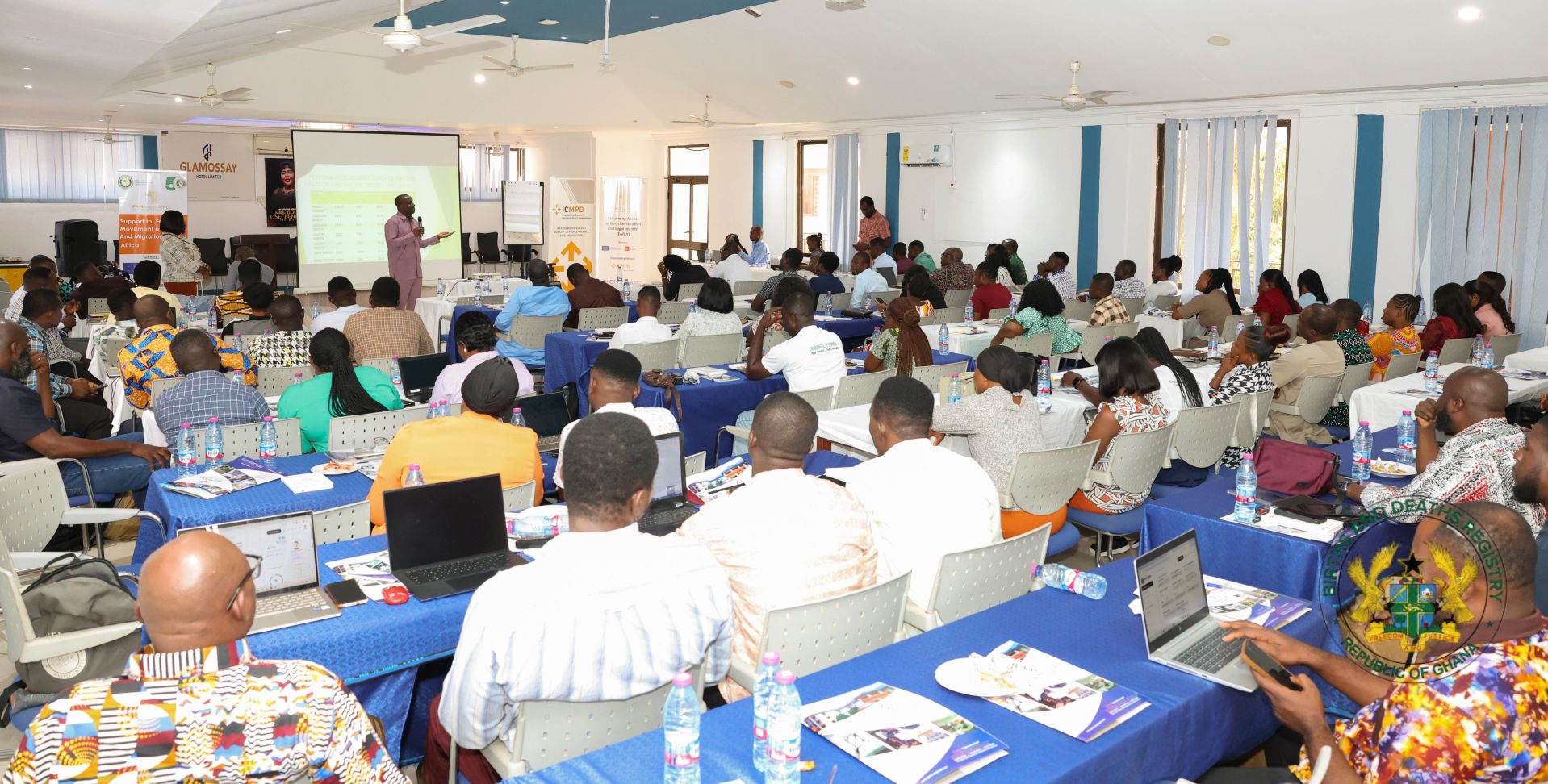
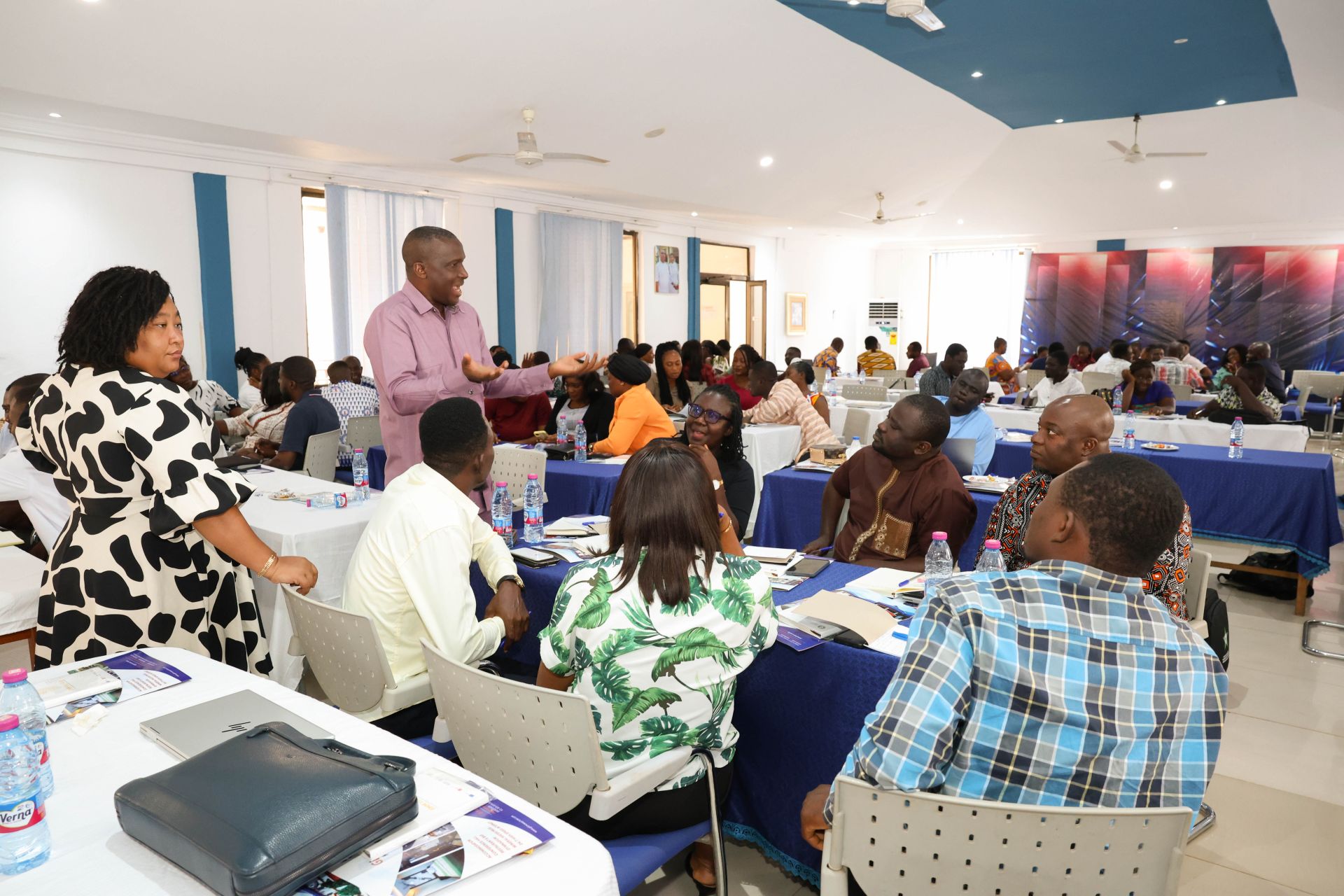
Over the past few months, both actions have started producing visible activity. In the north and centre Ghana, three rounds of training have brought staff from the Births and Deaths Registry and Ghana Health Service together in Tamale and Sunyani. In Accra, the Ghana Refugee Board has completed two reviews of its assessment and validated the findings.
Bringing Birth Registration Closer to Home
Every child born in Ghana has the right to have their birth registered and to receive a birth certificate. Yet in practice, around one in four children under five remains unregistered: the 2022 Ghana Demographic and Health Survey found that 75% of children under five had their births registered with the civil authorities, including 61% who had a birth certificate and 13% whose births were registered but who did not have one. Registration coverage was lower in rural areas and varied considerably across regions, with persistent disparities affecting underserved communities.
Without that record, a child can face difficulties proving their identity, age or nationality, accessing education and health services, and later obtaining a national identity card. The Births and Deaths Registry's DDF-supported action, EARLY (Enhancing Access to Birth Registration and Legal Identity), is working to close those gaps in six regions: Ahafo, Bono, Bono-East, North-East, Oti and Upper-East.
Much of the work comes down to coordination. Most children in Ghana are born in a health facility or seen by a health worker soon after, so the Ghana Health Service (GHS) usually knows first when a birth has happened. The Births and Deaths Registry is what turns that knowledge into an official record. When the two systems work together, registration works. When they do not, children fall through.
Since the launch of the action, three joint trainings have brought BDR and GHS staff together, with more than 200 trained so far. Two realities came through: coordination at district level can already improve coverage using tools that exist but are underused; and the Registry is short-staffed in many districts, limiting how quickly services can reach remote communities. Expanding birth registration will mean not only opening more registration points but making the systems around them work harder.
Building the Foundations of Refugee Protection
The Ghana Refugee Board's DDF-supported action began differently, not with delivery, but with a look inward. Since its launch, the Board has completed a gap and needs assessment of the institution as a whole and a separate assessment of its IT systems and have held a session to review and validate the findings. The Board and its partners now start from the same picture of what needs to change, before deciding where to intervene.
Refugee protection is only as good as the systems behind it: the technology that keeps records secure, the way different agencies work together on a case, the training of the staff who make decisions that affect people's lives. Understanding the gaps in the systems and having the Board itself agree on the bigger picture, means the support that follows can go straight to what will make the biggest difference.
The next phase of work will focus on drafting sessions for the communication and stakeholder engagement strategy, developing a capacity building for staffs, build a M&E framework and establishment of the data collection and management tool, priorities that emerged from the assessment conducted.
The DDF does not arrive with a fixed programme. It responds to what each partner institution says it most needs. For the BDR, its action will implement sensitisation campaigns and mobile registration exercises to strengthen outreach and beneficiary participation. A documentary highlighting the project's impact will be produced to support sustainability, promote visibility, and mobilise resources from additional partners for the expansion of activities to other areas.
The point of this work is easy to lose in institutional language. A birth certificate is the difference between a child who can go to school and one who cannot; a working refugee protection system, the difference between a family who is supported and one who is not. Institutions are the machinery. What matters is what they make possible.
Both actions are still in their early phases. As the Births and Deaths Registry expands its training across the six regions and the Ghana Refugee Board moves from review into action, the shared task is to document what changes, what holds, and what can be sustained into other parts of Ghana's systems and to other countries in the region facing similar questions.
The Demand-Driven Facility is implemented by ICMPD under the FMM West Africa Phase II project — an ECOWAS initiative funded by the European Union with a contribution from the Ministry of Foreign Affairs of Denmark, and jointly implemented by IOM, ILO and ICMPD.