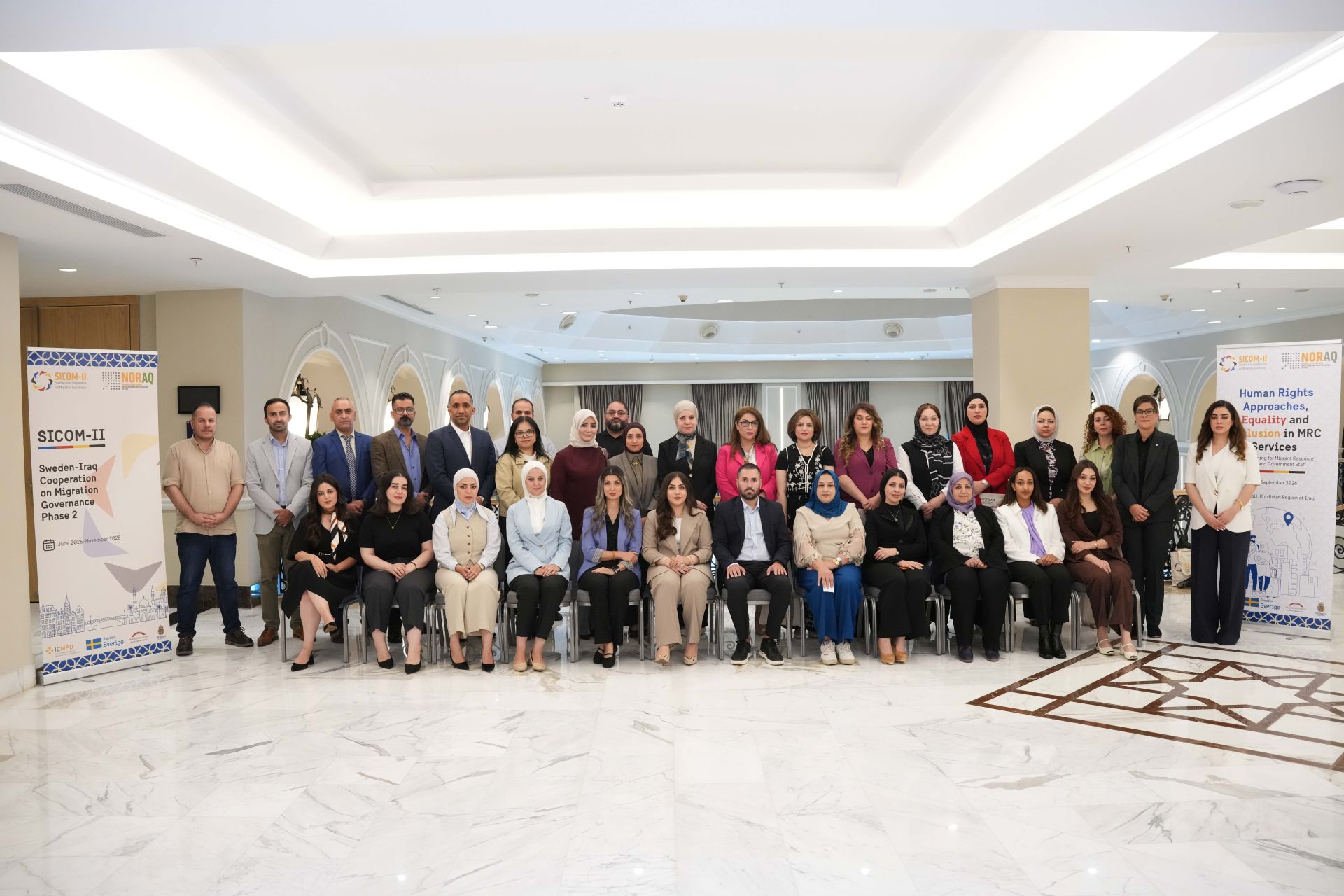
ICMPD organised a training on human rights, equality, and inclusion for the Migrant Resource Centres on 22-24 September 2026 in the Kurdistan Region of Iraq. In cooperation with the Swedish Migration Agency, participants received practical guidance on applying rights-based approaches in counselling, case management, and referral services.
The MRCs in Baghdad, Basra, Erbil, and Sulaymaniyah, along with government officials working with the Centres, explored issues directly relevant to their daily work; including human rights principles, equality and non-discrimination, identification and assistance of vulnerable persons, indicators of human trafficking, victim protection, counselling and interviewing methodologies, child-sensitive approaches, case management, informed decision-making, and referral pathways. The training is part of the Strengthening Migration Management in Iraq through Cooperation and Coordination-Phase II (SICOM-II) project, supported by the Swedish International Development Cooperation Agency (SIDA).
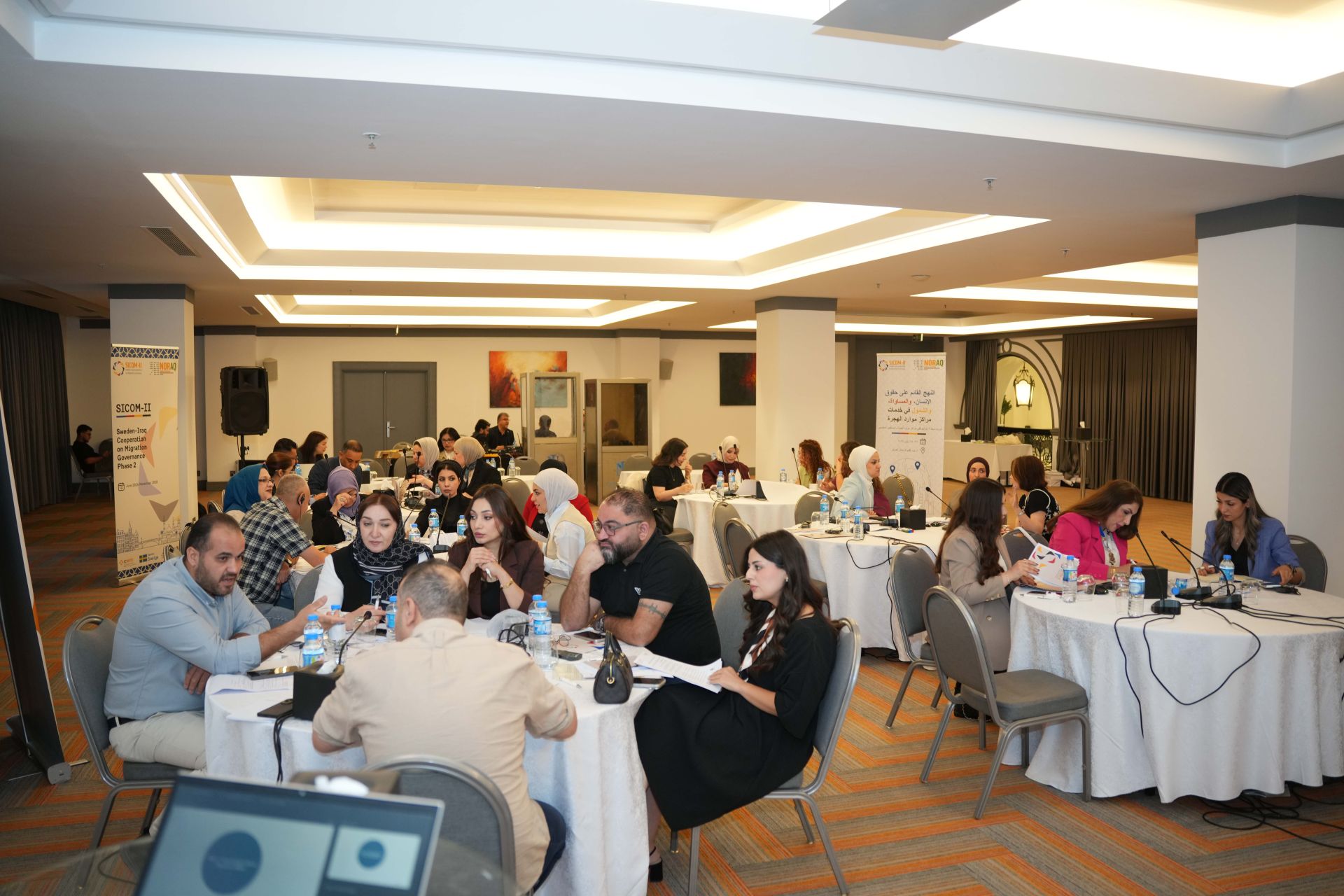
The training aimed to strengthen participants’ individual knowledge and skills and promote a shared understanding and more consistent application of human rights-based principles across the MRC network. Placing a strong emphasis on practical application, this common approach supports safe, inclusive, and protection-sensitive services for migrants and returnees, across all MRCs. Participants worked through realistic scenarios involving people with different needs, circumstances, and vulnerabilities. Discussions focused on identifying protection risks, respecting beneficiaries’ choices, providing accurate and accessible information, supporting informed decision-making and ensuring appropriate referrals to specialised services.
The training remind[ed] us that every person has different circumstances and needs. Listening carefully and respecting their choices is an important part of providing effective and dignified assistance.said Nuha Rashid, from the Iraqi Ministry of Migration and Displaced.
Particular attention was given to dignity, participation, non-discrimination and accessibility, and the importance of listening carefully to beneficiaries and adapting services to individual circumstances. Discussions reinforced that rights-based service delivery is not only about policies and procedures, but also about how migrants and returnees are treated and supported throughout their engagement with the MRCs. Case studies, group exercises and facilitated discussions complemented the discussions, enabling participants to examine how human rights can be applied in their everyday interactions with migrants and returnees.
The practical case studies helped us better understand how to apply human rights principles in our daily counselling work and how to respond to the different needs of migrants and returnees.Rubar Salih, MRC Counsellor from the Sulaymaniyah centre, shared.
The training demonstrated strong learning outcomes. Participant feedback confirmed the relevance and practical value of the training; underlining the value of combining technical knowledge with practical exercises and realistic scenarios to strengthen the capacity of frontline service providers. Participants highlighted their improved understanding of rights-based approaches, equality, non-discrimination and inclusion, protection, trafficking risks, informed decision-making, and referral mechanisms.
The sessions on vulnerability, trafficking risks and referral pathways were particularly useful because they are directly relevant to the cases and queries, MRC colleagues encounter in their work.said Hina Maqsood, ICMPD Project Manager, SICOM-II.
The SICOM-II project is also strengthening SOPs and staff guidance to integrate human rights, gender equality, non-discrimination, accessibility, cultural sensitivity, safeguarding, and other protection principles into daily MRC practice. This includes Do-No-Harm, child-sensitive approaches, confidentiality, informed consent, referral procedures, and quality assurance.
Together, the training, SOP development, safeguarding measures and wider mainstreaming efforts contribute to a more consistent, safe, inclusive and rights-based approach across MRC services in Iraq. These efforts aim to ensure that migrants and returnees are able to access assistance that respects their dignity, rights, choices and individual needs, regardless of where they seek support


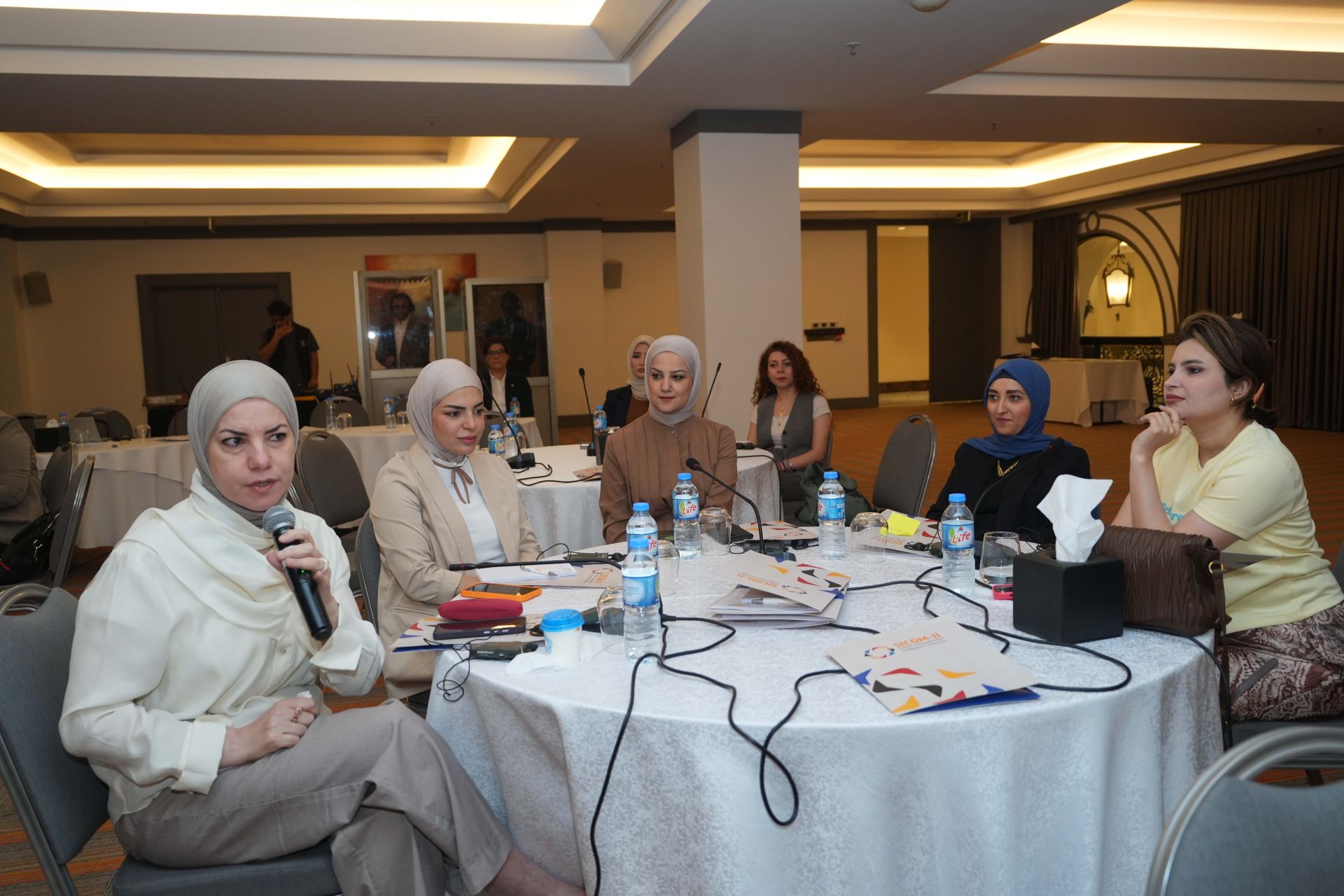

Rubar Salih, MRC Counsellor Sulaymaniyah presenting the outcomes of the group work.