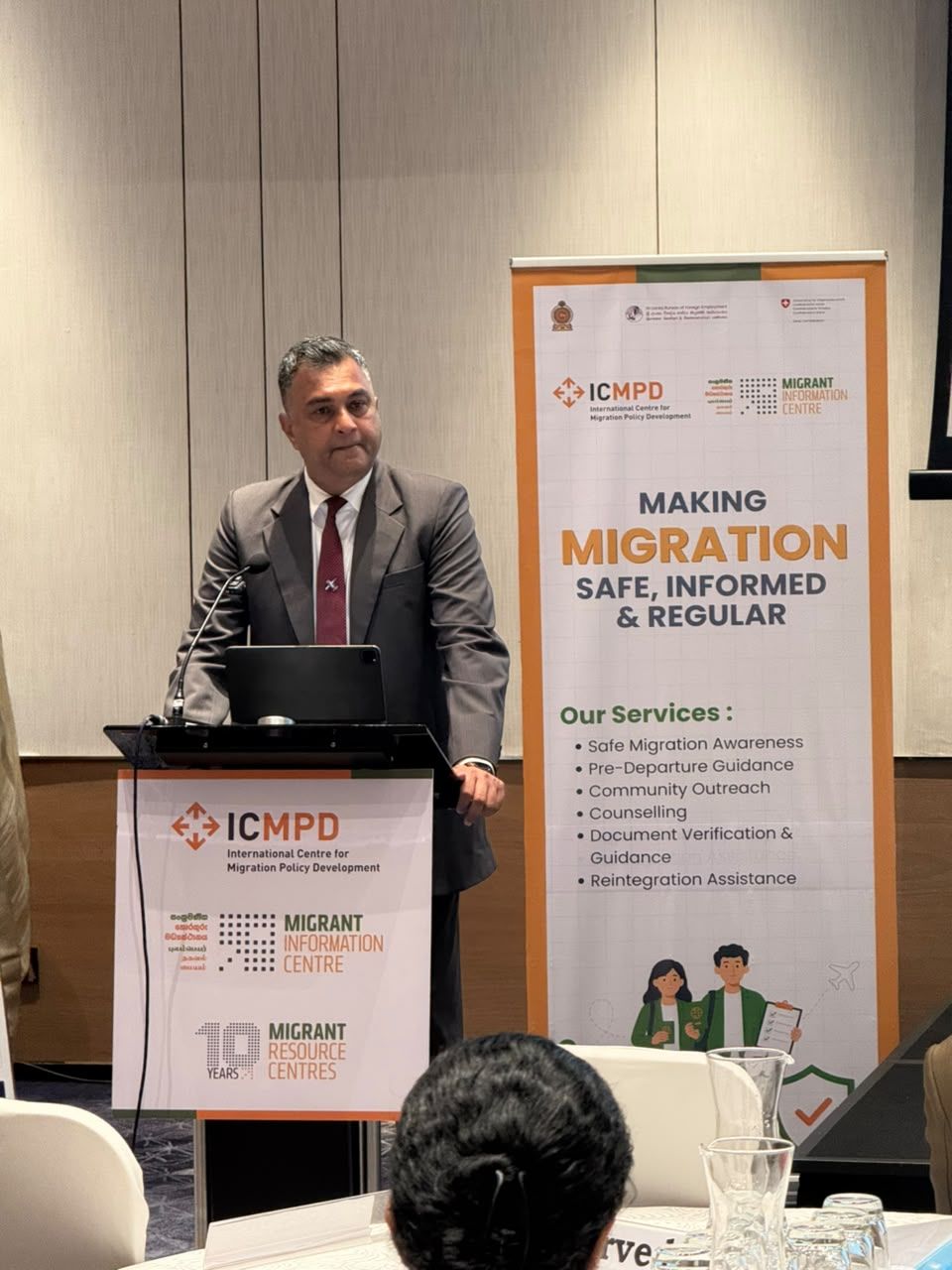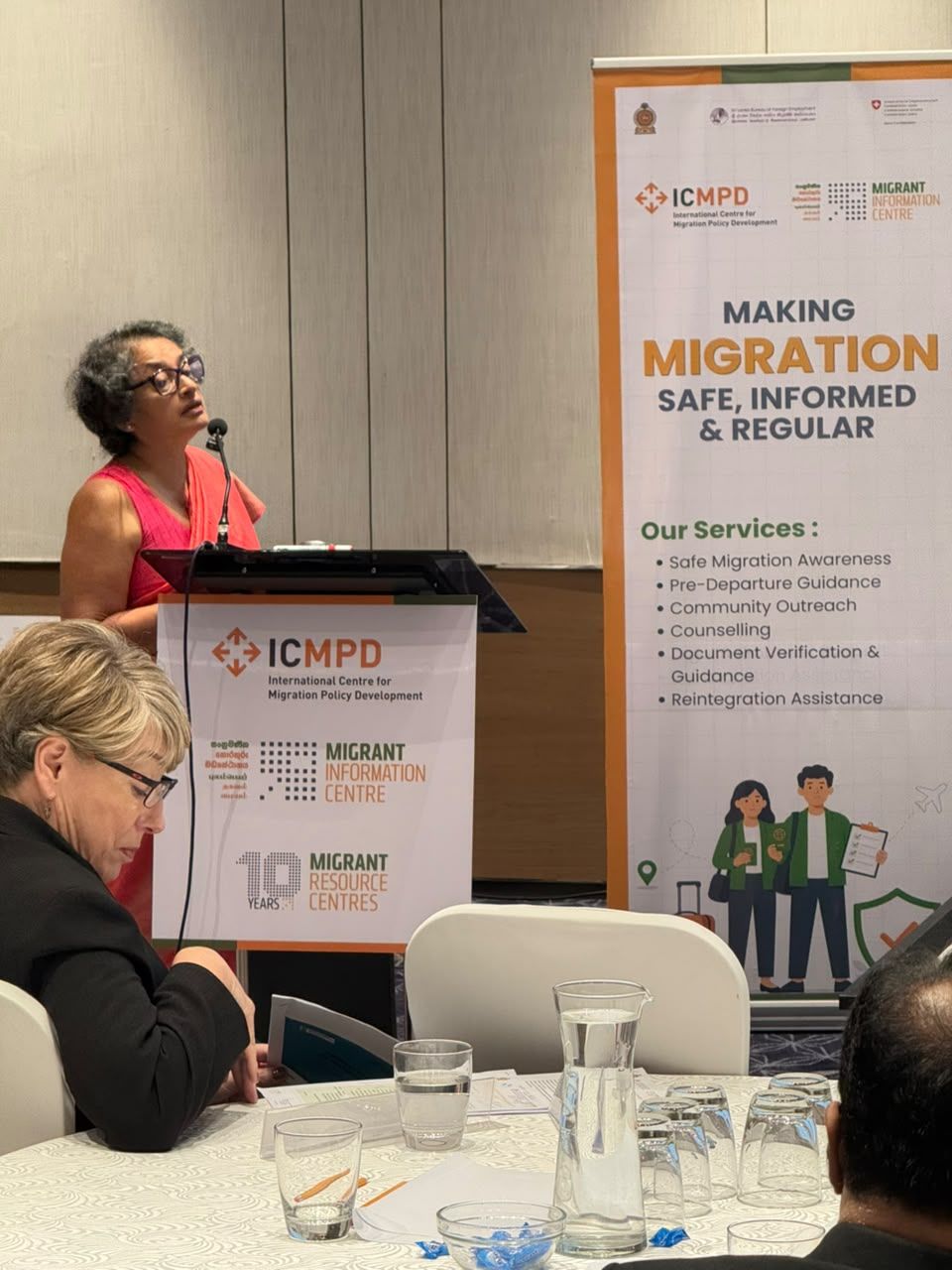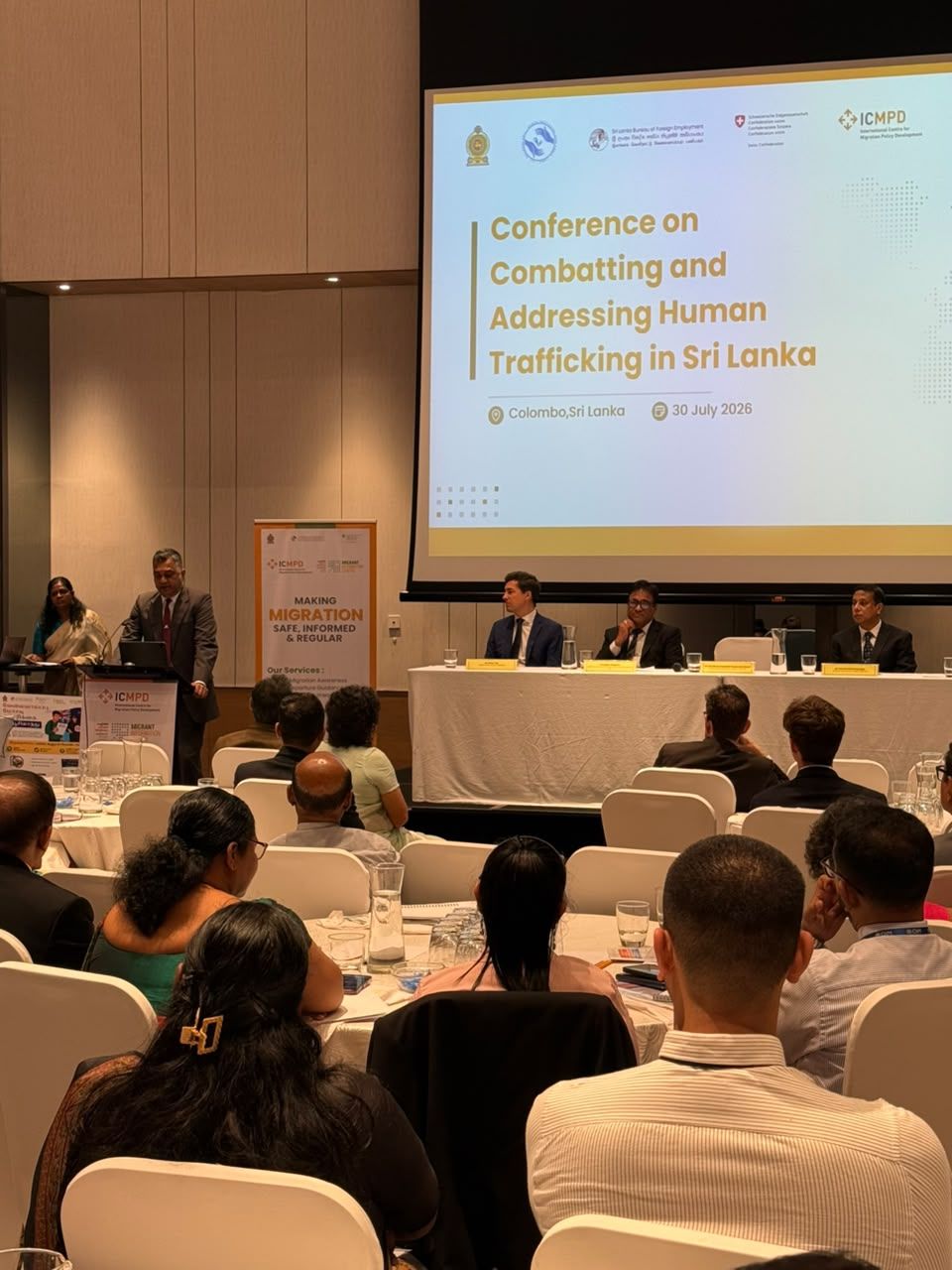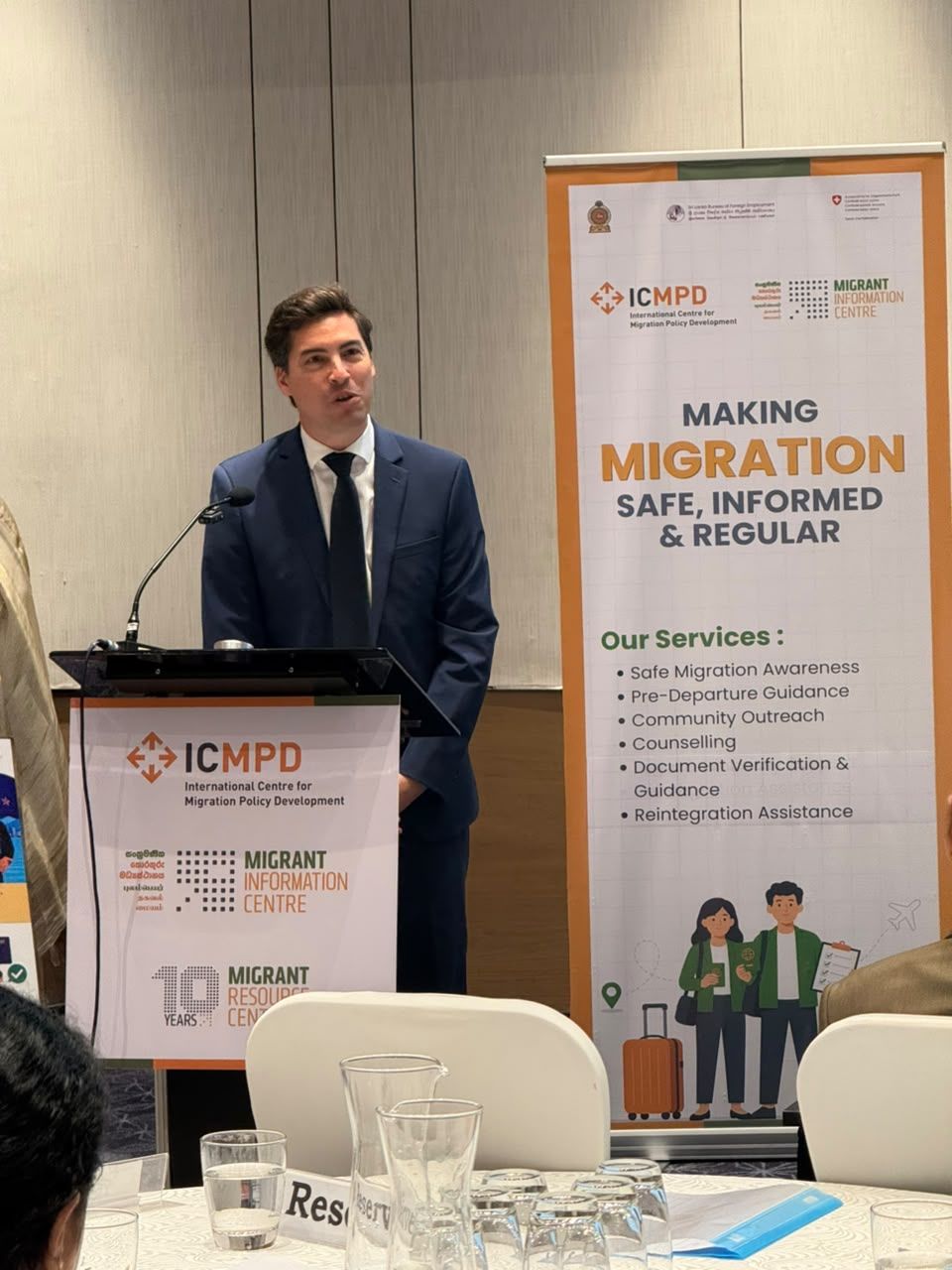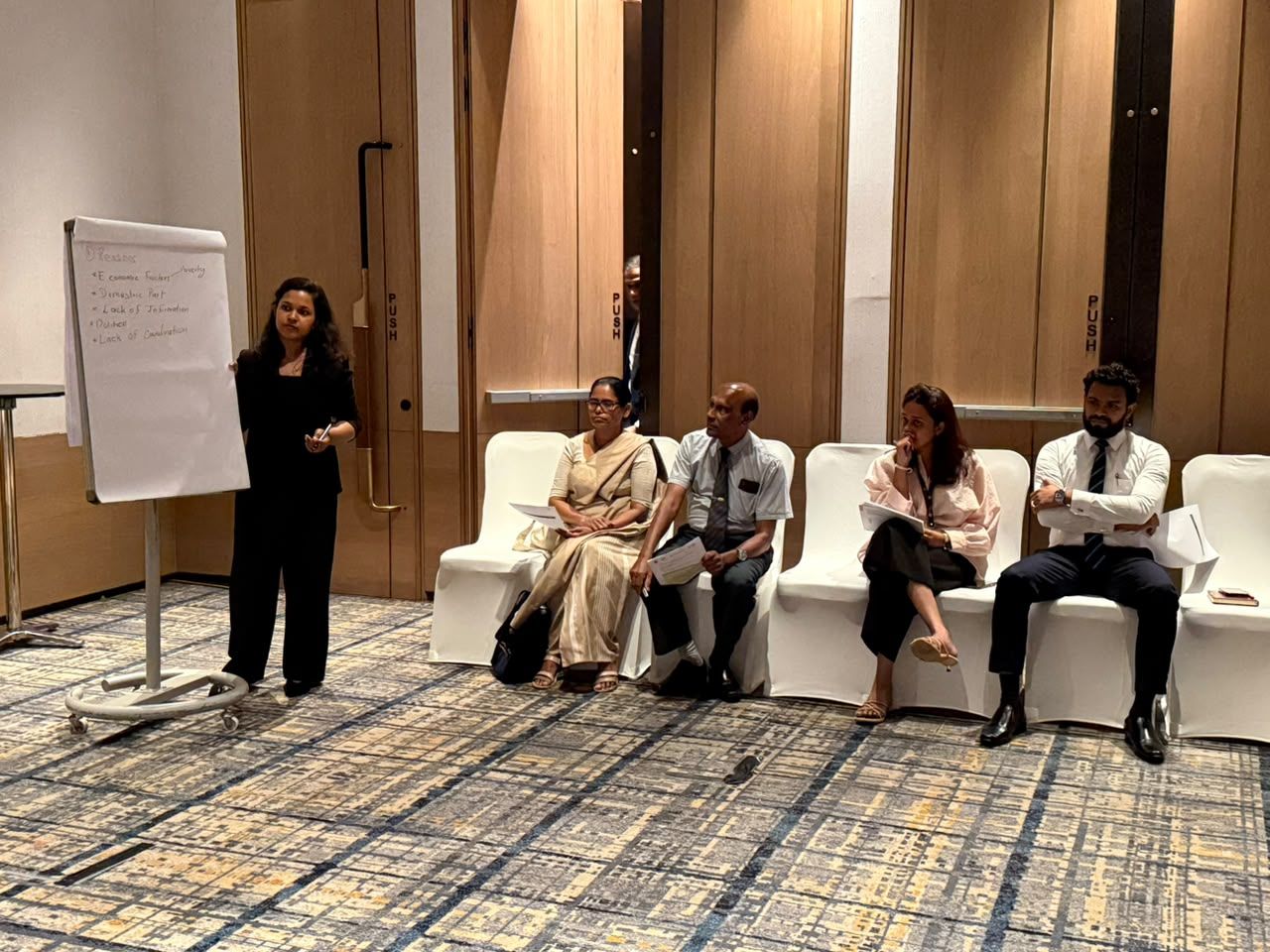
ICMPD joined the Sri Lanka government in hosting the Conference on Combatting and Addressing Trafficking of Human Beings today, renewing commitment to prevention, victim protection, and coordinated action. To commemorate the World Day Against Trafficking in Persons, more than 80 representatives of government, law enforcement and protection authorities, National Anti-Trafficking Task Force, and High Commissions and Embassies joined civil society, academia, development partners, international organisations, media, and survivor-support organisations.
Air Vice Marshal Sampath Thuyacontha (Retd), Secretary, Ministry of Defence and Chairman of the National Anti-Human Trafficking Task Force (NAHTFF) presented the “newly approved strategic action plan 2026-2030 to strengthen efforts of the Government of Sri Lanka in addressing trafficking of human beings.” He emphasised the need to cover the 4Ps: prevention, protection, prosecution and partnership. New district level action plans and awareness raising are also in the pipeline.
Sri Lanka remains at Tier 2 under the recent TIP report for the past four years. Secretary Thuyacontha said “that trafficking in persons has evolved beyond its traditional manifestations and now increasingly involves sophisticated methods of recruitment and exploitation facilitated through digital technologies and cross-border criminal networks.”
Joining Secretary Thuyacontha were Dr. Sugath Yalegama, Additional Secretary from the Ministry; S.M.S.D. Gunasinghe, General Manager Bureau of Foreign Employment; Ms Sonya Douglas, Counsellor and Irregular Migration Liaison Officer at the New Zealand High Commission in Colombo; and Mr Olivier Praz, Charge d’Affairs of the Swiss Confederation to Sri Lanka and the Maldives. Senior representatives of Sri Lanka’s anti-trafficking structures also contributed to the opening and technical discussions.
The conference focused on reducing the victimisation of vulnerable groups, including women, children and migrant workers. Participants underscored the importance of confidential, victim-centred and trauma-informed support, including access to legal, medical, psychosocial, shelter and reintegration services. Discussions identified practical gaps and solutions, including strengthening of referral pathways and supporting clearer institutional responsibilities. Survivor perspectives and the experience of frontline organisations were key elements to the discussions on maintaining dignity, confidentiality and protection.
The conference also reviewed global and national trafficking trends, Sri Lanka’s 2026 Trafficking in Persons Report, government and civil-society responses, and the work of the National Anti-Human Trafficking Task Force. Government institutions, donors, international organisations, civil society and MIC Sri Lanka presented ongoing initiatives, services and areas requiring stronger cooperation.
Presentations from the NAHTTF and UNODC mentioned of the challenges such as the lack of shelter for victims, sustainability of projects especially from CSOs, funding for reintegration of returnees and rehabilitation of victims. Recently, the most challenging cases are trafficking for forced criminality where victims are engaged in online scams and cyber trafficking. Child trafficking for labour and sexual purposes also pose big challenge to the community.
Because of this, through 2 workshops, participants examined trafficking for forced criminality as an emerging concern, including situations in which people recruited for apparently legitimate technology, customer-service or office-based jobs are coerced into online scams or other criminal activity. Discussions stressed the need to identify people affected by deception, threats or coercion as possible victims and to ensure appropriate protection and referral.
The conference was organised under MIC Sri Lanka Phase II, funded by the Government of New Zealand and co-funded by the Government of Switzerland, and implemented by ICMPD in partnership with the Ministry of Foreign Affairs, Foreign Employment and Tourism and the Sri Lanka Bureau of Foreign Employment.
About MIC Sri Lanka
The Migrant Information Centre (MIC) Sri Lanka provides free, accessible and reliable information, counselling, community awareness and referral support to prospective migrants, migrant workers, returnees and their families. Established in 2024 and co-located with the Sri Lanka Bureau of Foreign Employment in Batticaloa, MIC Sri Lanka works with government institutions, frontline officers, civil society and communities to support informed decisions, safe and regular migration pathways, and protection from exploitation.