This year ICMPD’s flagship initiative - Migrant Resource Centres - marks a decade of frontline service delivery, growing from a single pilot centre in Lahore, Pakistan, to multi-country model that supports migrants, returnees and communities across the full migration cycle.
The idea that became the Migrant Resource Centre took shape in October 2013, at the Budapest Process Working Group on the Silk Routes region in Islamabad that gathered senior officials to discuss migration governance and cooperation. Across the region, people were making life-changing decisions on the basis of fragmented or unreliable information. During the discussions it was made clear that awareness-raising campaigns would not be enough, and there is a need for space where migrants could ask questions before beginning their journey. It was first described as migration information centres.
Following the Islamabad meeting, three years later, the dialogue turned into a practical operational initiative. In April 2016, the first Migrant Resource Centre opened its doors in Lahore, established with the support of the Labour and Human Resource Department through a collaborative effort between the Ministry of Overseas Pakistanis and Human Resource Development, the ILO, the European Union and ICMPD. Today, MRC grew from a country-level pilot into a network embedded within national systems across multiple partner countries.

MRCs now function as multi-purpose service points, offering counselling, skills-related support and guidance on legal migration pathways, reintegration support and referral, alongside the information services they were first known for. This shift from awareness-raising to service delivery reflects the reality and demand within the growing complexity of the migration landscape.
Through their work on the ground, MRCs have also become a practical bridge between policy and people, contributing field-level insight back to broader dialogue platforms such as the Budapest Process and Prague Process, where it was first brought up during discussions.
The 10th anniversary is a moment to take stock of the value the MRC model has brought in responding to migration governance challenges in the Silk Routes region. What distinguishes the MRC approach is its integration within national systems from the outset. Centres are developed in genuine partnership with governments, ensuring that services reflect national priorities and can adapt to shifting migration dynamics while maintaining consistent standards and a clear commitment to people-centred delivery. Equally important is the model's proven responsiveness to emerging needs and challenges, whether new migration routes, evolving labour market demands or shifting mobility patterns. This capacity to respond quickly and meaningfully is both a measure of the MRC network's strength and a key reason for its continued relevance.
The impact of MRC services is increasingly backed by evidence. The 2025 Knowledge, Attitudes and Intentions (KAI) Assessment across Pakistan, Kyrgyzstan, Tajikistan and Afghanistan found significant shifts in how people understand and approach migration after engaging with MRC activities. The share of respondents correctly answering all migration knowledge questions rose from 14.5% to 66.6%, a more than fourfold increase. The assessment also showed notable changes in attitudes and behaviour. Preference for seeking support from embassies, consulates and NGOs increased by more than 30%, while reliance on informal agents fell by more than half.
Throughout 2026, the anniversary is being marked across the countries where MRCs operate.
- A job fair and soft skills training in Kyrgyzstan.
- A national conference on trafficking in Sri Lanka.
- A media engagement campaign in Tajikistan. A multi-stakeholder conference on mental health, migration and reintegration in Iraq.
- A regional exchange bringing together all MRCs and national authorities from across the network in Pakistan and many more activities are planned. Each event reflects a different dimension of what the centres provide.
- A central event in Brussels, bringing together EU institutions, Member State representatives, partner countries and civil society.
These events will present the accumulated impact of a decade of MRC work and what the next 10 years will bring.
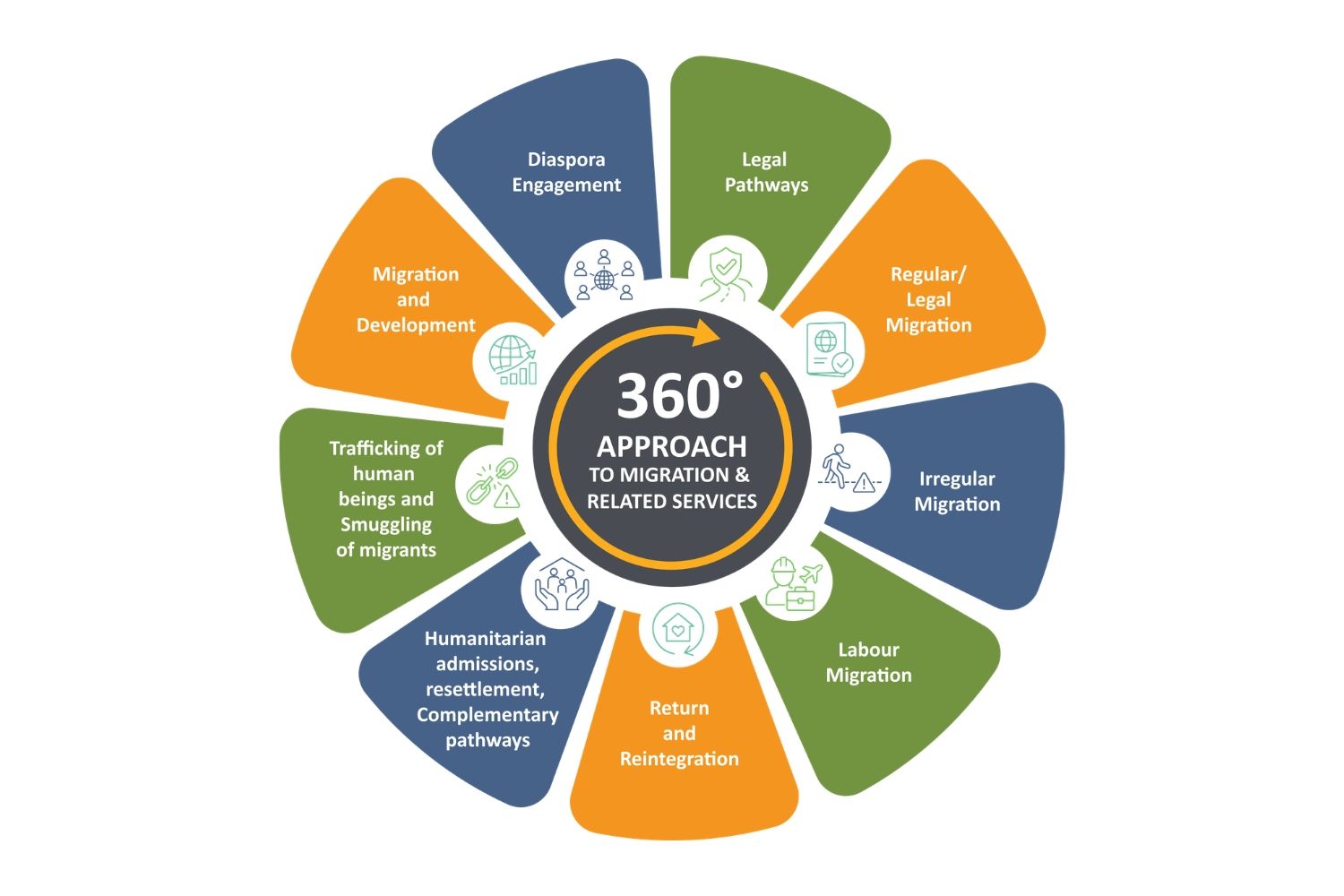
As the MRC enters its second decade, the founding principle remains unchanged - migration decisions should be guided by credible information. MRCs today offer a 360° response to migration, covering legal pathways, labour and regular migration, prevention of irregular migration, return and reintegration, humanitarian admission, resettlement and complementary pathways, and migration intelligence - reaching migrants at every phase of their journey.
The next decade is about building on that foundation - deepening impact, reinforcing partnerships, sustainability and ownership and ensuring services continue to timely respond to emerging needs and challenges.
Discover the people, milestones, and moments that have shaped MRC over the past 10 years:
Migrant Resource Centre (MRC) Kyrgyzstan:
📍 237, Toktogula street, Bishkek
📍 8/914 Amir-Temur street, Osh
Tel.: +996 (554) 99-19-90; +996 (774) 99-19-90
WhatsApp/ Telegram: +996 (774) 99-19-90
Follow us: www.instagram.com/mrc_kyrgyzstan | www.facebook.com/mrckyrgyzstan
- Celebrating 10 Years of MRCs: Uzbekistan strengthens youth awareness on safe migration
- MRC in Uzbekistan strengthening cooperation on safe and informed migration
Migrant Resource Centre (MRC) Uzbekistan:
📍Tashkent, Uchtepa district, Kukcha Darvoza, 485
WhatsApp/ Telegram: +998 90 819 06 25
Follow us: https://www.instagram.com/mrc_uzbekistan | www.facebook.com/mrc_uzbekistan
Activity in Afghanistan launching later this year, please check back in October.