

This fifth collection of selected publications produced by the Prague Process Migration Observatory in 2024-2026 showcases in-depth analyses and research findings on migration trends, policy developments, and the various challenges and opportunities within the Prague Process region. This edition reflects the increasingly complex and interconnected nature of migration challenges, shaped by geopolitical developments, demographic change, technological advances, and environmental pressures. The selected publications provide timely insights and forward-looking perspectives across several thematic priorities of the Prague Process Action Plan 2023-2027. Key areas explored in this collection include: Climate change and demographic resilience, examining the implications of environmental change for migration, protection and adaptation strategies, alongside long-term demographic scenarios and strategic migration planning in the Western Balkans.
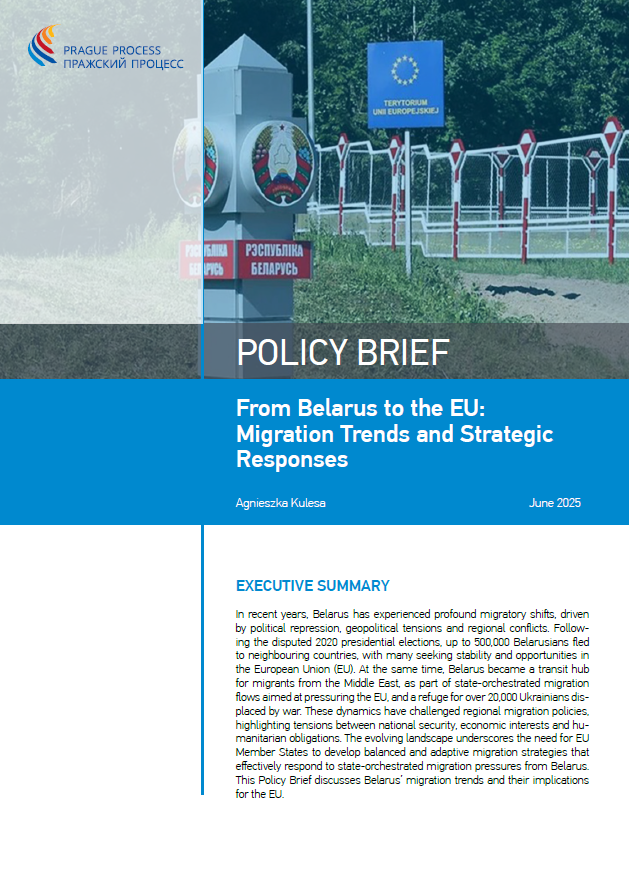
Geopolitics and forced migration, analysing developments in Russian migration policy, migration trends involving Belarus and the EU, and the consequences of Russia’s continued war against Ukraine, including attacks on critical energy infrastructure.
Migration governance and international cooperation, exploring the implications of EU accession processes for migration, asylum and border management in Ukraine and Moldova, as well as opportunities for skills mobility partnerships across the Prague Process region. The Migration Observatory remains dedicated to producing high-quality, evidence-based research to inform policy and practice. This compilation serves as a valuable resource for decisionmakers, policymakers, researchers, and practitioners engaged in migration-related work.
The Migration Observatory remains dedicated to producing high-quality, evidence-based research to inform policy and practice. This compilation serves as a valuable resource for decisionmakers, policymakers, researchers, and practitioners engaged in migration-related work.