A project on preventing human trafficking and improved border management in Côte d'Ivoire has strengthened coordination between institutions, and prevention actions in vulnerable areas.
17.06.2026
Côte d'Ivoire
A project on preventing human trafficking and improved border management in Côte d'Ivoire has strengthened coordination between institutions, and prevention actions in vulnerable areas.
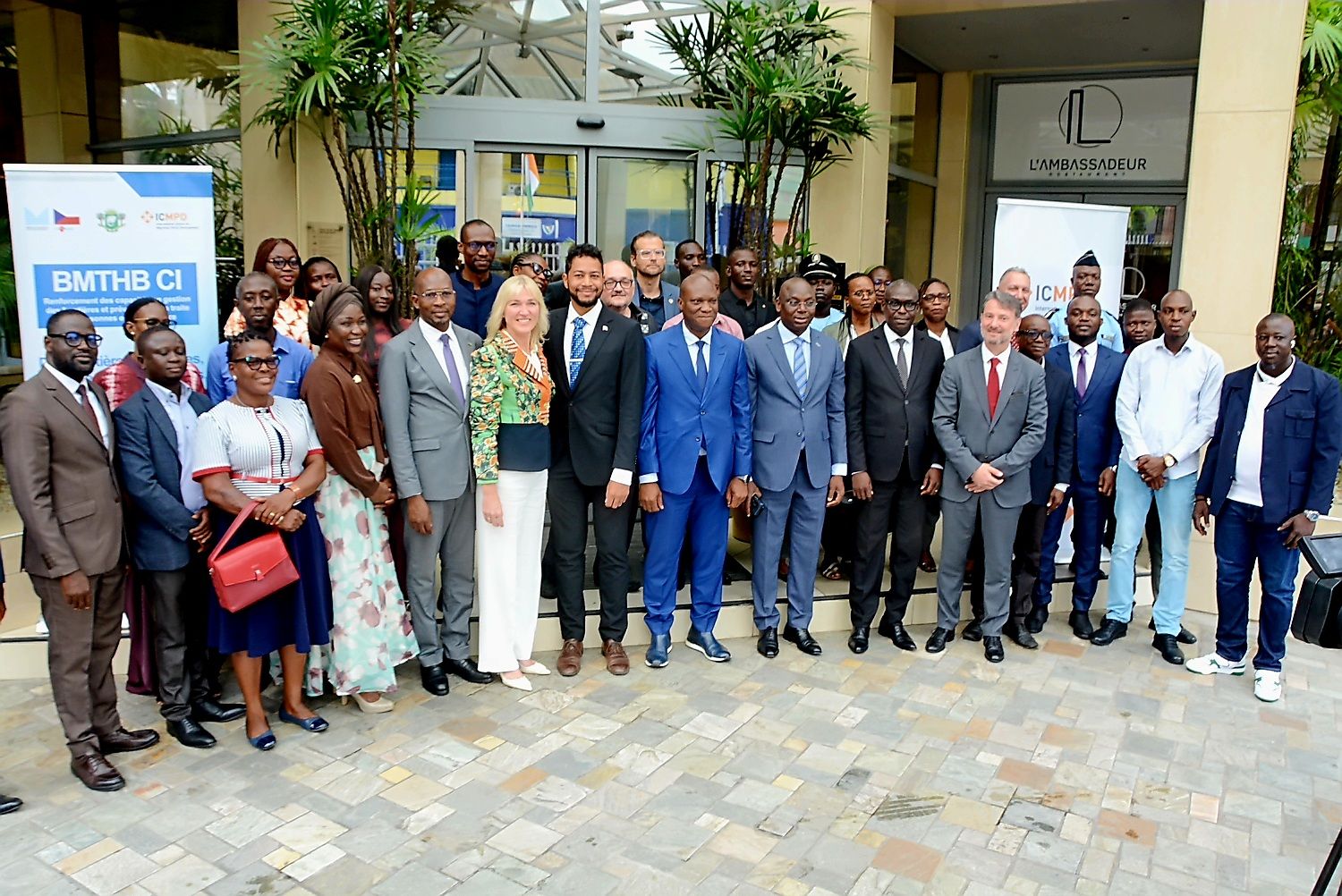
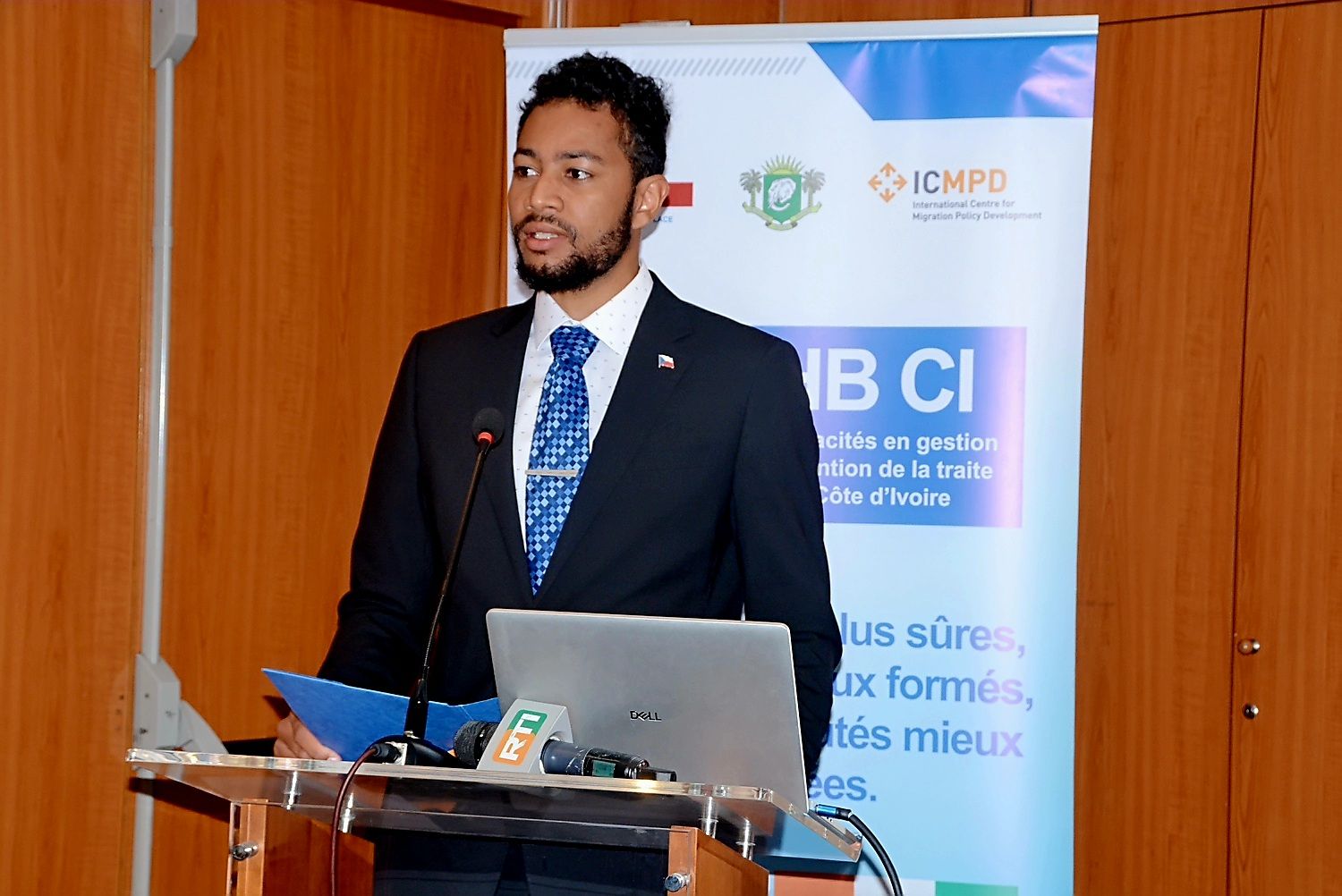
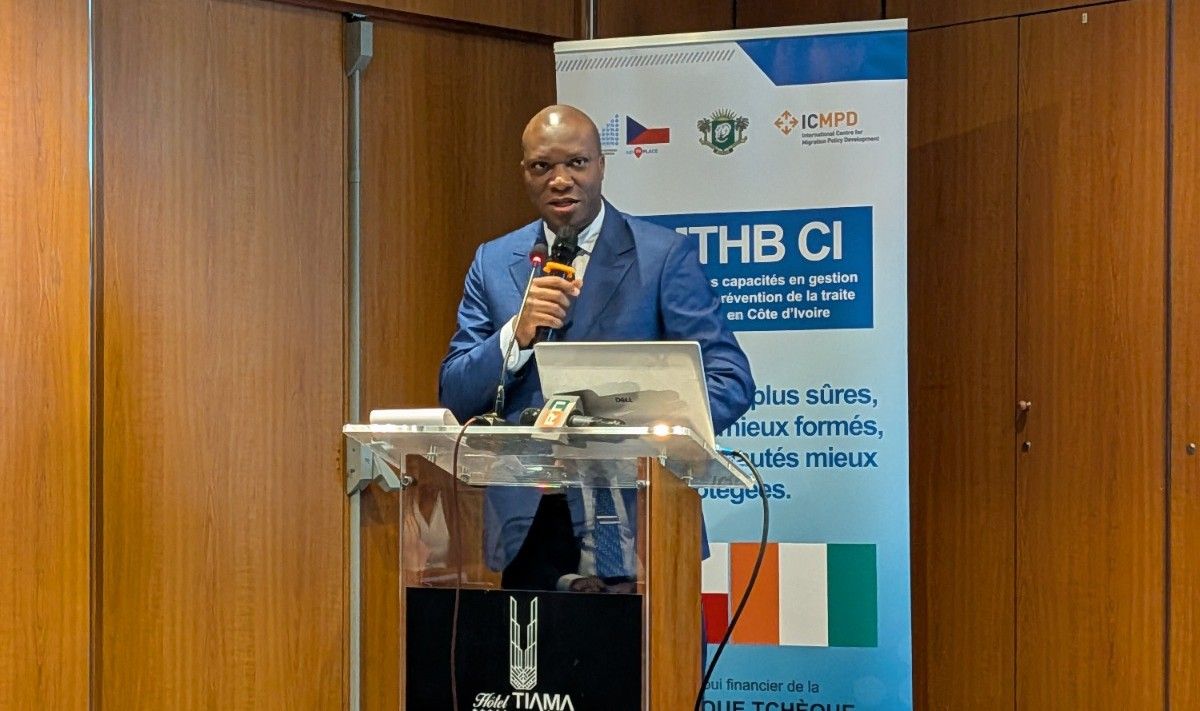
At the closing ceremony of ICMPD’s Strengthening Border Management and Prevention of Human Trafficking (BMTHB CI) project on 21 May 2026, ICMPD project manager Natalija Spunjini presented the key results in strengthening the operational capacities of border and police units, improved institutional coordination, and deployment of portable document fraud detection equipment to frontline officers. Senior representatives of the Ivorian and Czech governments, and partners underlined the importance of sustained international cooperation in addressing border governance challenges and combating trafficking in persons.
Funded by the Ministry of the Interior of Czechia, the project supported Ivorian authorities through capacity building, in close collaboration with the Directorate of Territorial Surveillance (DST), the National Borders Commission of Côte d'Ivoire (CNFCI), and the National Committee for the Fight against Trafficking in Persons (CNLTP).
“The partnerships built under this project reflect what effective technical cooperation looks like in practice — grounded in local realities, responsive to operational needs, and genuinely owned by national institutions. This is a foundation worth building on,” said ICMPD Pan-African Regional Portfolio Manager Marcello Giordani, reflecting on the collaboration built throughout the project.
The closing ceremony highlighted the testimony of Lieutenant Loua Banty, Head of the Koun-Fao police border post, who described how the training they received on document fraud detection and identity verification, combined with equipment that the project provided, enabled his team to intercept travellers presenting fraudulent Ghanaian identity cards — an incident that prompted a constructive professional exchange with Ghanaian immigration officers across the border.
Lieutenant Banty’s account illustrated how targeted training and operational support can simultaneously strengthen frontline border control and foster cross-border cooperation between neighbouring services.
Also joining the Ivoirian Ministry of Interior and Security, were diplomatic missions, technical and financial partners, civil society organisations, and project beneficiaries in celebrating the closing ceremony. Representatives of the DST, CNLTP, and CNFCI also highlighted the project's positive operational impact on their institutions. CNLTP representatives particularly commended ICMPD's consultative approach in the project design phase, noting it ensured activities and implementation priorities responded effectively to their operational realities on the ground.
The closing ceremony concluded with a reaffirmation of the shared commitment of all partners to sustaining the project's results and advancing border governance and anti-trafficking efforts in Côte d'Ivoire.