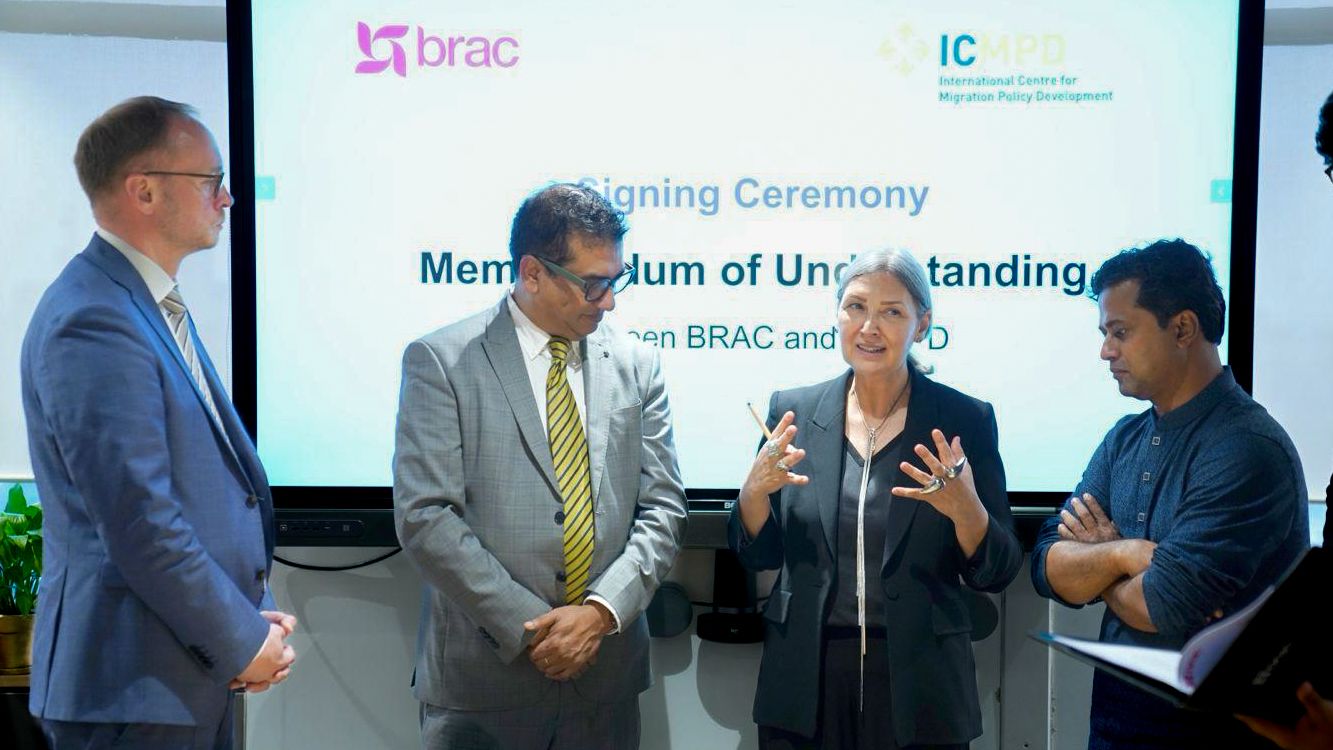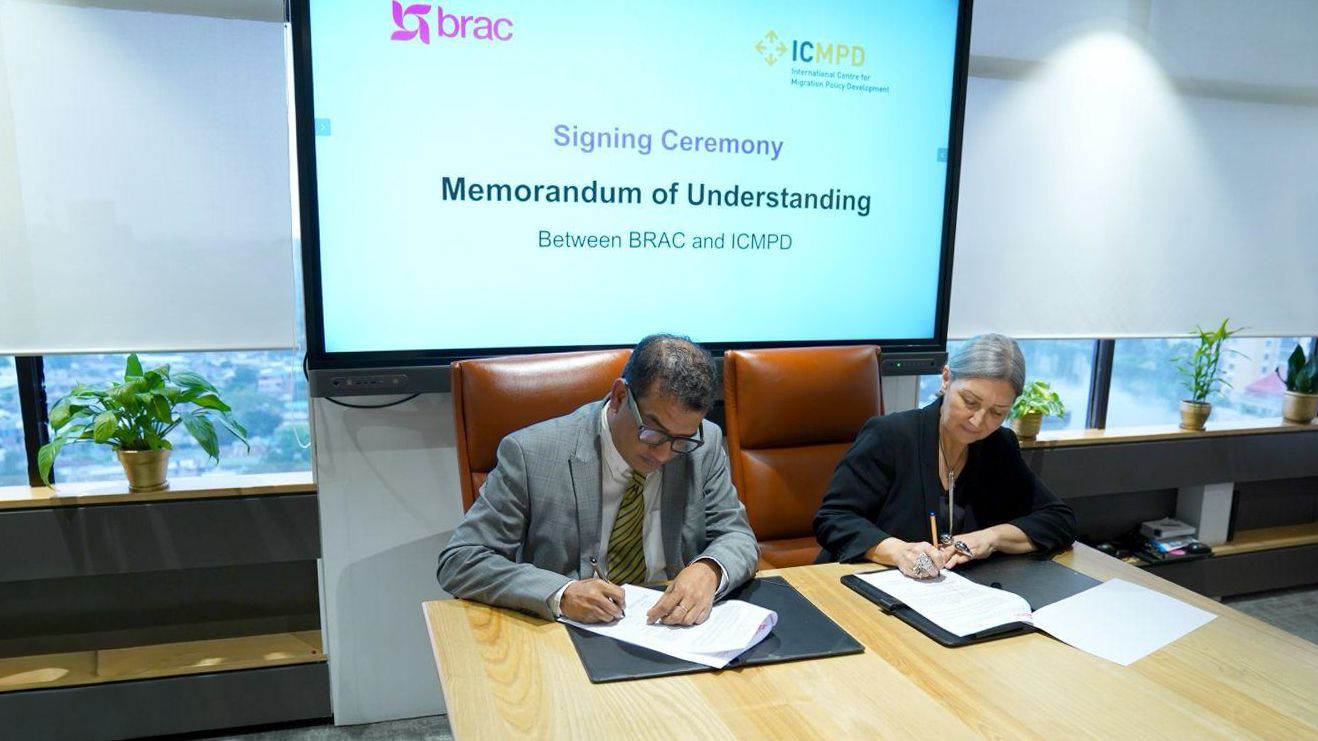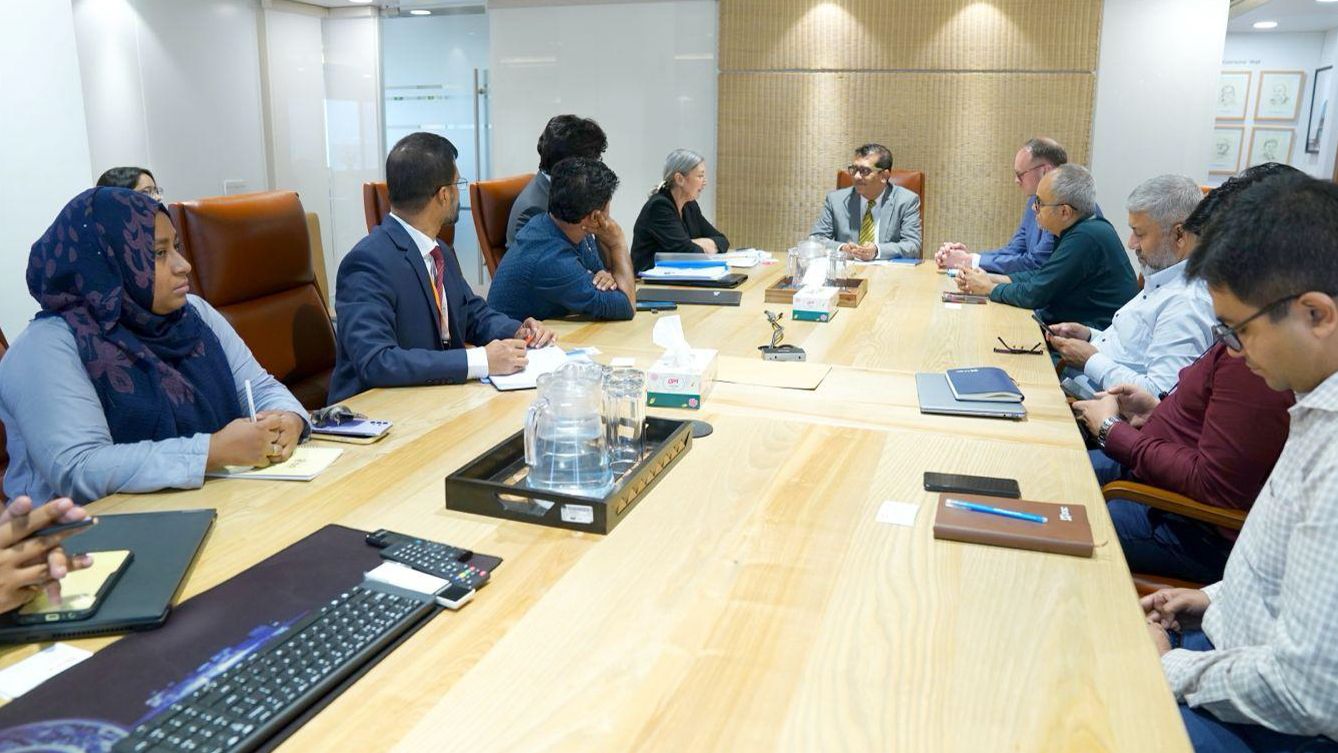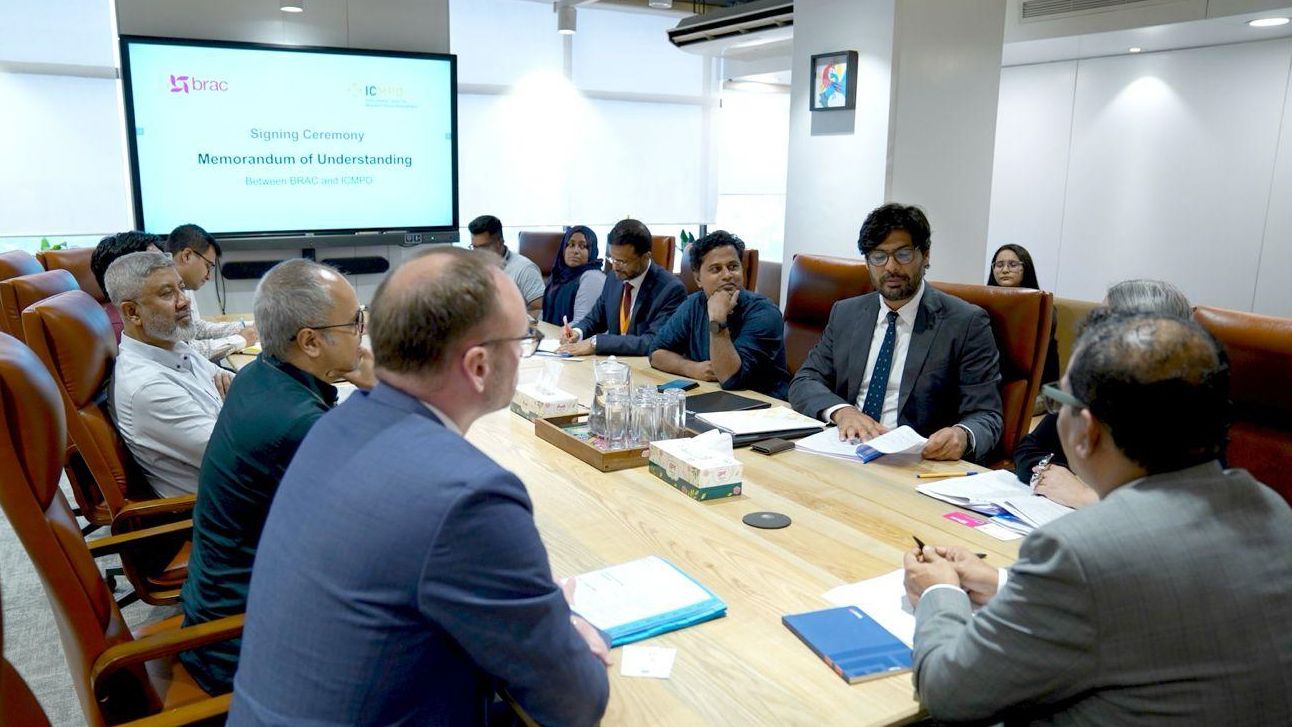
ICMPD and Bangladeshi organisation BRAC have formalised long-term collaboration to promote safe and regular migration, mobility, return and reintegration, and tackle irregular migration. Signed through a Memorandum of Understanding on 29 June 2026 in Dhaka, both organisations will focus on facilitating legal and skilled labour mobility pathways for Bangladeshi workers to Europe, as well as supporting the sustainable reintegration of returning migrants.
ICMPD Deputy Director General and Director of Migration Dialogues and Cooperation Sedef Dearing, and BRAC Officer-in-Charge Arinjoy Dhar, signed the cooperation.
While migration plays a vital role in Bangladesh's socio-economic development, significant challenges remain in tackling irregular [migration], strengthening integrated border management, preparing skilled workers to meet labour market demands, facilitating legal migration pathways, and ensuring the protection of migrants. Addressing these challenges requires coordinated national and international efforts. ICMPD is working globally to address these issues, and our partnership with BRAC in Bangladesh will further strengthen these efforts.Ms Dearing said.
Under the MoU, BRAC and ICMPD will also promote evidence-based public understanding of migration, strengthen diaspora engagement, and address emerging migration challenges including those linked to climate change. Both organisations will also collaborate on policy dialogue, research, training, knowledge exchange and stakeholder engagement to support more effective and people-centred migration governance.
BRAC has long been working to promote safe migration, support the sustainable reintegration of returnee migrants, and prevent human trafficking and migrant smuggling. ICMPD, on the other hand, works internationally with governments and a wide range of stakeholders to strengthen migration policy and governance. This partnership will create new opportunities to combine international expertise with local experience and develop more effective migration management initiatives.Mr Dhar said.
The ceremony was also attended by officials from both organisations, including ICMPD Chief of Staff Romed Perfler, Project Manager Samim Ahmadi, ICMPD Bangladesh Fazle Karim; along with BRAC's Education, Skills Development and Migration Programme Director Safi Rahman Khan, Associate Director Shariful Hasan (Migration & Youth Platform), Skills Development Programme Head Golam Faruque.
Ms Dearing further emphasised that the cooperation plays an important role in reducing irregular migration from Bangladesh, while also narrowing the gap between the European labour market's demand for skilled workers and the supply of skilled workers from the country.
ICMPD’s engagement with the Government of Bangladesh builds on previous efforts in promoting safe migration awareness and counselling services through the Migrant Resource Centres (MRC) and developing Public-Private Partnerships (PPP) to map priority economic sectors and employers to strengthen labour migration and the sustainable reintegration. Since then, ICMPD has expanded its cooperation with Bangladesh through Integrated Border Management (IBM), supporting the Ministry of Home Affairs, Special Branch, Immigration Police and the School of Intelligence. This includes institutional capacity development, document security and fraud detection training, establishing a national cadre of Master Trainers, providing specialised equipment, and the development of policies and standard operating procedures.
ICMPD also supports labour migration, Talent Partnerships, return and sustainable reintegration; while facilitating Bangladesh's role as Co-Chair of the Budapest Process Working Group on Return and Reintegration. More recently, ICMPD has expanded its engagement through the EU Migration Capacity Development (EU MIDCAP), which strengthens institutional migration governance capacities; and the Global Alliance Rapid Response Initiatives (GARRI), supporting strategic communication, prevention of irregular migration, and enhanced international cooperation.