The fraudulent use of identity and travel documents can facilitate transnational criminal activities, including human trafficking and migrant smuggling – particularly when people move across borders undetected. This has been endemic and poses a persistent threat to regional security across West Africa.
Senegal, a country of origin, transit country, and destination at the crossroads of key migration routes in the region, is particularly exposed to such risks. In 2024, of all fraud cases declared to the National Office for the Fight against Fraud and Corruption (OFNAC), more than 20% referred to document and identity fraud – making this the most important fraud category in the country. According to national estimates, this detection rate ranging between 10 and 20%, is vastly undercalculated; underscoring the scale and complexity of the challenge, with the improvement of detection now a top priority.
In response, the country’s Comité interministériel de lutte contre la migration irrégulière (CILMI) –mandated to facilitate safe, regular and orderly migration – has made the fight against document fraud a core priority of their action. According to Police Commissioner Modou Diagne, CILMI’s Permanent Secretary, the key is “to have personnel trained to identify people seeking to enter Senegalese territory.”
Senegal’s priority also resonates strongly with EU member states, including Poland. The Polish Ministry of the Interior and Administration funded the pilot DOCSEC Senegal project, to strengthen document security and fight documentary fraud through capacity strengthening in the country.
Through the course of the pilot implementation in 2025, the project has already provided three training sessions in Valletta, Brussels and Dakar. The course in Valletta equipped 11 participants into becoming trainers themselves, focusing on innovative teaching and learning, and effective evaluation techniques. In Brussels, participants gained the practical skills to detect document fraud, verify travel documents, and apply basic examination techniques using standard detection equipment.
Learnings from the two trainings led up to the third, in Dakar, where four MCP-MED TI-accredited Senegalese trainers led practical sessions to apply the new skills and competencies they had acquired, and trained 24 other border officials. This enabled them to leverage local expertise and direct experience, to cascade knowledge within their services– which ultimately ensures local ownership and longevity of the project.
Practice makes perfect: hands-on learning for efficient fraud detection
As fraud techniques and organised fraud networks become increasingly sophisticated, detecting falsified documents or imposters can be challenging. But a targeted and practical training can significantly enhance border officers’ ability to spot suspicious behaviour and identify fraudulent documentation.
The training sessions on document security fundamentals in Brussels and Dakar placed hands-on and experiential learning at the core of their methodology. Participants used practical examination tools to analyse both specimen documents and real fraud cases, mastering to identify ‘red flags’ that may warrant closer scrutiny or full forensic examination. For the officers involved, this approach increases their confidence in improving their daily performance.
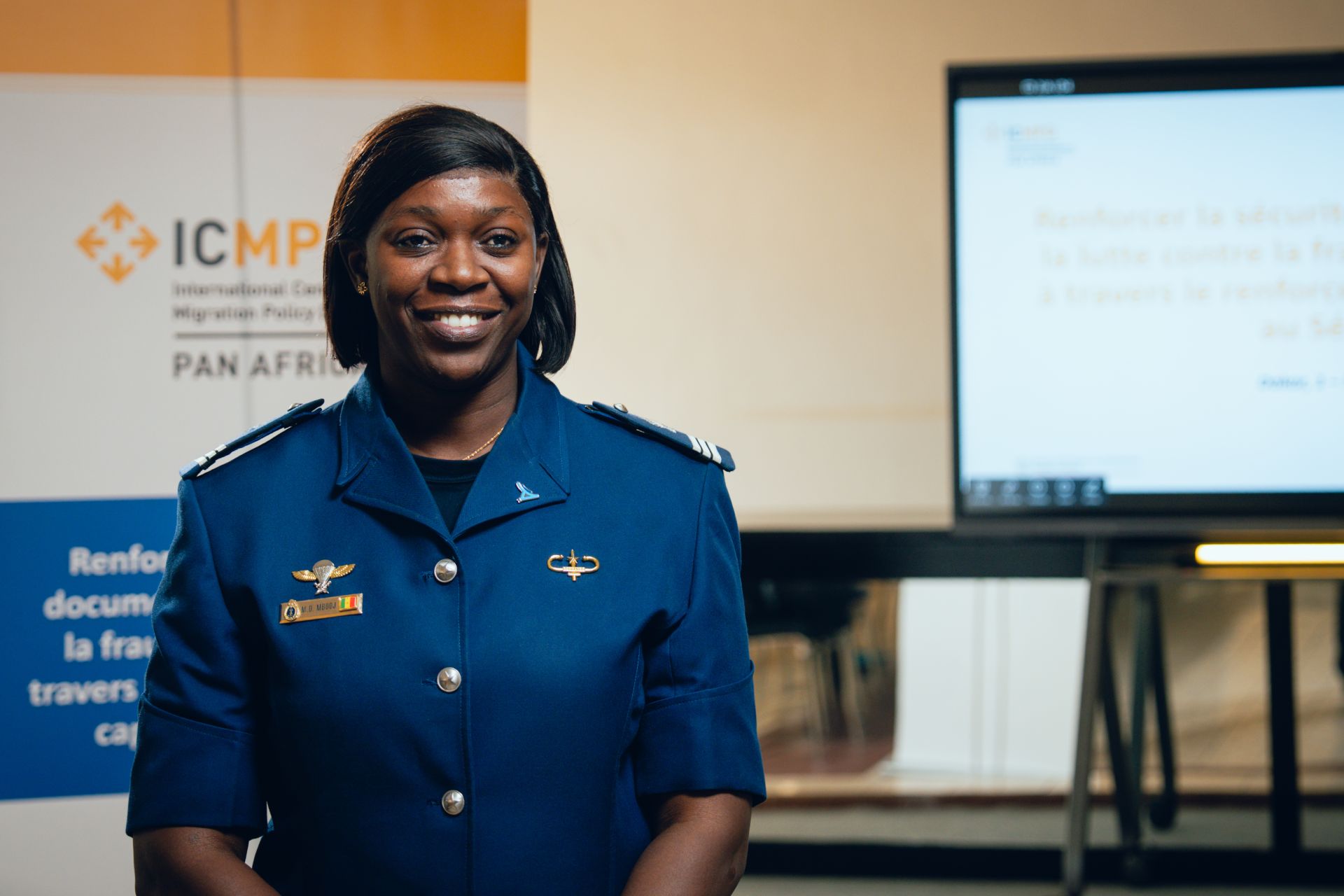
The trainings helped us develop knowledge through concrete cases that heightened our vigilance towards specific types of fraudsaid Marieme Mbodji, National Maritime Police Captain at the Special Port of Dakar.
Police Officer Adama Diouf, stationed at the Blaise Diagne International Airport, also emphasised that the programme taught him new control techniques, reinforcing his operational efficiency and knowledge of emerging fraud trends. Preliminary evaluations conducted by the CILMI in key border posts conclude that the detection rate of trained agents had already started to improve following the sessions.
The multiplier effect: how teaching can support organisational skills development
Beyond the development of technical skills, the Training of Trainers (ToT) feature of the project also promotes effective knowledge transfer. It strengthens expertise by sharing them widely across their institutions, and thus amplifies the benefits such as:
- Enhanced local ownership: as trainers are embedded within their institutions, they can adapt the [training] content to specific operational needs and local realities, such as the prevalent fraud patterns and fraudsters profiles in the region.
- Multiplying effect: technical experts become multipliers of knowledge and skills, enhancing knowledge dissemination and adaptation at a large scale.
- Sustainability: in the long-term, trainers disseminating their skills ensures that knowledge is cascaded after the end of the project’s implementation period.
For example, in Dakar last December, four of the 11 participants who completed the Vocational Train the Trainer programme put their skills into practice. After a complementary induction as accredited trainers, they are now the training providers to cover the fundamentals of document examination to 24 participants.
Reflecting on their experience, Police Sergeant Joseph Frider Faye from the National Police Force in Thiès, said: “The training allowed us to innovate in how we manage groups and carry out lessons, and exchange ideas with our colleagues on the best approaches to teach our classes.” For Police Sergeant Massamba Diakhaté from the CILMI, the programme provided important professional techniques for training and teaching; adding how the Dakar training demonstrated the effectiveness of the approach they have taken.
Indeed, there is a strong basis for further engagement in Senegal and across the wider region. The participants expressed interest for advanced training modules; addressing the use of specialised forensic equipment or emerging fraud trends, including those linked to electronic falsifications and hybrid identities. In parallel, the regional nature of cross-border mobility and fraud patterns in West Africa creates an opportunity to adapt and scale the project in neighbouring countries. Building on these solid foundations and future prospects, trainings would further contribute to upskilling border officials, enhance fraud detection, and contribute to national and regional security through secure, resilient borders.
In an era of increasingly interconnected mobility routes, effective responses to complex issues rely on joint cross-border action, strong international partnerships, and strategic use of existing expertise. People-centred training programmes that focus on local ownership are a powerful tool in sustainable transfer of skills and competencies. By combining core technical expertise with basic teaching principles, these programmes equip border officials with the tools to verify secured documents and detect fraud at border crossings points.


Massamba Diakhate, Police Sergeant, CILMI, practicing lesson delivery in Valletta, Malta, September 2025