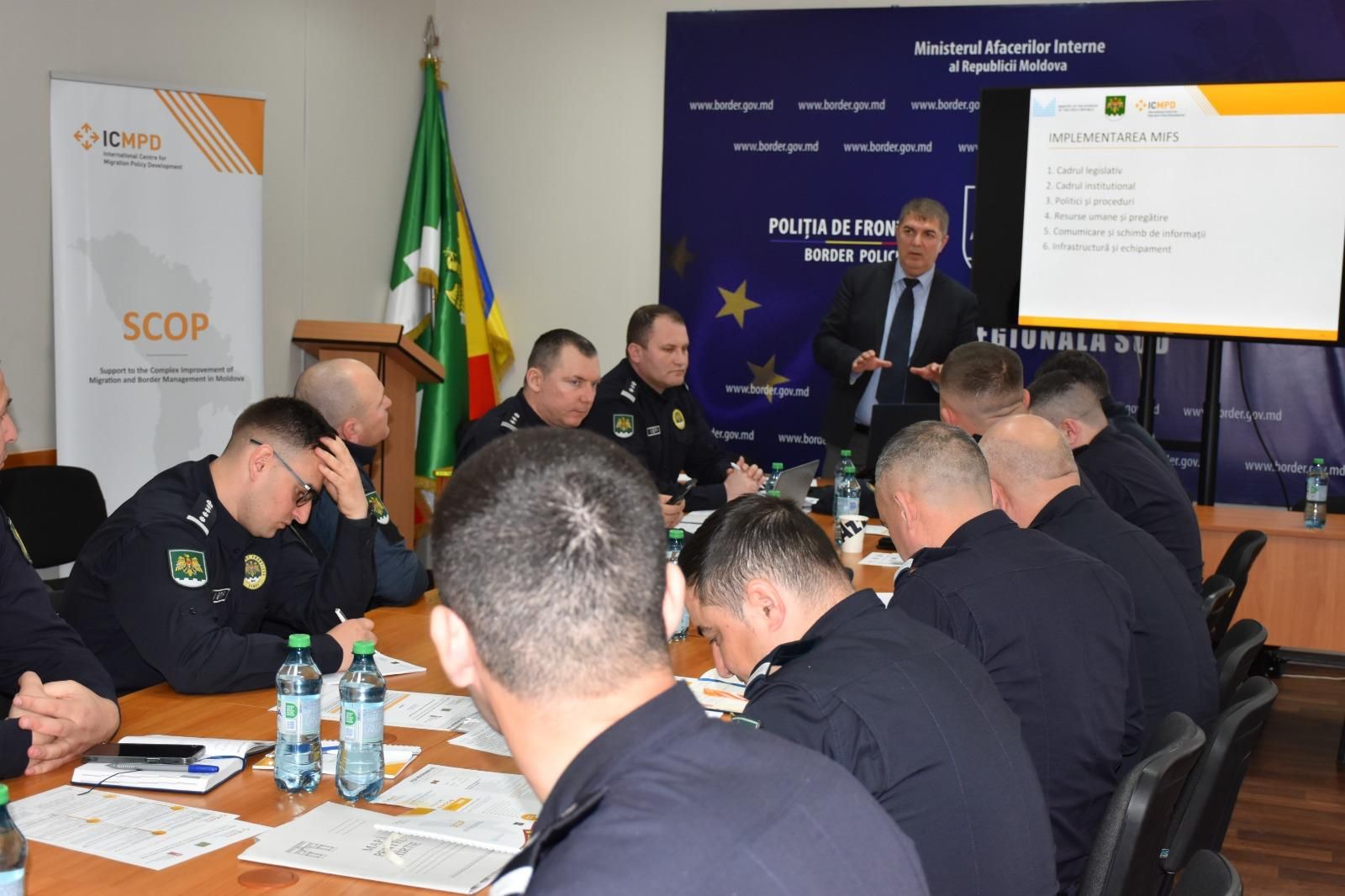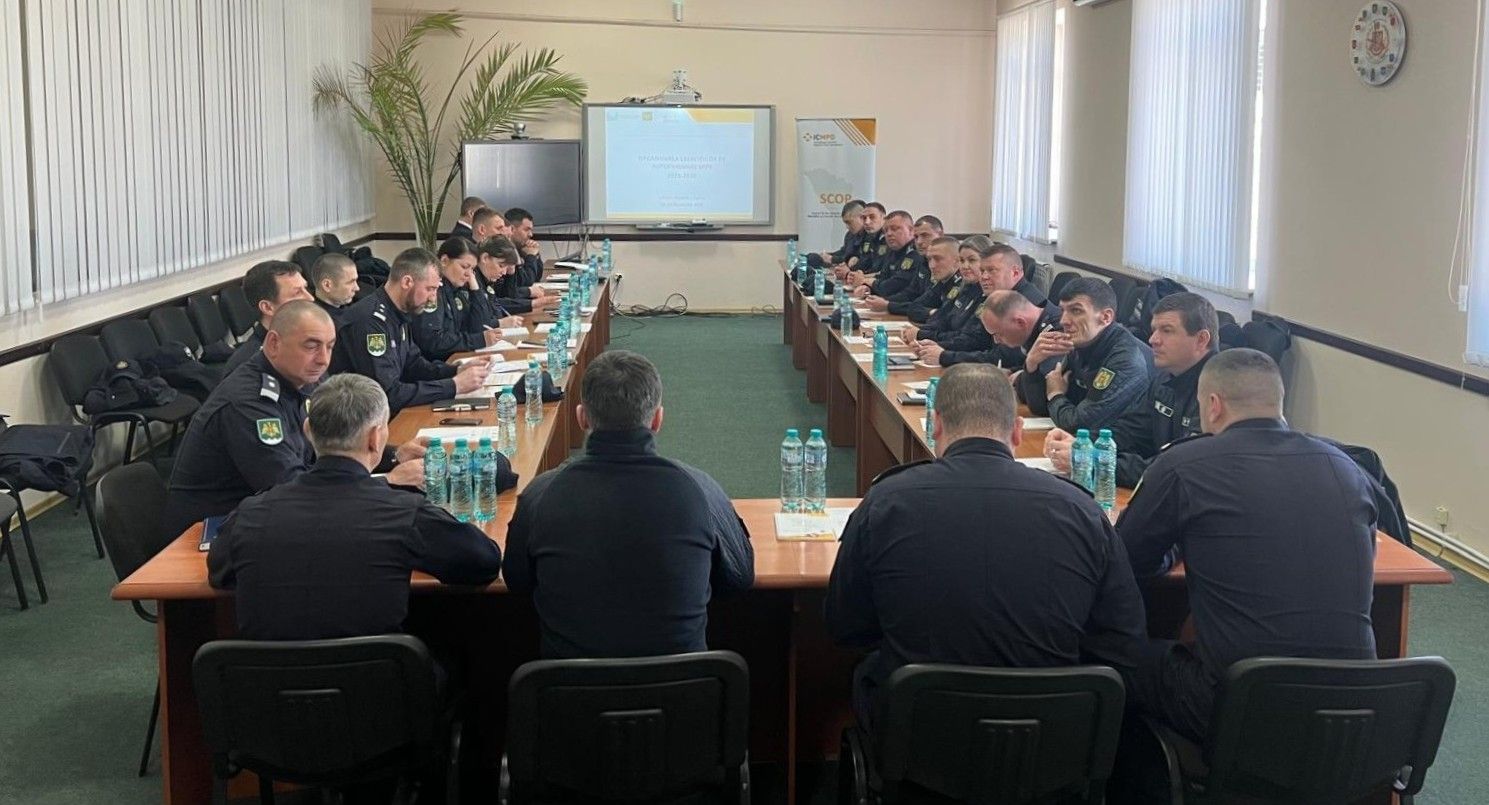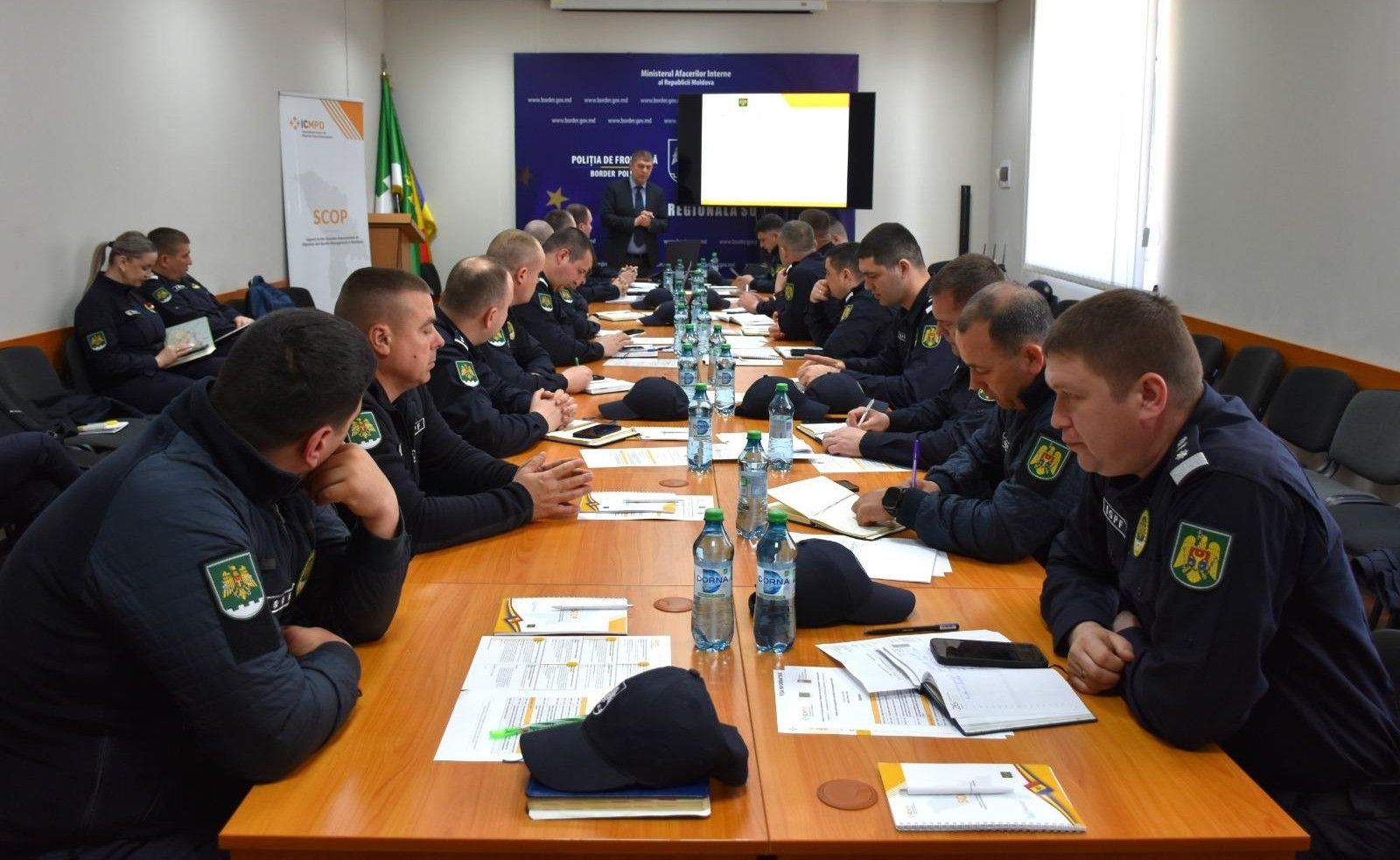
Between 23–25 March 2026, ICMPD organised three self‑evaluation workshops in Edineț, Chișinău and Cahul for the Border Police Regional Directorates, supporting the launch of the new IBM Programme 2026–2030 and Moldova’s preparations for future evaluation missions.
From 23 to 25 March 2026, the SCOP 3.1 project conducted a new cycle of workshops dedicated to strengthening the Border Police’s capacity to plan and carry out internal self‑evaluation exercises. Sessions were held in Edineț, Chișinău and Cahul and brought together representatives of all Regional Directorates.
The workshops form part of the initial measures supporting the implementation of Moldova’s new Integrated Border Management (IBM) Programme 2026–2030. In the context of the country’s recent progress in EU accession negotiations, participants explored how self‑evaluation contributes to internal quality control, early identification of vulnerabilities, and alignment with EU good practices, including the Schengen Catalogue and the Schengen Evaluation (SchEval) mechanism.
The sessions combined presentations with hands‑on discussions, case studies and peer exchange. The ICMPD expert – a career border guard with experience in SchEval missions – facilitated open dialogue with field practitioners, supported by central‑level managers responsible for control, surveillance and public order. Participants discussed tools and techniques for structured self‑assessment, including the updated evaluation questionnaire and related documentation.
In Chișinău, the Chief of the Border Police addressed participants, while the regional workshops were opened by the Deputy Director. They emphasized the importance of institutional readiness, continuous learning and standardized self‑assessment practices across all regions. They thanked ICMPD and the Ministry of the Interior of the Czech Republic for their sustained support.
Funded by the Ministry of the Interior of the Czech Republic and implemented by ICMPD, the SCOP project supports Moldovan authorities in harmonising migration and border management systems with the EU acquis. By enhancing institutional resilience and capacity, the project enables effective border management and timely responses to emerging challenges.