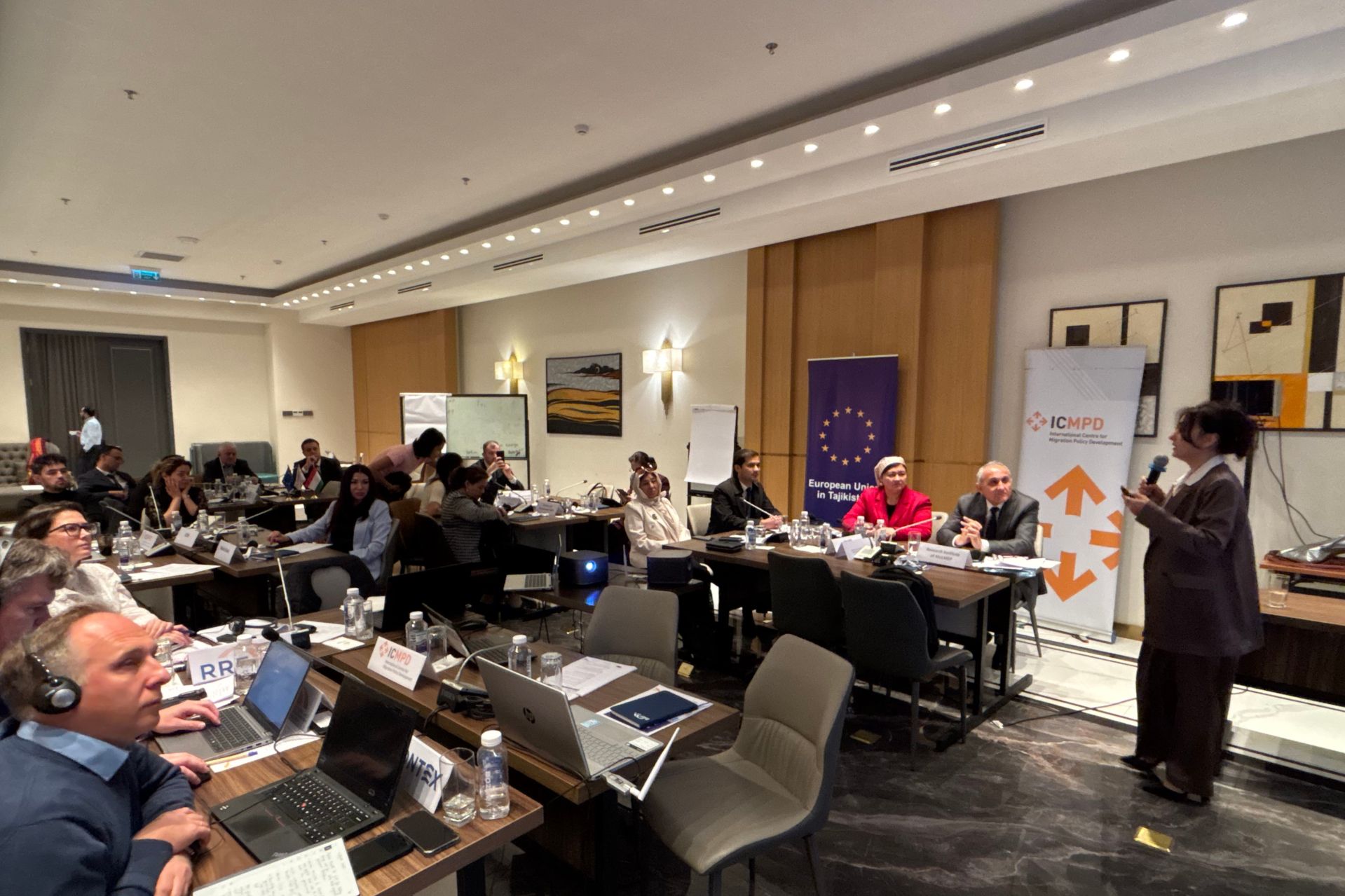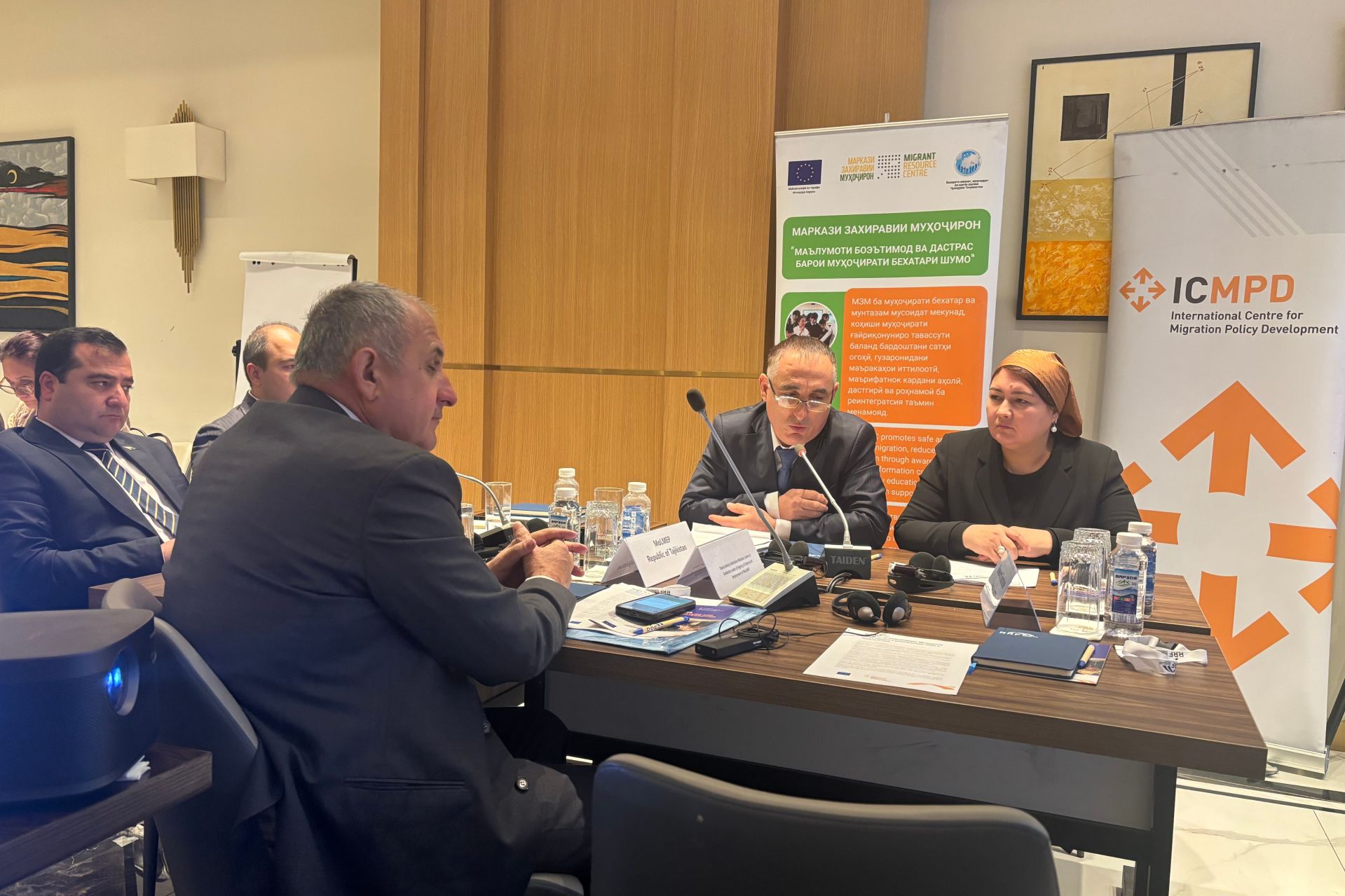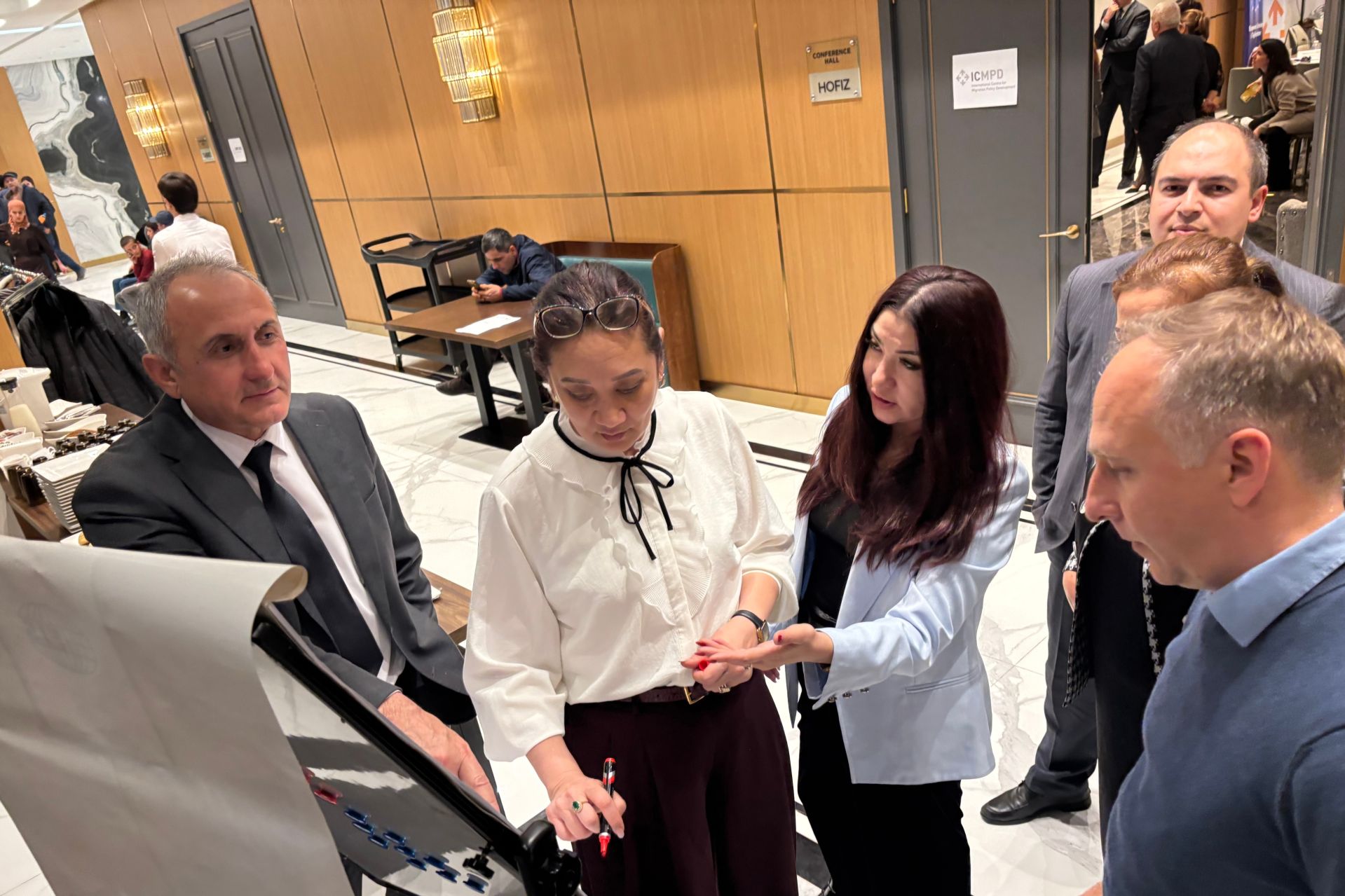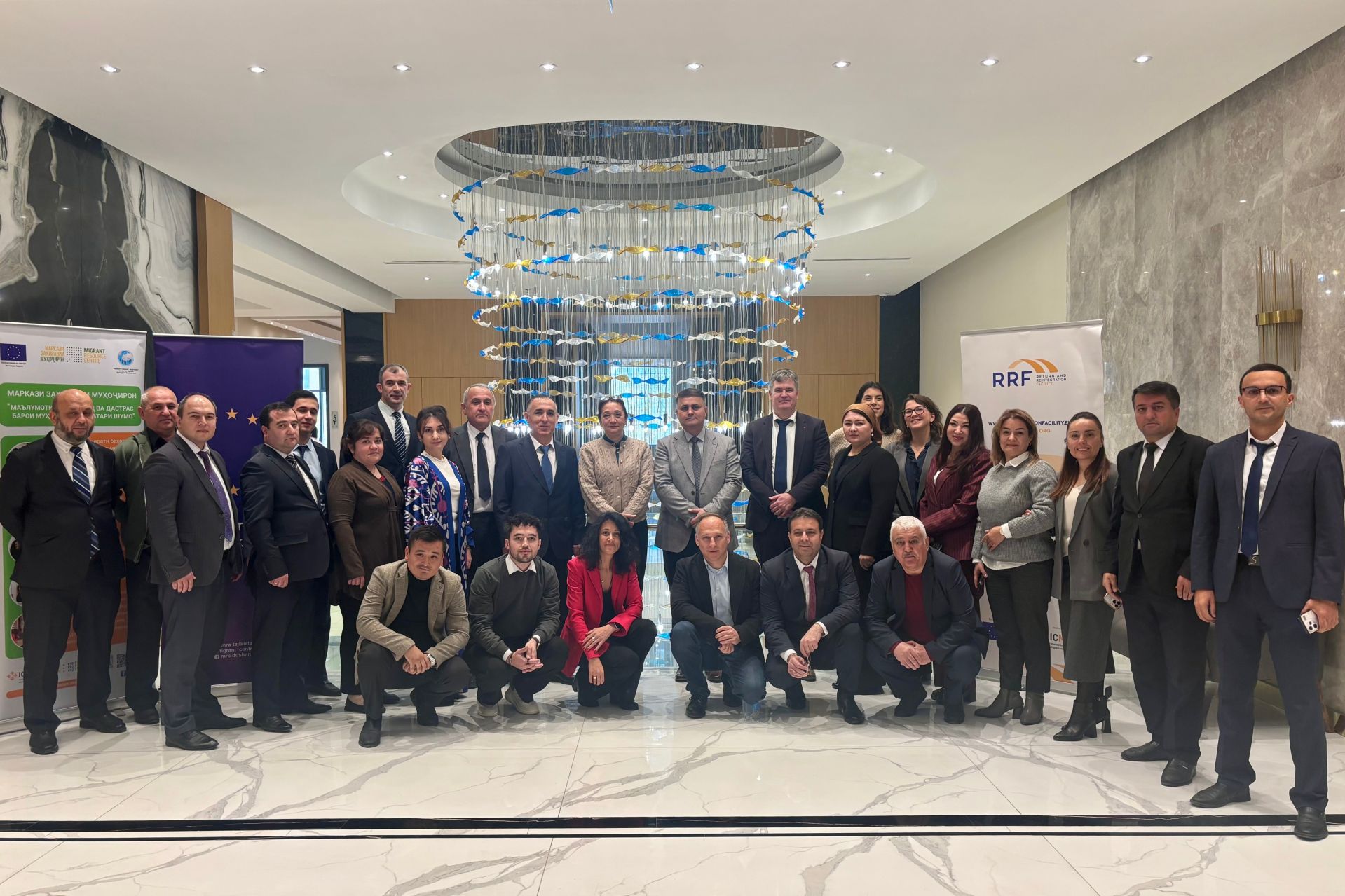
European Union and international partners, government representatives, civil society organisations, gathered in Dushanbe in December for a high-level briefing to strengthen long-term reintegration support systems for returning migrants in Tajikistan. Discussions centred on the multifaceted reintegration landscape in Tajikistan, highlighting the need for more coherent, predictable, and sustainable support for returning Tajik nationals.
Over 40 participants from the EU, national institutions and international organisation (including Frontex), development agencies, and local service providers steered a substantive dialogue on reintegration processes and programmes, and future areas for collaboration. The event was co-organised by the Return and Reintegration Facility (RRF) in collaboration with ICMPD and the Migrant Resource Centres (MRC).
Tajikistan is a vital partner to the European Union, with cooperation that extends far beyond migration to encompass connectivity, trade, and regional security. This event is one element of broader partnership grounded in mutual respect, shared priorities, and long-term collaboration.said Khudonazar Ojimammadov, Programme Manager at the EU Delegation in Tajikistan
Many of Tajik returnees have recently returned from European countries, as well as the Russian Federation and Kazakhstan, through both voluntary and non-voluntary mechanisms.
Understanding the Reintegration Landscape
Representatives from government officials, civil society partners and international actors including the EU Delegation in Tajikistan, Frontex, IOM Tajikistan, the Asian Development Bank and the World Bank delivered presentations on their work and partnerships. These sessions provided insights into current reintegration programmes, referral pathways, and opportunities for strengthening linkages between state services, non-governmental providers, and migrant support networks.
Participants engaged in working sessions aimed at identifying practical entry points for enhanced cooperation, with a view to bridging policy frameworks and frontline service delivery. Stakeholders also underscored that reintegration process goes beyond administrative return to include access to employment, education, financial services, and community support systems that help returning migrants rebuild sustainable lives at home.
Returnees are at the centre of efforts in sustainable reintegration. Programmes and interventions, or support mechanisms succeed only with individuals’ intrinsic motivation and skills they bring to the process. And ultimately, the primary responsibility for successful reintegration rests with the returnees themselves – thus underlining the human-centred approach that is critical to reintegration successes. This also reflects the key role of Frontex as a key partner in strengthening Member States’ capacity and coherence in reintegration efforts at EU-level.
Looking Ahead
The Briefing sought to deepen understanding of EU reintegration policy frameworks and explore how international best practices – including RRF-supported initiatives in Georgia – can inform Tajikistan’s evolving approach to reintegration support. Discussions also highlighted the importance of streamlined coordination mechanisms among government agencies, civil society and international partners, so that reintegration services can more effectively tailor to the unique needs of returnees and delivered through well-defined and established referral pathways.
The Reintegration Briefing in Tajikistan marked a first-of-its-kind forum in the country, setting the stage for continued multi-stakeholder engagement on return and reintegration in the region. As participants explore and exchange on future avenues for cooperation, the momentum generated in Dushanbe will inform future collaboration, including strengthened partnerships between Tajik authorities, EU Member States, RRF stakeholders, and implementing partners such as ICMPD and the MRCs.
ICMPD extends its appreciation to all the participants for their constructive contributions. Continued collaboration in 2026 will focus on translating the insights and connections created at the event into practical reintegration outcomes, with the aim of building stronger, long-term support frameworks for returning migrants.