Regional workshop in Accra translates dialogue among border and security officials into six priority actions and a practical workplan for implementation.
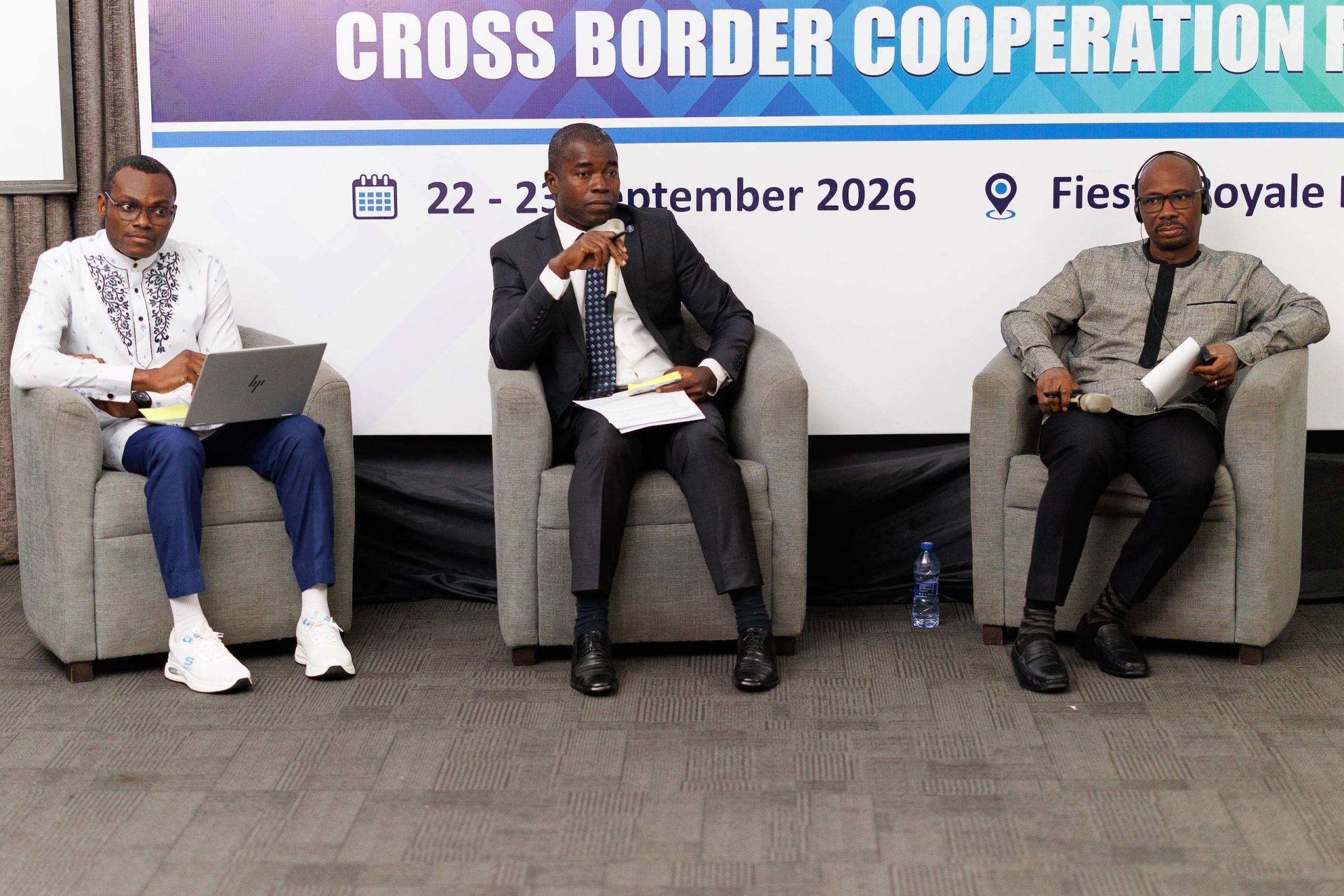
Government representatives from Benin, Côte d'Ivoire and Ghana met with officials from the Economic Community of West African States (ECOWAS), INTERPOL, GIZ and other regional and international partners in Accra on 22–23 September 2026. The Regional Workshop on Cross-Border Cooperation Frameworks examined how existing bilateral, multilateral and regional frameworks operate in practice. Participants agreed on six priority actions to strengthen cross-border cooperation.
The workshop was organised under the SHIFT Project – Strengthening and Harmonising Integrated Border Management Frameworks and Technical Capacities in West Africa. The International Centre for Migration Policy Development (ICMPD) implements the project with funding from the European Union.
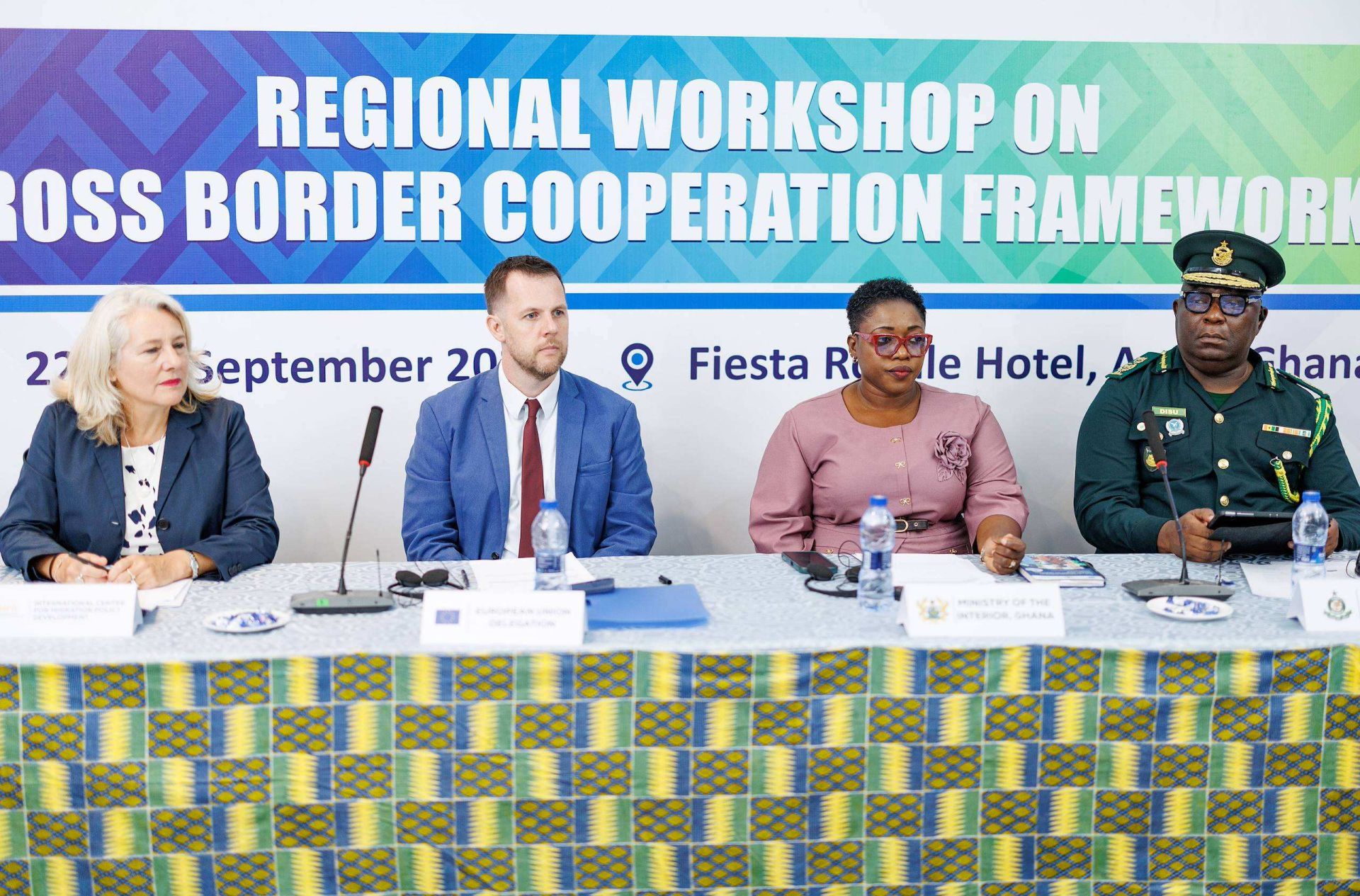
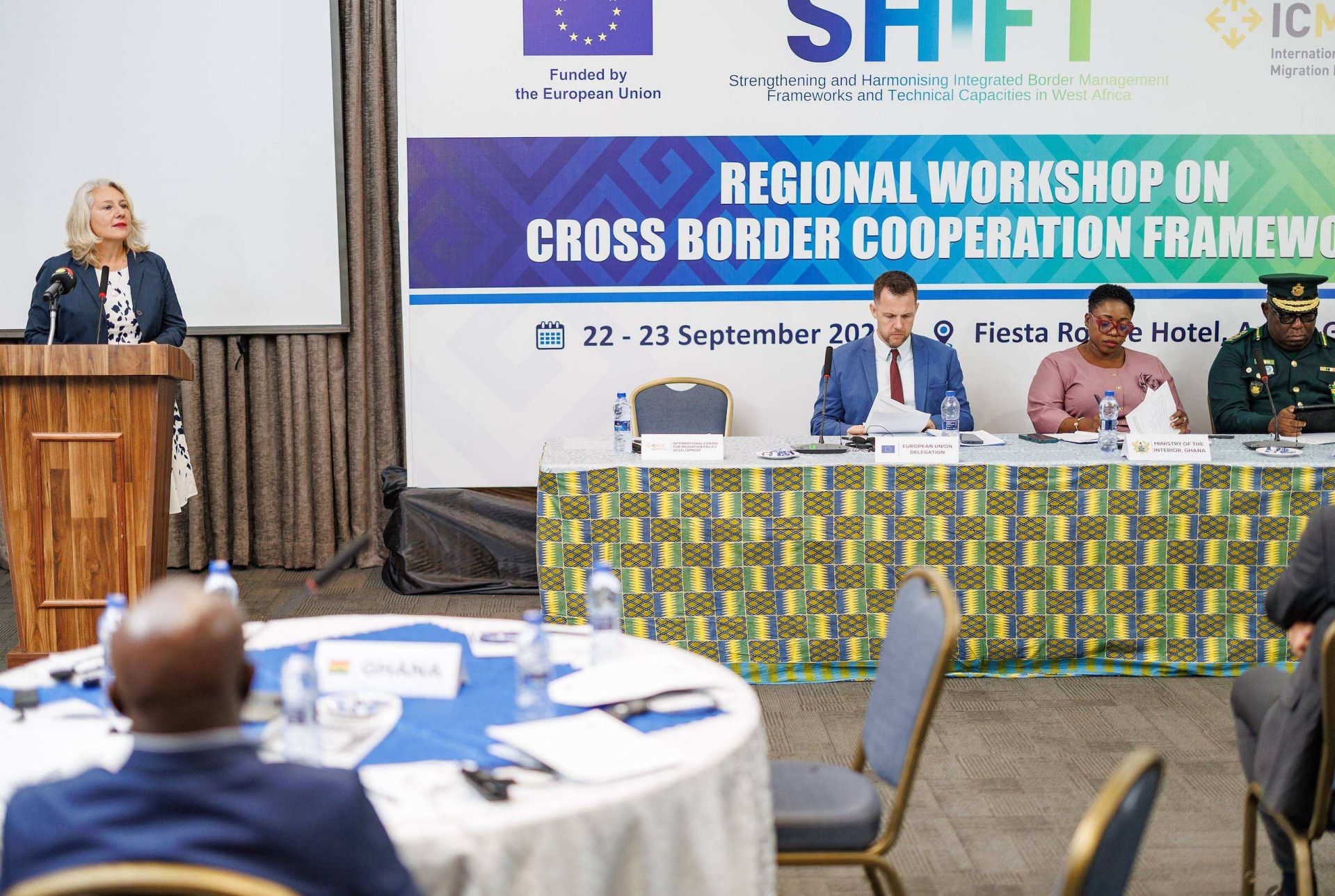
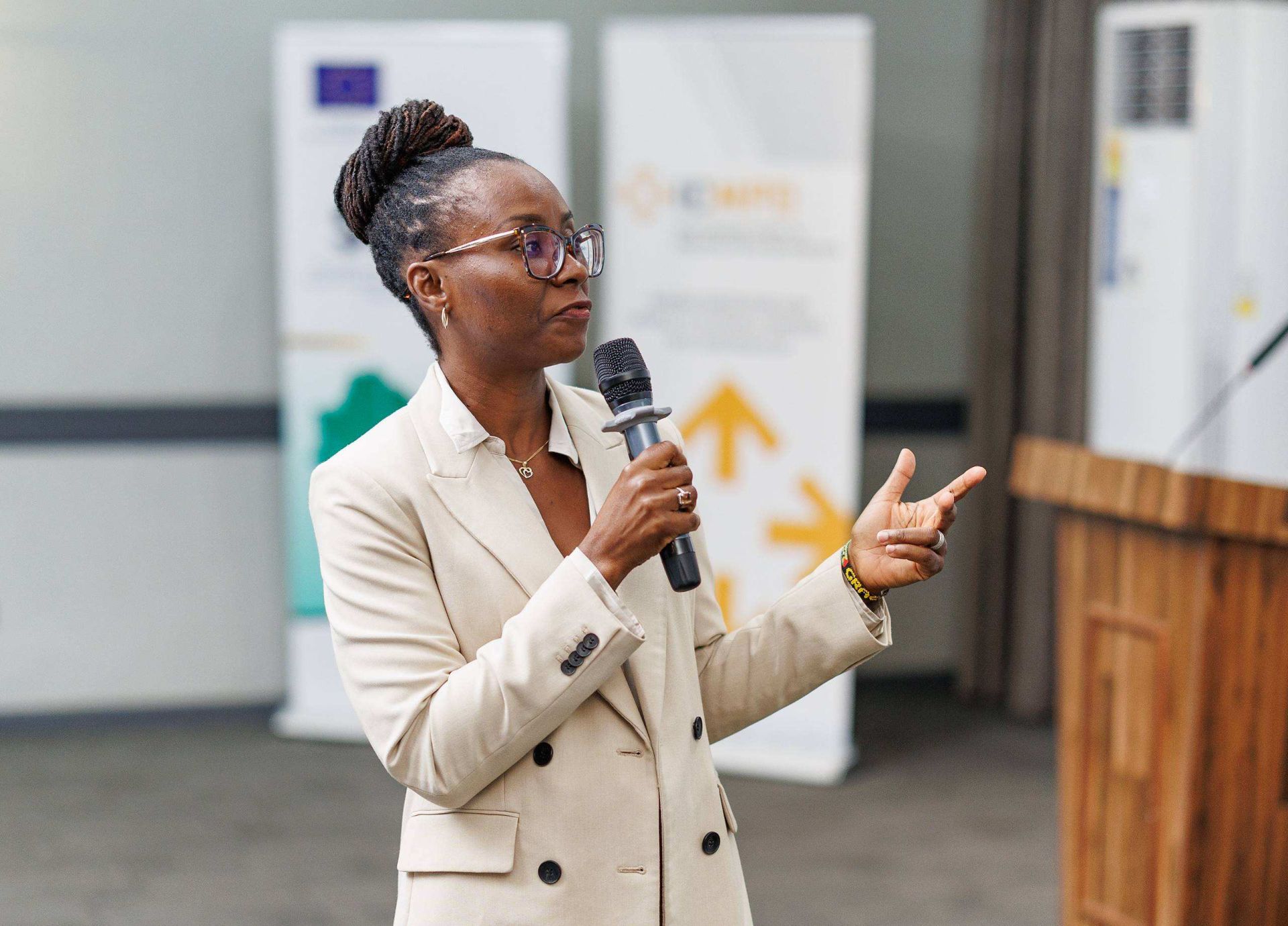
Opening the workshop, Ms Monica Zanette, Head of Region, Pan-Africa at ICMPD, set out the case for closer cooperation between neighbouring States.
At ICMPD, we firmly believe that effective border management is not achieved by one institution or one country working alone. It requires sustained dialogue, trust, coordination and practical cooperation across borders.Monica Zanette, Head of Region, Pan-Africa at ICMPD
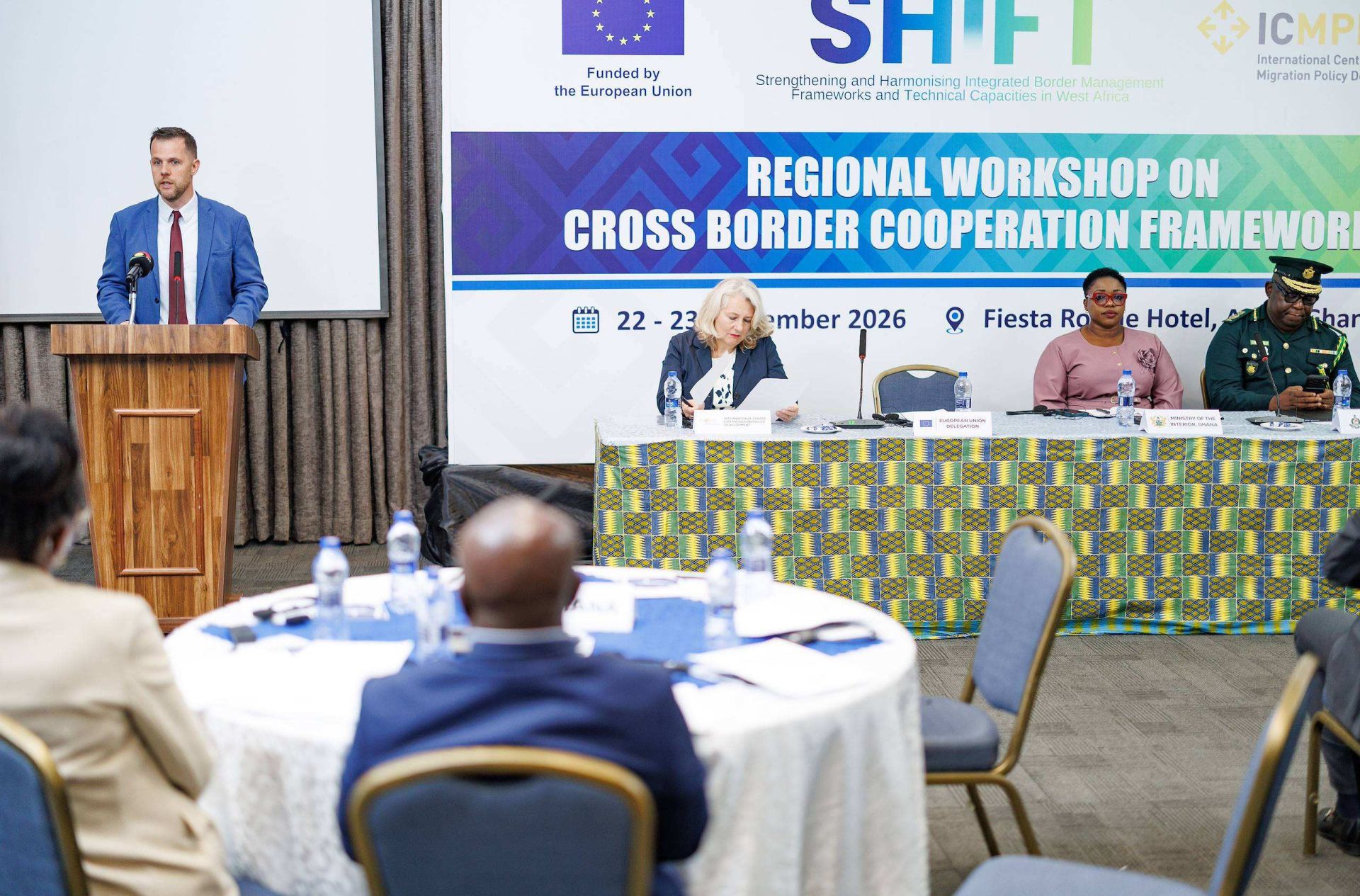
Mr Jonas Claes, Deputy Head of Mission of the European Union Delegation to Ghana, reaffirmed the European Union's role as a partner to national governments in addressing shared security challenges.
The European Union is proud to support this process. Our partnership with coastal countries in the Gulf of Guinea is rooted in a shared interest in strengthening security, promoting cooperation, and advancing regional integration based on common principles and mutual respect.Jonas Claes, Deputy Head of Mission of the European Union Delegation to Ghana
Delivering the keynote address on behalf of Ghana's Minister of the Interior, Ms Freda Agyei Asare, Director of the Migration Unit, underscored the need for ECOWAS Member States to strengthen the legal frameworks governing borders and migration processes, alongside bilateral and multilateral cooperation mechanisms. Referring to the Sustainable Development Goals (SDGs) and the Global Compact for Safe, Orderly and Regular Migration, she called on participants to move from dialogue to implementation.
Beyond the discussions over these two days, let us focus on forging the right partnerships, in the spirit of the SDGs, towards the implementation of the Global Compact for Safe, Orderly and Regular Migration, to ensure that major outcomes from this workshop do not end up only as reports, but as actionable activities.Freda Agyei Asare, Director of the Migration Unit at the Ministry of the Interior
Reviewing frameworks and implementation
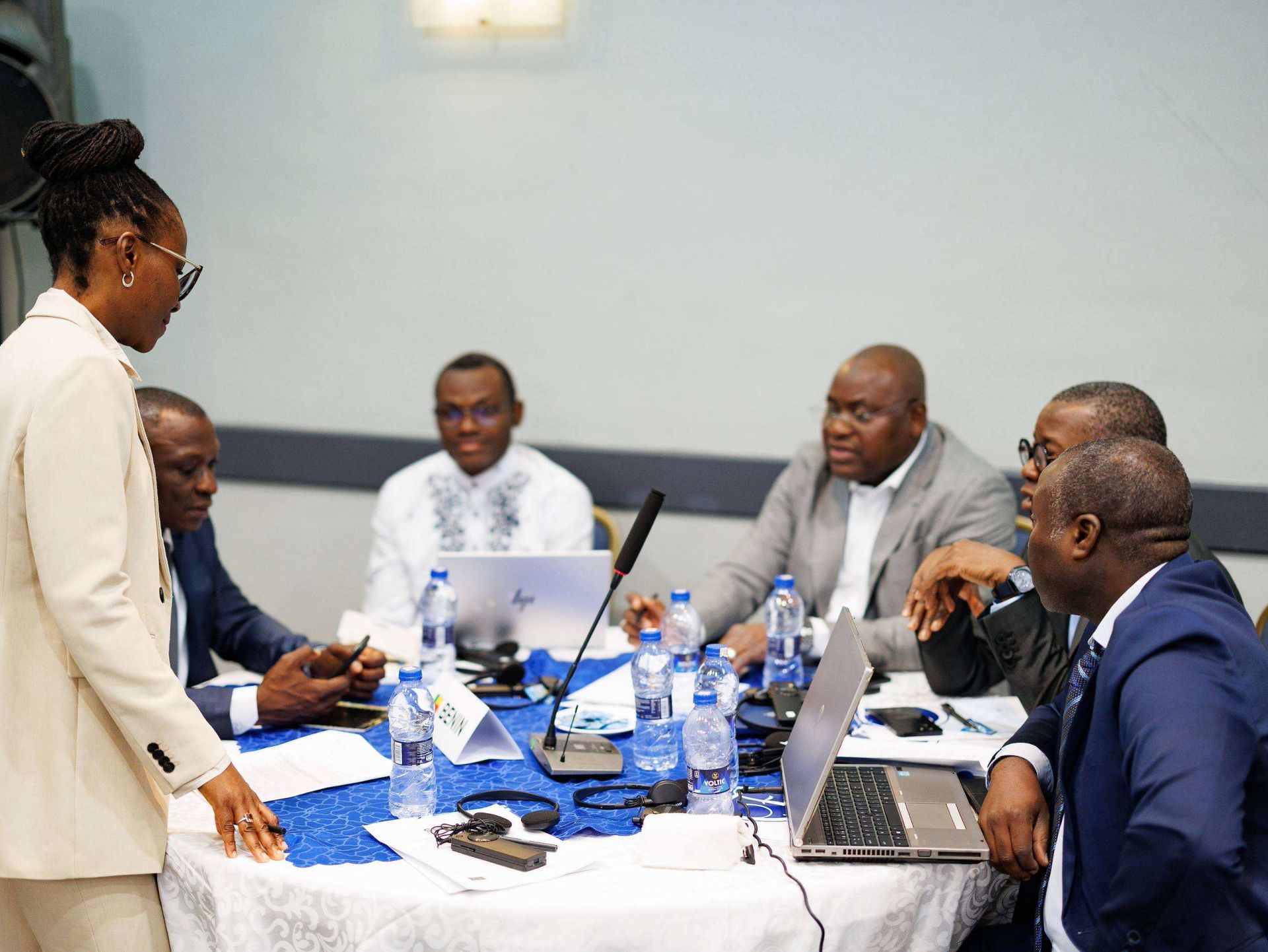
Technical sessions reviewed the frameworks that shape cross-border cooperation in West Africa, including the Niamey Convention, ECOWAS Border and Cross-Border Programmes and the West African Police Information System (WAPIS). Country representatives assessed the current status of implementation, identified persistent operational challenges and developed practical solutions with their counterparts.
Participants found that the legal and policy architecture for cross-border cooperation is largely in place, but practical implementation at national and subnational levels requires further strengthening.
Six priority actions
The workshop agreed on six actions to be pursued under the SHIFT Project:
- Interconnect customs and immigration databases, supported by clear standard operating procedures, to link goods and merchandise with responsible parties.
- Extend WAPIS to border crossing points to enhance the detection of criminals and persons of concern.
- Adopt the ECOWAS Biometric Identity Card as an acceptable travel document within the region.
- Jointly organise annual African Border Day celebrations, combining dialogue, sociocultural activities and infrastructure investment in border communities.
- Establish border community consultation platforms with designated focal points and action plans to strengthen community engagement and early warning systems.
- Define bilateral cooperation agreements to operationalise the African Union's Niamey Convention, supported by local follow-up mechanisms.
From dialogue to implementation
Following the workshop, representatives of the participating countries convened for the inaugural SHIFT Regional Project Steering Committee meeting. Ghana, as host country, and the European Union co-chaired the meeting, which laid the foundations for the project's regional governance and coordination with national-level steering committees.
The priority actions identified during the workshop were presented to the Committee and integrated directly into the SHIFT workplan. This translated the countries' shared priorities into a concrete implementation framework.