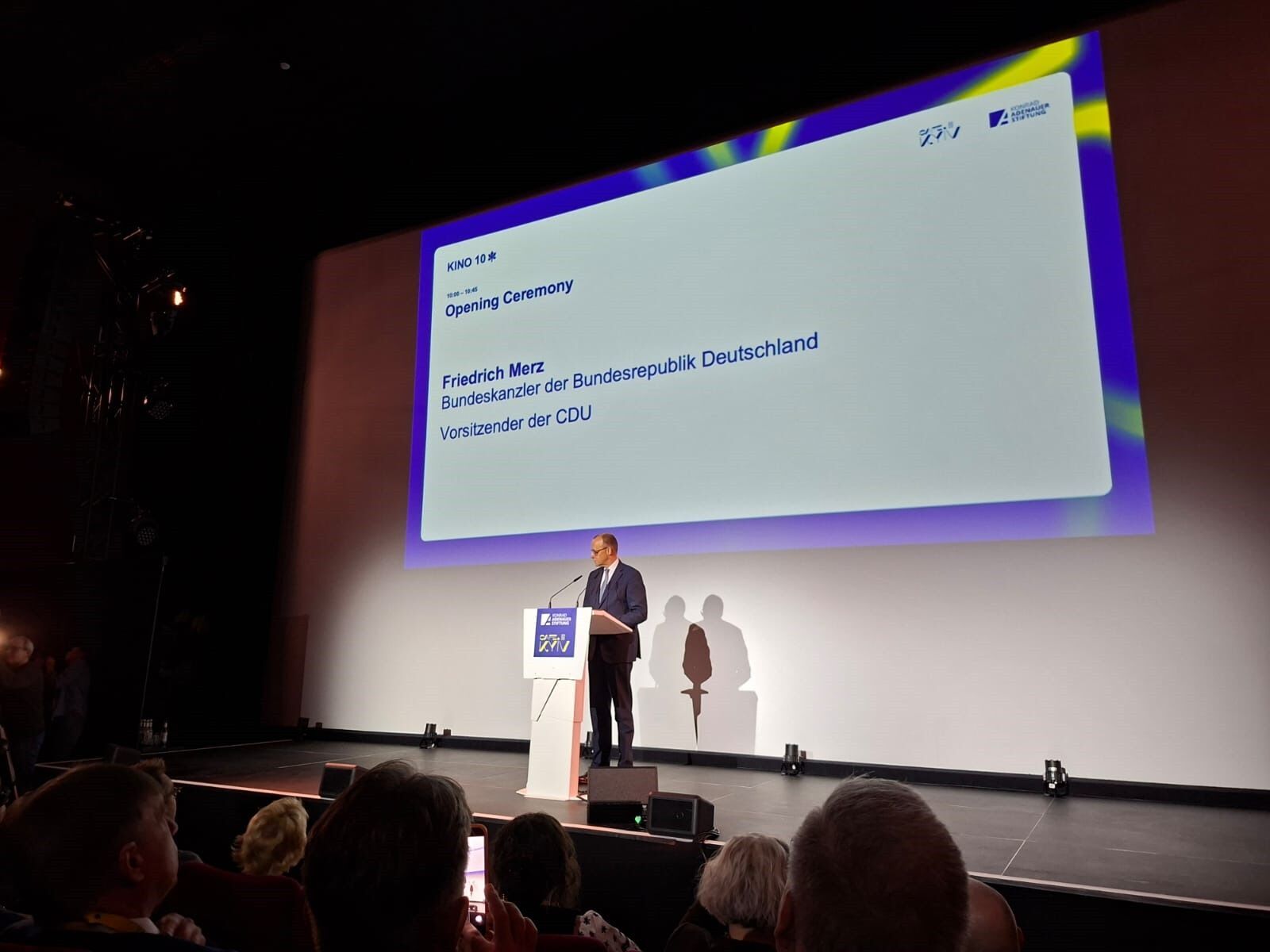
The 2026 Café Kyiv opened on Tuesday with German Chancellor Friedrich Merz calling for continued support for Ukraine. “We have supported Ukraine financially, politically, and also militarily. We have been doing so for four years, and we will continue to do so. [We need] peace in Europe that is not dictated to Ukrainians and Europeans, but one that we shape together,” Chancellor Merz said.
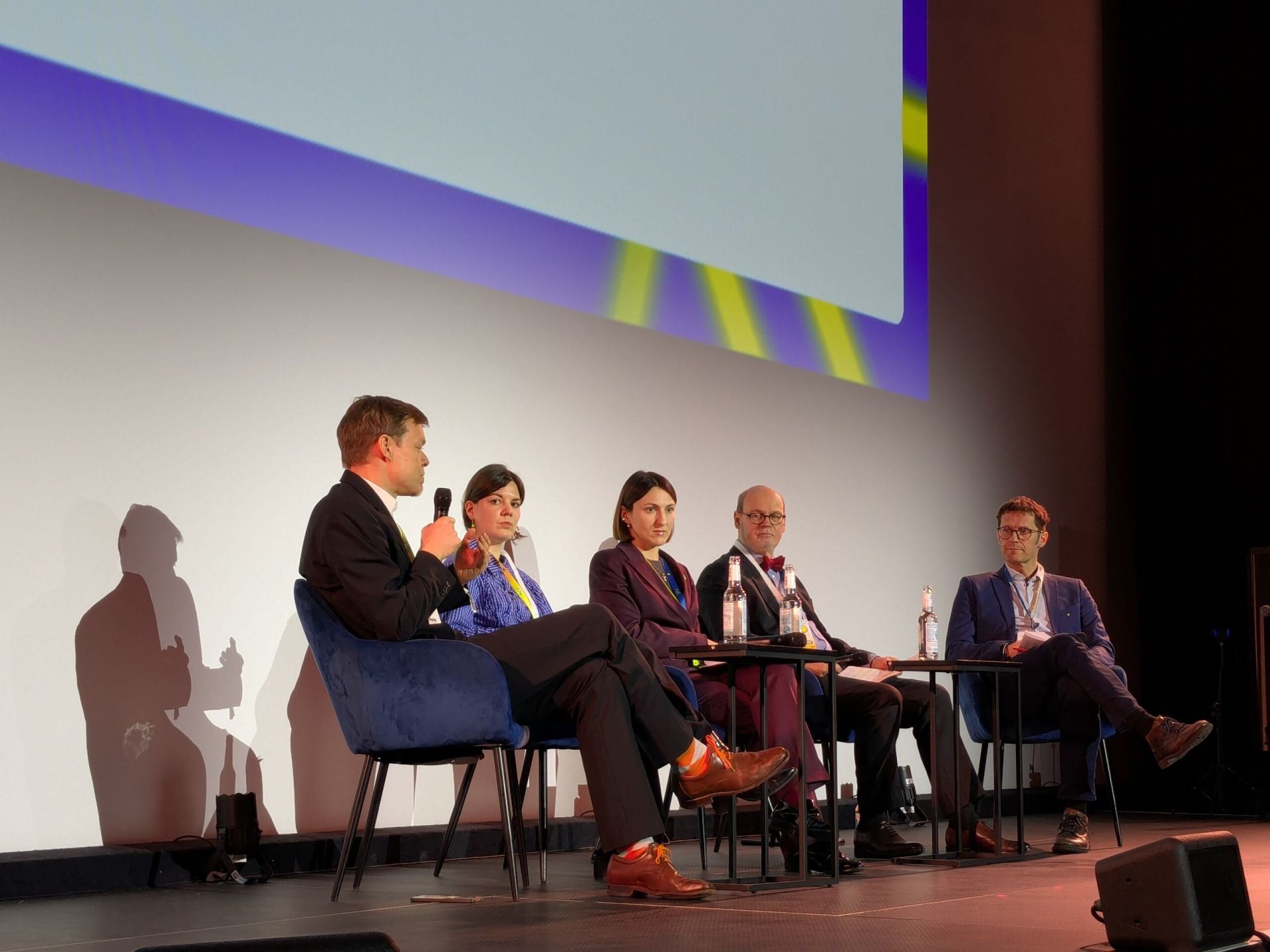
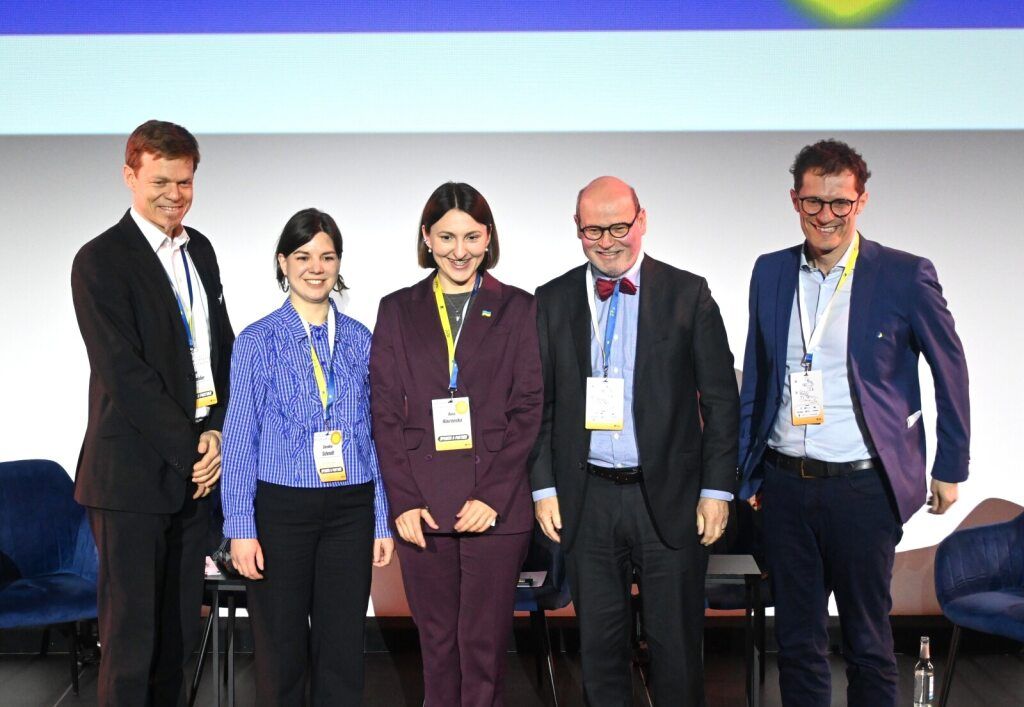
Following the opening by Mr Merz, ICMPD Senior Policy Advisor Martin Wagner joined Ukraine’s Deputy Minister of Social Policy, Family and Unity Ilona Havronska; Hans-Ulrich Benra, Head of Task Force Ukraine at the German Federal Ministry of the Interior; and Jan Schneider, Expert Council on Migration and Integration; with Caroline Schmidt of the Konrad-Adenauer-Stiftung moderating the panel discussion. As Temporary Protection is set to end in March 2027, the panel discussed Ukraine and EU Member States’ key question now: whether for Ukrainians to take another residency status, find employment and qualify for long-term or permanent stay, or return home.
Deputy Minister Havronska said her country has developed an action plan in response to the looming end of TP in March 2027.
We discussed the possibility of the end [of temporary protection], but conditions for return are not yet in place because as you see, security is a decisive factor in any return decision. At the same time, it is our responsibility for our government to be prepared. We are working on action plans to prepare our timeline by March 2027 – with the understanding that anything can change at any time.she emphasised
Mr Wagner added that when Temporary Protection was triggered as a common approach, it was not so clear how to come out of [TP].
What is at stake for the Ukrainians across the 27 EU countries – with each having a different approach – is to think of how to transition from TP into either another residency status to remain; or to prepare for return, when this is possible.Mr Wagner said, summing the panel’s theme, From emergency to uncertainty: What comes after Temporary Protection for Ukrainians?
A Policy Brief was published by Mr Wagner last year, outlining seven ways for displaced Ukrainians to transition from their TP status in the EU into various possible scenarios. This coincided with last year’s European Council Recommendation that provided guidance to Member States on next steps, but which still leaves significant discretion at national level and do not offer a uniform pathway beyond Temporary Protection.
Meanwhile, Mr Benra emphasised that once Temporary Protection ends and TP holders have not transitioned to another, longer-term residency status, they would have to leave the country.
Do not wait for the last minute, lest we burden the system with a large number of last-minute applications. People who want to stay, and are eligible, should seek advice about their options already now – including finding a job and transitioning to a residency status.Mr Benra said at the discussion
The panellists also discussed how Ukrainians can be prepared and informed for when TP ends; with a focus on preparedness, policy choices, and shared responsibility in navigating the transition from an emergency regime to more durable solutions.
Since the full-scale invasion, ICMPD’s Member States (such as Germany, Poland, Czechia) have been host to the largest numbers of Ukrainians. As a response beginning in early-2023 ICMPD has been managing the Ukrainian Consultation Centres to support the displaced Ukrainians domestically – including on information on legal, social, and administrative matters; as well as on concerns and questions regarding transitioning out of TP.
The annual Café Kyiv gathered this year again hundreds of thematic experts and researchers, journalists, institutional donors and government partners, and civil society organisations – all in support of Ukraine and the 4.3 million displaced Ukrainians in the EU.