When the first Migrant Resource Centre opened in Pakistan, Syed Umer Wazir Shah was one of its first Counsellors. Ten years on, he helps oversee a network of MRCs across Pakistan and into regional initiatives in Afghanistan and Sri Lanka.
Umer describes the MRC as a bridge. "For migrants, it is a bridge to reliable information and safer choices. For government institutions, a bridge to communities and citizens who need guidance. For donors and partners, a bridge between policy objectives and real impact on the ground."
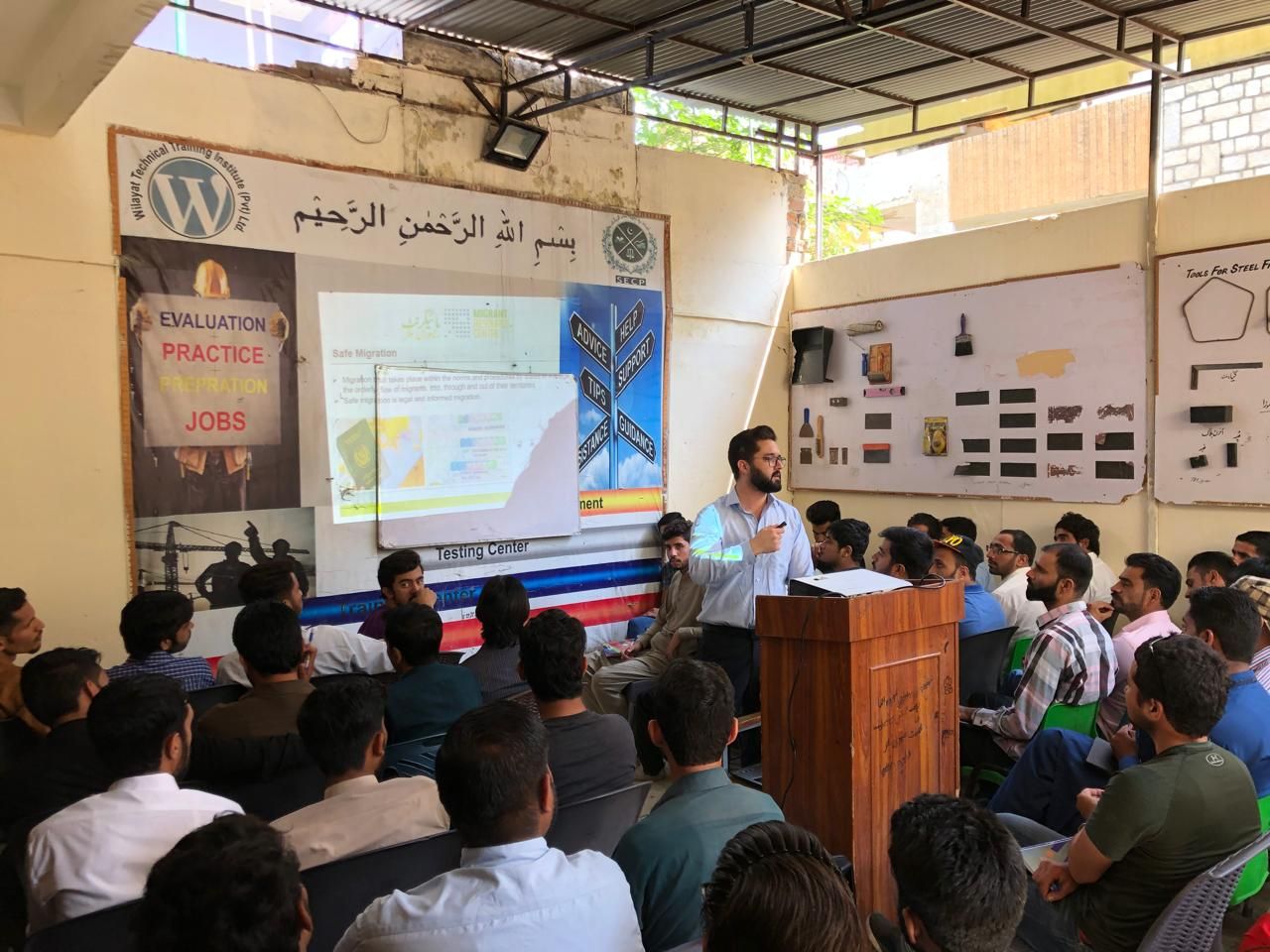
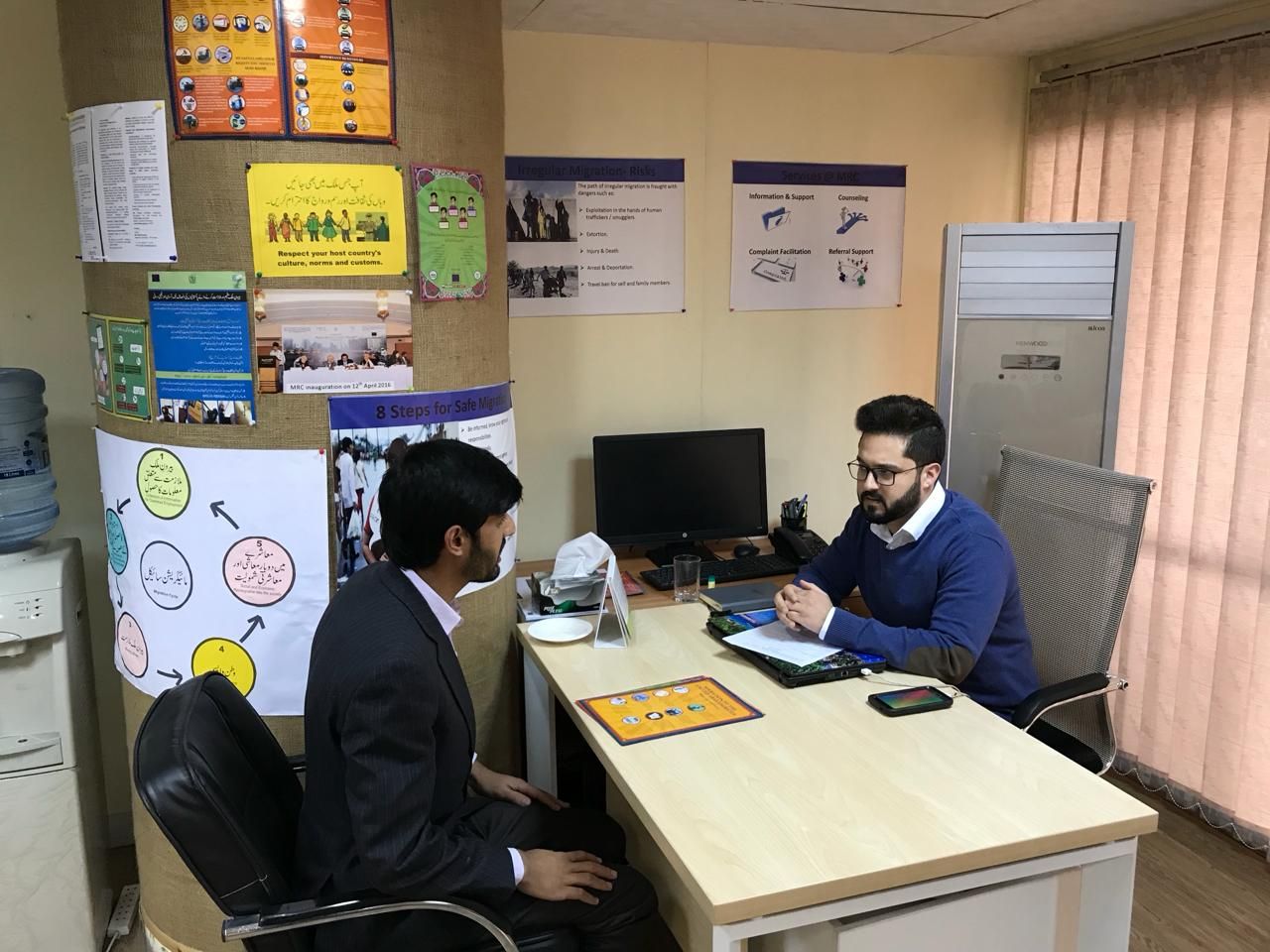
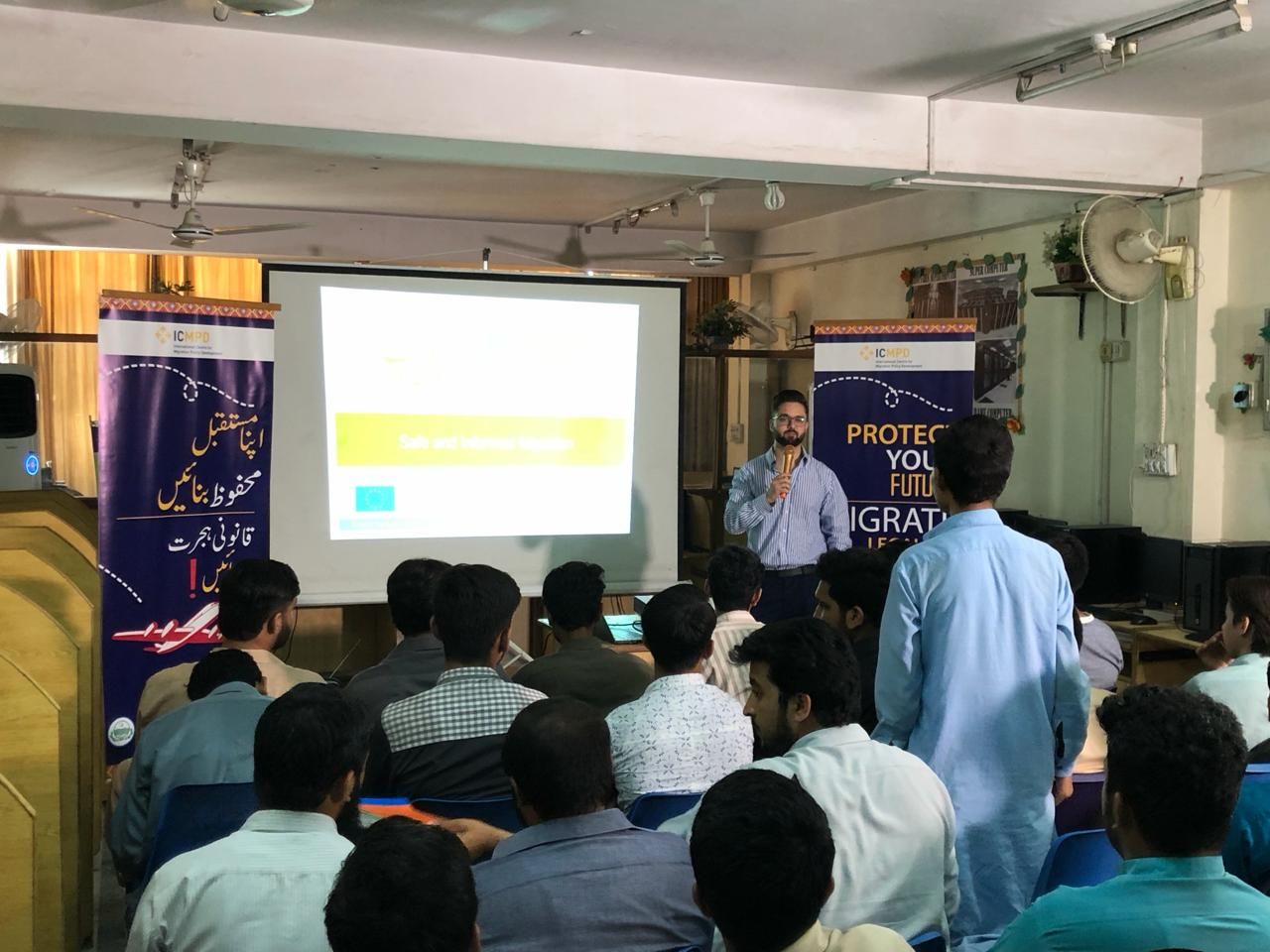
Ten years ago, that bridge was only an idea. A dedicated centre where migrants, returnees and their families could get free, reliable, practical information about migration did not exist in Pakistan. At the time, the idea was new to Pakistan, and Umer's early work centred on building awareness of what the MRC offered. He helped set up the model on the ground: coordinating with government counterparts, running outreach activities and pre-departure briefings, and building the partnerships the centre would depend on.
As the model grew, so did Umer's role. His transitioned from Counsellor to Coordinator brought him his first team; and a more structured hand in delivery, just as the network itself began to grow beyond a single centre. As awareness spread, so did the range of issues people brought through the doors: legal migration pathways, fraud prevention, support for people in difficulty abroad, return and reintegration.
His responsibilities also grew beyond Pakistan. He supported the launch of the MRC in Sri Lanka, contributing to implementation and leading social media for the new centre — proof, he says, that the expertise built at the MRC Pakistan could travel and adapt.
One highlight stands out for him: the launch of the Soft Skills Training Module in Pakistan, supported and owned by the Ministry of Overseas Pakistanis and Human Resource Development. Umer was entrusted to lead and support its implementation. What made the moment special was not only the launch itself; it was the level of ownership the Government of Pakistan took for the initiative. Watching the Ministry recognise the value of soft skills for outgoing migrant workers, and support its wider roll-out, remains one of the proudest moments of his MRC journey. For him, it showed how MRC work can move beyond direct counselling and awareness-raising into a more institutionalised, lasting contribution to migration governance.
Umer has also come a long way: Now as Project Officer, Umer supports a three-country portfolio covering Pakistan, Afghanistan and Sri Lanka, he oversees implementation, coordination, and partner engagement across three projects including PROTECT, preparatory work for PARIM-III, and MRC in Sri Lanka. That is a long way from one MRC where he started.
His portfolio’s growth also comes with higher expectations and a wider scope, demanding more planning, coordination, teamwork, and trust in the people around him.
He still draws heavily on his years as a Counsellor, which keep him grounded in the purpose of the work even as his role becomes more strategic. Thus, he believes the MRC's people-centred approach is still its greatest strength: "If someone receives the right information at the right time, they may avoid unsafe routes or exploitation. That is what makes this meaningful."
Umer watched the MRC grow from an idea into a cross-regional network; not just a project or an office, but a model shaped by the people who built it. His vision for the next decade is clear: MRCs fully embedded in national governance systems, reaching not just major cities but migration-prone districts and communities. He sees the MRC accompanying migrants across their whole migration cycle — before departure, during their time abroad, and after return — using digital tools, labour market data, and stronger links to skills institutions to reach the right people at the right time.
For Umer, the foundation is already there. The 10th anniversary, he says, is not only a milestone for an institution; but also for everyone who believes that migration should be safe, informed and dignified. It is personal for him, too, marking the distance between being a Counsellor in Islamabad and now as Project Officer who helps shape the future.
My journey mirrors that of the MRC itself: from one centre and one frontline counselling role, to a wider national and regional platform supporting migrants, communities and institutions.he says.