In global development, civil society expertise and active community engagement are vital for the success of partnerships. This is evident how, in 2025 and only in just a few months, 29 civil society partners of the Migration and Mobility Dialogue (MMD) Grant Facility have organised and launched seven projects across 25 African countries and two in Europe. In cultivating local community development, these projects also showcase the work and expertise of civil society organisations (CSOs) at an international level through conferences and high-level meetings
Marking its first year of the Grant Facility, ICMPD published an illustrative Retrospective Report that highlights the key milestones since the Facility was officially launched in March 2025. It features the success in bridging the gaps between policy and practical application, connecting CSOs together and with ICMPD’s dialogue platforms, and empowering them in their active role in migration diplomacy.
Monica Zanette, head of ICMPD’s Pan-Africa Region, says the MMD Grant Facility is not only a tool that supports migration initiatives; it also empowers CSOs in their role in Africa-EU migration diplomacy, reinforcing South-South and South-North partnerships.
The Grant Facility anchors within the Support Programme to the MMD and strongly aligns with the priorities of EU institutions; as well as those of our European and African partners. It enables us and our partners to translate migration policy commitments into tangible action and strengthens engagement of African civil society.Ms Zanette says.
Casting a wider net for impact
In the year since, the MMD Grant Facility’s civil society partners have produced 29 research products across the region. In Benin, Burkina Faso, Côte d'Ivoire, Mali and Togo, the OUESTAF project provides trainings that combine research, advocacy, capacity-building and improving coordination and protection to better communicate on migration governance issues. The media plays a key role in combatting misinformation that put (potential) migrants at risk and providing reliable information for better decision-making among their audiences. Project partners WeWorld and WILDAF-AO bring journalists and bloggers together with civil society to highlight better communication practices towards preventing irregular migration, human trafficking and migrant smuggling, and advancing the protection of youth and women in the region.
The project SAFE-MIT, likewise, ran a series of successful social media campaigns with local partners in Kenya, Morocco, Nigeria and Senegal; including The Migrant Project banner under the Seefar Foundation. In parallel, four non-government organisations in Ethiopia, Uganda, Tunisia and the Gambia received trainings on designing and implementing awareness campaigns on issues such as migrant smuggling and human trafficking.
Meanwhile, the Spanish Red Cross and Niger Red Cross are providing support on family reunification, healthcare, and assistance to victims of gender-based violence to over a thousand recipients. In Burkina Faso, along with the national Red Cross, they provide medical consultations, psychosocial support, hygiene kits and non-food items, information materials, and referrals to specialist services for almost 500 persons in need, so far. The PROMISE project provides comprehensive protection and assistance to migrant communities in vulnerable host communities, providing inclusive and context-specific support.
In East Africa, the MECMEA project traces the nexus between migration and climate. It produced a regional synthesis on the links between climate change, human rights, conflict, and migration trends in East Africa and the Horn of Africa; and an interactive public dashboard on climate-induced mobility.
There are also engagements with national governments and civil society partners, along with international and EU partners. In Cabo Verde, a mission organised by project partner FORIM led to a meeting with President José Maria Neves. The discussions led to a tripartite cooperation protocol between the Cabo Verdean Government, FORIM, and the Federation of Cabo Verdean Associations in France.
The look ahead: multiplied reach for civil society
The Retrospective Report shows how in 2025 the Grant Facility started creating and consolidating the partnerships: as projects are being implemented, civil society is increasingly making tangible impact and providing solutions for their communities, institutions and policymakers. It also spotlights the Facility’s direction for the coming years in strengthening engagement with partners and expanding its network to enable more organisations to amplify impact on the ground.
While the MMD Support Programme has been running for more than a decade now, the year-long milestones of the Grant Facility demonstrate the versatility and community-focused approach in its projects. In parallel, it is also a year since the Facility established the Community of Practice, which is designed to continuously tailor projects to the specific needs of partners and beneficiaries. Through this, civil society partners share their progress, highlight the challenges they face, and better collaborate in identifying synergies and opportunities together.
[One] would think that a project on protecting unaccompanied minors, and another on dialogue between authorities and diasporas, have nothing in common. The Community of Practice proves the opposite: through sustained exchanges, common ground and complementarities emerge along with transferable ideas. In practical terms, this opens pathways for synergies and joint initiatives.says Adel Abdédaïm, Coordinator for Connect’Diasporas implemented by FORIM, one of the civil society project partner-beneficiaries of the Grant Facility.
Connect’Diasporas has had field missions in Cabo Verde and the Republic of Congo; and facilitated diplomatic meetings between diaspora communities in the EU, and their respective [EU] host countries.
The current projects – and counting – demonstrate the Grant Facility’s threefold added value to the work not only of ICMPD; but more broadly, its partners and beneficiaries. They translate policy and research work to concrete, impact-driven action, connect CSOs together and with ICMPD-facilitated Dialogues (such as the C2CMMD project; the Rabat Process and Khartoum Process), and ultimately, advance the role of CSOs in broader migration diplomacy and dialogues.
From combatting human trafficking and migrant smuggling to enhancing protection and asylum, advancing legal pathways while promoting sustainable reintegration, addressing climate and mobility nexus while empowering diaspora communities across continents, to promoting peace – the success of a whole-of-route approach hinges on the institution’s ability to operationalise systems on the ground.
Such milestones, while often steered through high-level, official engagements, are also driven by the ground-level work of implementors: civil society actors and NGOs. The Retrospective Report not only highlights those milestones and future engagement; it also humanises the response to the gaps and challenges, the political will and cooperation, the complementarity of expertise and local knowledge, and the innate consultative nature of migration governance.


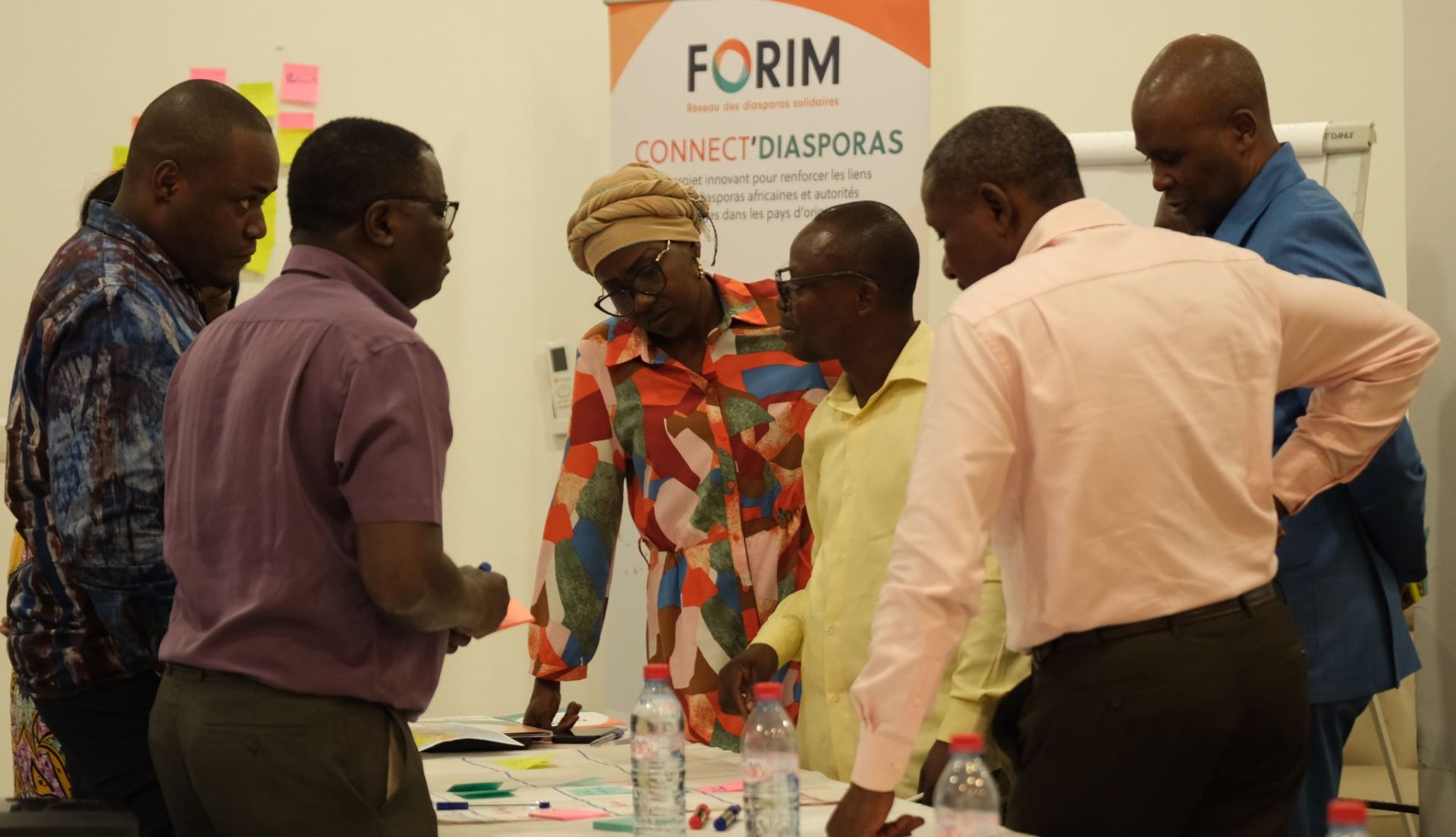
![Connect’Diasporas: On March 16, 2026, a cooperation protocol was signed between the Government of the Republic of Cape Verde, the Federation of Cape Verdean Associations in France [FACF], and FORIM, officially recognising the diaspora as a strategic actor in national development. This initiative paves the way for more structured, sustainable, and operational collaboration.](https://www.icmpd.org/var/site/storage/images/_aliases/full/8/0/6/9/1259608-1-eng-GB/4676f2cd38b4-8.-Connect-Diasporas_2026_cooperation-protocol-signed.jpg)
SAFE-MIT: Awareness-raising activities on irregular migration in secondary schools in Kenya (February 2026).