true

Charting Pathways: Navigating migration prospects among youth in the Kurdistan region of Iraq

Policy Brief

Published 16.05.2024

Iraq

#Irregular migration #Reintegration

Summary

This policy brief examines the migration intentions and informational landscapes of potential Kurdish irregular migrants, emphasising the information gaps and needs, especially about migration pathways and risks. 
 

Cultivating talent: Exploring effective talent attraction and retention practices in and beyond the EU

Study

Published 16.05.2024

#Capacity Building #Labour Migration

Summary

New study commissioned by the Migration Partnership Facility highlights the current challenges and opportunities regarding talent attraction and retention policies in the EU and beyond. Featuring examples of national strategies and practices from all over Europe, the research piece provides a comparative snapshot along with 10 action-driven recommendations.

Irregular pathways: Probing migration dynamics in Iraq and the significance of information campaigns

Study

Published 16.05.2024

Iraq

#Irregular migration

Summary

This study aims at providing a comprehensive overview of the research project conducted in the Kurdistan Region of Iraq between October 2023 and February 2024.

Seeking Sanctuary: Information Needs and Migration Prospects for Afghan Nationals in Pakistan

Policy Brief

Published 17.05.2024

Pakistan

#Irregular migration

Summary

This policy brief aims at understanding the current context for Afghans in the country, examining the policy frameworks that regulate their potential onwards migration to Europe, and discussing policy conclusions for the establishment of safe, orderly, and regular migratory channels and effective policy responses targeting this population.

Best Practices in Diaspora Engagement for Azerbaijan

Study

Published 07.05.2024

Azerbaijan

#Diaspora Engagement

Summary

This paper aims to advise the Azerbaijani government on better engaging their diaspora. It covers good diaspora engagement practices in general as well as in selected countries. Additionally, it includes lessons learned after the COVID-19 pandemic and presents the kinds of support that can be given to members of the diaspora in times of crisis.

Migration Textbook

Working Paper

Published 07.05.2024

Azerbaijan

Summary

The present migration textbook provides a comprehensive overview of the migration field, exploring its historical roots, current trends, and future prospects. It covers a wide range of issues from across the migration spectrum, including the causes and consequences of migration, the experiences of migrants, the social and economic impacts of migration on sending and receiving countries, and the policies governing migration.

ICMPD Migration Outlook Silk Routes 2024

Document

Published 08.05.2024

Afghanistan / Bangladesh / India / Iran (Islamic Republic of) / Iraq / Pakistan

Summary

The regional Silk Routes Migration Outlook zooms in on ICMPD’s global outlook released earlier this year. It takes a closer look at the events that shaped the region and provides an outlook on the possible impact they may have on mobility and migration. The report takes stock of events or policy developments and their ripple effects on displacement across the region’s focus countries: Afghanistan, Bangladesh, India, Iran, Iraq and Pakistan. 

Guardianship Solutions and Services for Unaccompanied and Separated Children under Temporary Protection in the EU: The case of Ukrainian children

Working Paper

Published 07.05.2024

#Temporary Protection

Summary

This paper aims to shed light on the different guardianship models and practices that have been developed and implemented within the European Union (EU) for unaccompanied and separated children (UASCs) who have fled Russia’s invasion of Ukraine. The review draws particularly on the findings of a prior project publication which analysed Poland’s approach to the administration and delivery of guardianship solutions and services for Ukrainian UASCs since 2022.

Manual for Early Identification of Potential Victims of Trafficking in Human Beings, Child Sexual Abuse and Child Sexual Exploitation

Study

Published 27.05.2024

#Research #Trafficking in human beings #Migration good governance

Summary

The Manual serves as a practical tool for early identification of potential victims of trafficking in human beings (THB) and child sexual abuse or exploitation (CSA/E). It targets frontline responders who, during their daily work, might detect potential and actual victims of THB and/or CSA/E and refer them to relevant support services.


Authors: Elena Petreska (ICMPD), Edgar Federzoni dos Santos (ICMPD), Madalina Lepsa - Rogoz (ICMPD), Ivanka Hainzl (ICMPD), Ishrat Shamim (CWCS), Sergio Rivera Reyes (RENACER), Claudia Álvarez Conde (UCM), Raquel Barras Tejudo (UCM), Carlos Brito Siso (UCM), Jana Dilger (TRI), and Melita Gruevska Graham (ICMPD).
FIMAS Sonderauswertung Vorarlberg

Study

Published 15.04.2024

#Research #Integration and social cohesion #Labour Migration

Summary

Die vorliegende Sonderauswertung beleuchtet die Situation der Arbeitsmarktintegration von Geflüchteten aus den Herkunftsländern Syrien, Afghanistan, Irak und Iran in Vorarlberg. Insgesamt nahmen im Zeitraum von 2018 bis 2022 in Vorarlberg 440 Personen an der FIMAS-Befragung teil – per Online-Fragebogen sowie durch telefonische Befragung. Ein Teil der Befragten nahm an mehreren Wellen teil – insgesamt umfasst die Vorarlberg-Stichprobe dadurch 512 Befragungsdatensätze – von Geflüchteten unterschiedlicher Herkunft, Geschlecht und Alters, und zu unterschiedlichen Zeitpunkten ihrer jeweiligen Integrationsverläufe.

Vienna Migration Conference Report 2023

Document

Published 18.04.2024

#Policy #Migration narratives and public opinion #Dialogues #Migration and development #Migration good governance

Summary

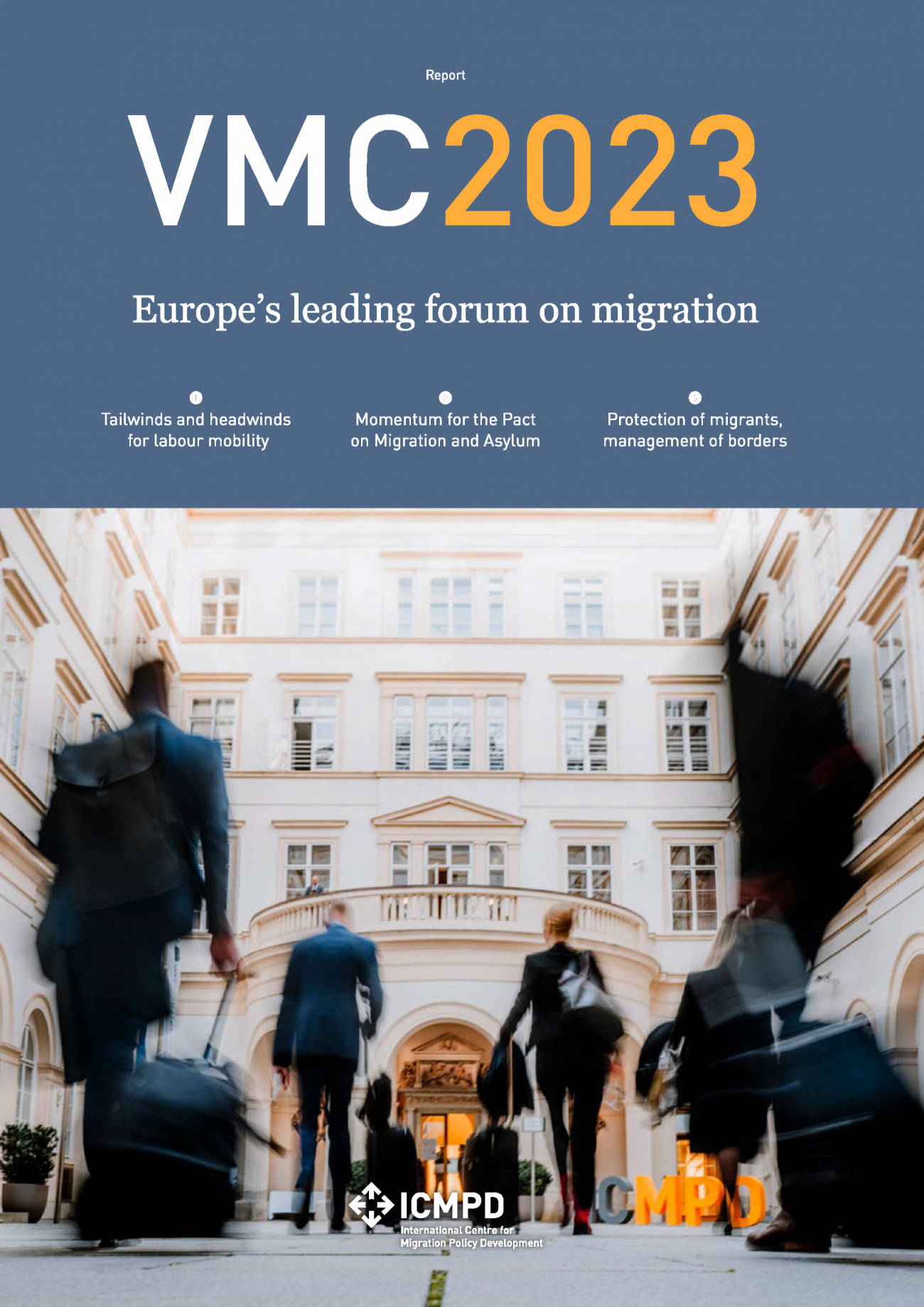
The Vienna Migration Conference 2023 (VMC2023) brought together international leaders, practitioners, and experts at the Palais Niederoesterreich on 10-11 October 2023, for two days of discussions on critical current and future issues in migration governance in Europe and beyond.

Integrating youth perspectives in migration policy processes – Diaspora Youth Recommendations

Document

Published 15.07.2024

#Migration and development #Migration good governance #Diaspora

Summary

This publication presents recommendations from diaspora youth on including youth perspectives in migration policy processes. It is the result of a co-drafting process between youth diaspora representatives, organised by the EU Global Diaspora Facility, and covers recognition of youth expertise, access to funding and inclusion in governance structures.

Mobility and labour dynamics after the EU Year of Skills: Are we fit for the future?

Policy Brief

Published 16.07.2024

#Migration and development #Legal and labour mobility #Policy

Summary

In 2023, an estimated 3 in 4 European employers struggled to find skilled employees. As the EU’s working-age population is expected to continue to decrease, existing gaps will become even harder to fill. Yet, over the same period, working-age populations are estimated to increase in many African, Asian, and Latin American countries. In this context, our latest policy brief aims to foster debate on enhancing skills mobility as a global priority and offers recommendations for EU and national policymakers as well as other key actors. This brief results from a project conducted by ICMPD with the European Policy Centre (EPC), the Egmont Institute and the Belgian Development Agency, Enabel, in the context of the EU Year of Skills.

Migration Curriculum

Working Paper

Published 13.06.2024

Azerbaijan

Summary

The Curriculum was developed based on the Migration Textbook produced within the EU-funded project “Support to the Implementation of the Mobility Partnership with Azerbaijan (MOBILAZE 2)” implemented by the International Centre for Migration Policy Development (ICMPD). The Curriculum was designed for the needs of academia as well as beyond, such as the Regional Training Centre on Migration (RTCM) of the State Migration Service in Azerbaijan (SMS) and training centres of related migration authorities and relevant non-state organisations. Its use is intended not only for academia but also for non-academic environments to provide updated information on migration management in Azerbaijan amongst relevant stakeholders.

Challenges related to the reception of unaccompanied children from Ukraine in Poland – legal representation issues

Study

Published 17.06.2024

Ukraine / Poland

#Asylum, refugees and international protection #Policy

Understanding and supporting female immigrant labour: Comparing the cases of Jordan and Norway

Study

Published 17.06.2024

Jordan / Norway

#Policy #Integration and social cohesion #Asylum, refugees and international protection #Legal and labour mobility

Impacts of Russia’s War in Ukraine on Migration in Central Asia

Policy Brief

Published 02.07.2024

Summary

This Policy Brief explores the status quo of migration in and out of Central Asia two years since Russia invaded Ukraine, focusing on anticipated and unexpected developments that continue to shape migration realities in this part of the Prague Process region. 

Ministerial Conference of the Salzburg Forum

Speech

Published 26.06.2024

Austria

#Irregular migration #Migration and development #Trafficking in Human Beings

Re-balancing Migration Narratives: Key Lessons on Communication from EUROMED Migration V

Working Paper

Published 06.06.2024

#Dialogues #Migration narratives and public opinion

Summary

This report overviews and discusses the key findings from the original research of the EUROMED Migration V programme on migration narratives in the Euro-Mediterranean region. Each report was dedicated to a different facet of migration narratives and each offering an original contribution that can help communicators offer a more balanced set of migration narratives.

Emigration narratives: what migrants believe and why it matters

Working Paper

Published 06.06.2024

#Dialogues #Migration narratives and public opinion

Summary

Why do some people choose to migrate and some people not? Why are some willing to do so via irregular channels and some unwilling?  Answering these questions allows us to design better interventions to achieve migration policy objectives such as “safe, regular, and orderly migration”. It also helps us answer profound scientific questions using the timeless yet increasingly important case of migration. Given the salience, uncertainty, complexity, risk and novelty of migration—as well as its emotive and valuedriven nature—we can expect narratives to play a powerful and rich role in emigration decisions. This report builds on recent findings and cutting-edge data to investigate the role of narratives in affecting variation in various forms of migration behaviour.

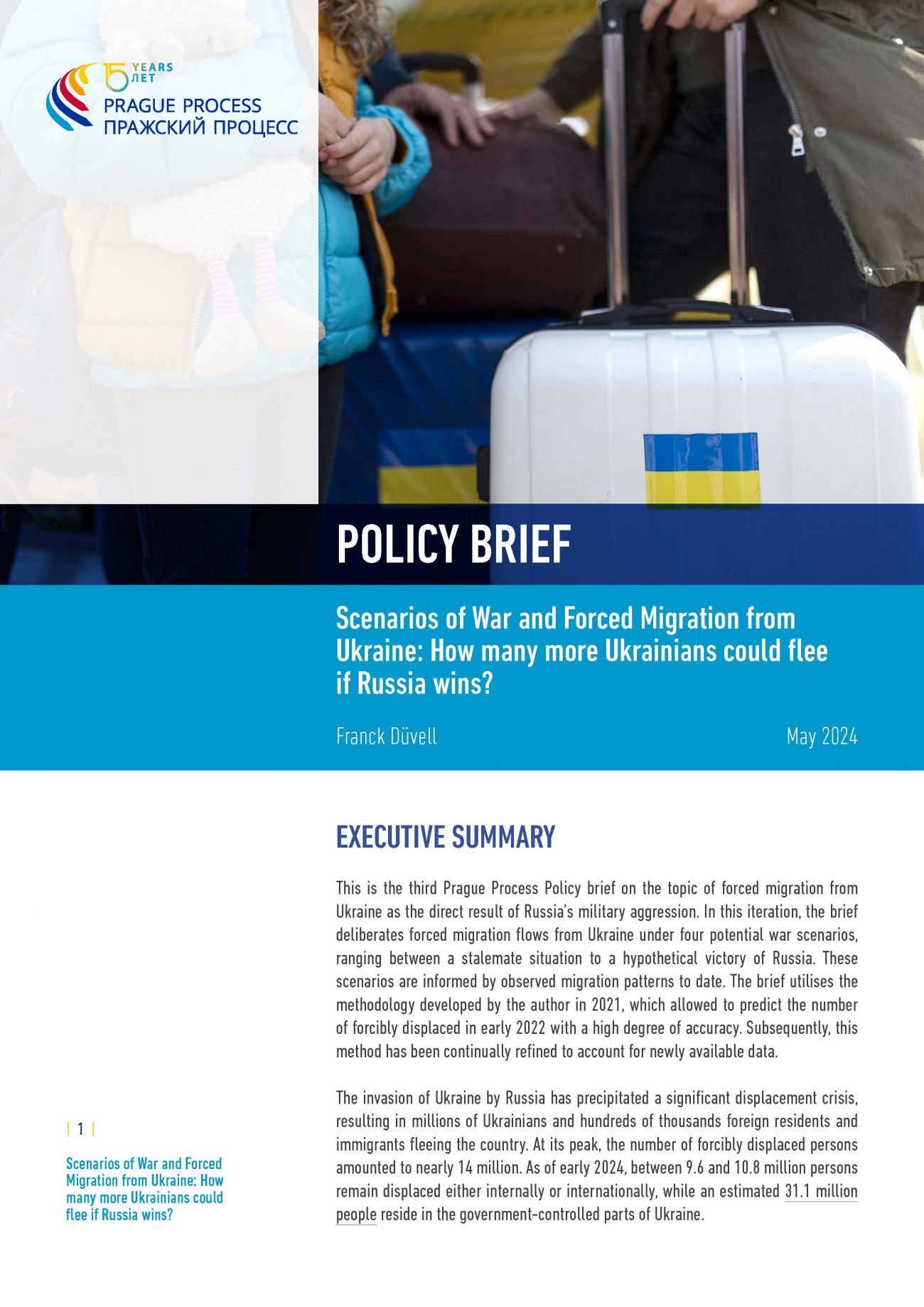
Scenarios of War and Forced Migration from Ukraine: How many more Ukrainians could flee if Russia wins?

Policy Brief

Published 15.05.2024

Ukraine

Summary

This is the third Prague Process Policy brief on the topic of forced migration from Ukraine as the direct result of Russia’s military aggression. In this iteration, the brief deliberates forced migration flows from Ukraine under four potential war scenarios, ranging between a stalemate situation to a hypothetical victory of Russia. These scenarios are informed by observed migration patterns to date.

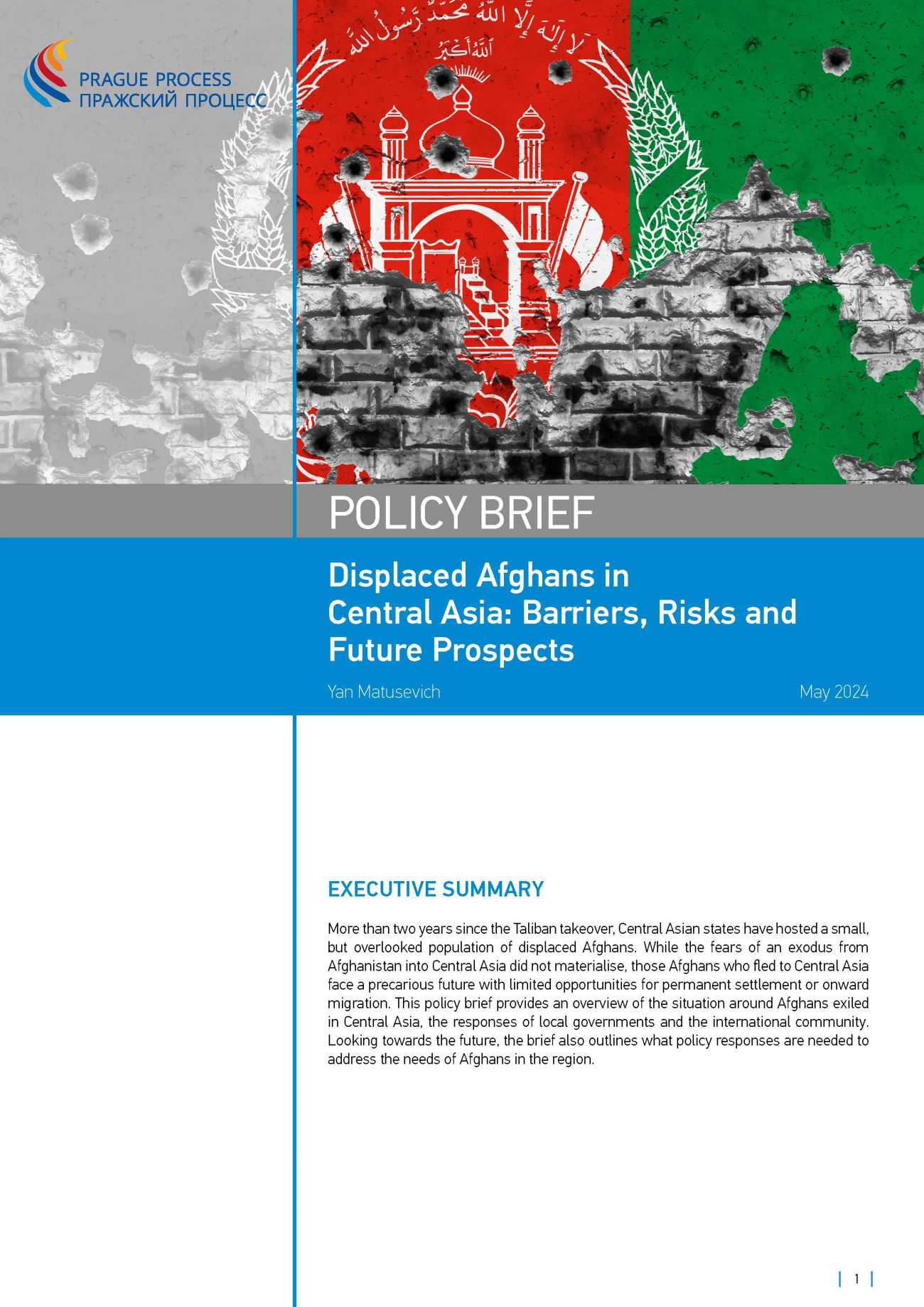
Displaced Afghans in Central Asia: Barriers, Risks and Future Prospects

Policy Brief

Published 06.05.2024

Summary

More than two years since the Taliban takeover, Central Asian states have hosted a small, but overlooked population of displaced Afghans. While the fears of an exodus from Afghanistan into Central Asia did not materialise, those Afghans who fled to Central Asia face a precarious future with limited opportunities for permanent settlement or onward migration.


This policy brief provides an overview of the situation around Afghans exiled in Central Asia, the responses of local governments and the international community. Looking towards the future, the brief also outlines what policy responses are needed to address the needs of Afghans in the region.

Digitalisation and labour migration: the use of modern technology, challenges and opportunities

Policy Brief

Published 06.07.2023

#Labour Migration

Summary

This Policy Brief explains the digital products and services available which facilitate labour migration, as well as the current barriers to the use of modern technology. This paper also analyses existing policy measures as well as looks at recommendations on how digitalisation can be leveraged to enable labour migration.

Emigration from Russia after 24 February 2022: main patterns and developments

Policy Brief

Published 05.06.2023

Summary

One year after the invasion, Russia’s emigration potential is nearly depleted. Neither new mobilisation nor increased combat will result in a new exodus of Russians from the country in the coming years. The countries of Central Asia and the South Caucasus are faced with the challenge of properly regulating the influx of Russians in order to reap benefits without exacerbating social tensions in the hosting communities, which may require international actors to interfere. The EU member states will have to develop a more uniform strategy for accepting Russians from risk groups, as well as legal migration pathways for Russians who may benefit the EU labour market. This Policy Brief looks at the main patterns and key developments of migration from Russia after 24 February 2022.

The Role of Bias in the Identification of Victims of Trafficking in Human Beings in the EU

Policy Brief

Published 30.11.2021

#Trafficking in Human Beings

Summary

Data show that trafficking in human beings (THB) for sexual exploitation continues to be the most prevalent form of trafficking. Moreover, women continue to constitute the great majority of victims identified in Europe. Much fewer trafficking victims are identified in agriculture, construction, hospitality, domestic work, or begging. This Policy Brief provides a statistical overview of the victims identified across the EU (2017-2018) and aims to assess why identification programmes struggle to identify and assist male victims and those facing exploitation outside the sex industry. The key question raised is whether identification efforts are biased towards trafficking for sexual exploitation and female victims.

Loading...