true

ICMPD Migration Outlook Eastern Europe & Central Asia 2025

Document

Published 16.05.2025

Summary

The Eastern Europe and Central Asia (EECA) Migration Outlook presents an analysis of the key events and trends that shaped migration in the EECA region in 2024.

Do Russia’s attacks on power infrastructure drive forced migration from Ukraine?

Published 14.02.2025

Summary

This brief assesses the state of Ukraine’s energy system, and its impact on the population, and discusses the potential for further forced migration to the EU.


Authors:

Franck Düvell, Institute for Migration Research and Intercultural Studies (IMIS), Osnabruck University. | This publication was produced in the framework of the Prague Process Migration Observatory. The Prague Process is funded by the European Union through the Migration Partnership Facility (MPF), which is implemented by the International Centre for Migration Policy Development (ICMPD).

ICMPD Migration Outlook Mediterranean 2025

Document

Published 26.03.2025

Summary

This publication provides a regional perspective on ICMPD’s Migration Outlook 2025, delving into key current and emerging migration trends in the Mediterranean region, with a focus on the countries of North Africa and the Middle East.

Returnee Voices Matter: Towards More Inclusive Return Policies

Policy Brief

Published 30.04.2025

Summary

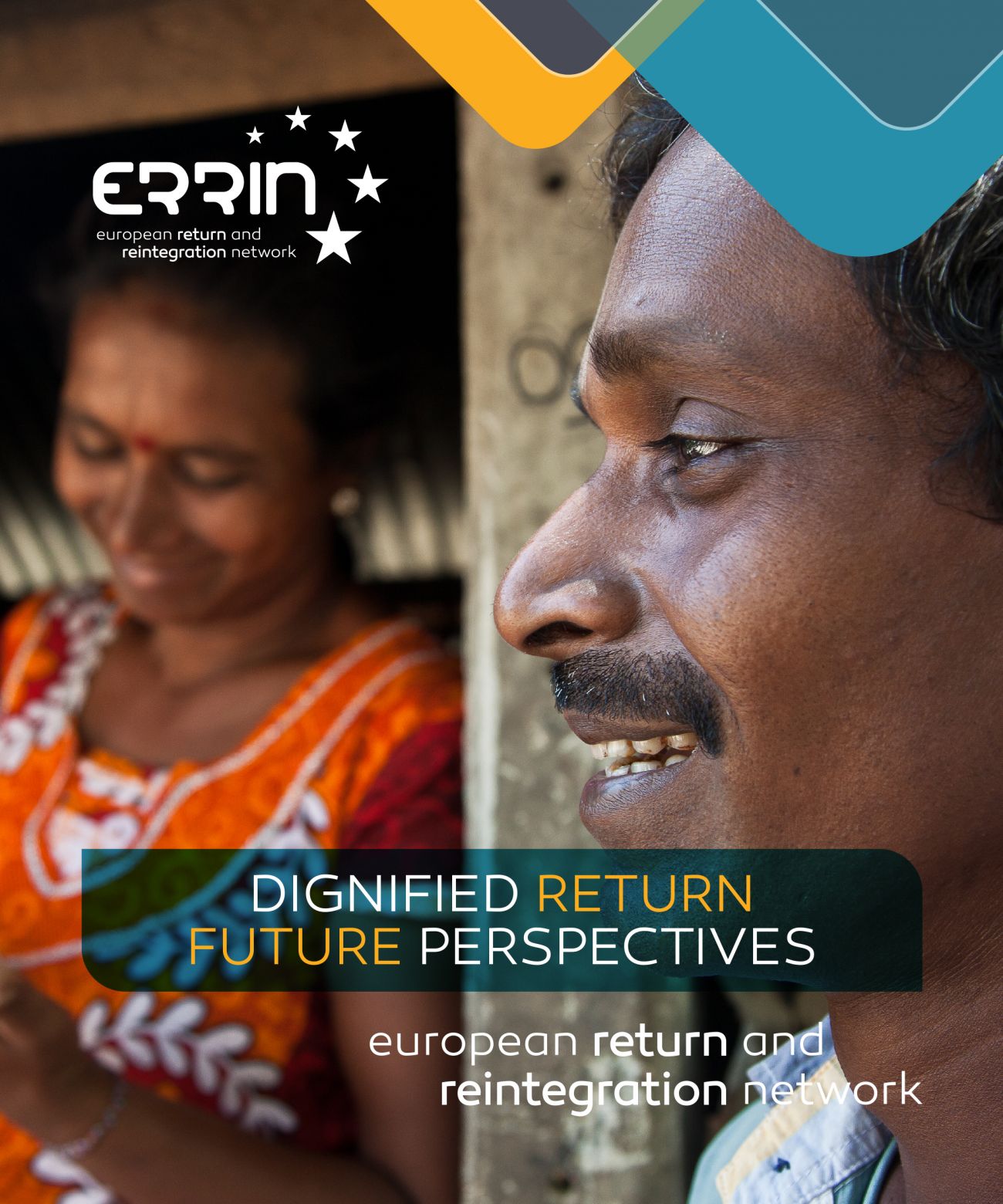
Despite the emphasis placed on return within EU migration management strategies, existing policies often fail to address the lived realities of returnees. They frequently result in exclusion, stigma, and in some cases, inefficient migration management outcomes. As the research highlights, prevailing return policies often silence returnees, overlooking their agency and perspectives.

Drawing on fieldwork conducted in Georgia, Iraq, Nigeria and Türkiye, the brief explores how dominant narratives and discourses disconnect returnees from return and reintegration policies, and offers practical, actionable steps for policymakers and practitioners seeking to develop return and reintegration frameworks that are more effective, human-centred, and grounded in the realities of returnees themselves.

Key recommendations focus on enhancing meaningful engagement of returnees in policymaking processes, strengthening operational strategies to meet returnees’ needs, and improving communication channels to bridge the gap between policy and practice.


Authors

Nazanine NOZARIAN (ICMPD), Madeleine HOELD (ICMPD), Sabeth KESSLER (ICMPD), Nassim MAJIDI (Samuel Hall), Juliette SAMMAN (Samuel Hall), Lisa PFISTER (Samuel Hall), Marta ROCHA (Samuel Hall), Daniel PROVOST (Samuel Hall)

Diaspora Engagement Report: Case Studies and Best Practices for Ukraine

Published 08.04.2025

Summary

This report analyses the policies and practices of countries that have successfully engaged their diaspora communities and aims to provide valuable insights and policy recommendations. A well-defined and comprehensive diaspora engagement strategy will not only strengthen collaboration between Ukrainian diaspora organisations and government institutions but also facilitate long-term and sustainable support mechanisms. Through this research, the aim was to provide a knowledge base that will guide the development and then implementation of targeted policies and programmes, leading to a more impactful approach to diaspora engagement in Ukraine.


Authors:

Giulia Mori, Júlia Puigdomènech Vidal, Melissa Siegel, Maastricht University & UNU-MERIT.

Four million people, one crossroads: Charting the future of temporary protection

Published 26.05.2025

#Asylum, refugees and international protection #Return, readmission and reintegration #Integration and social cohesion #Legal and labour mobility #Policy

Summary

The EU’s temporary protection (TP) regime for persons displaced by the war in Ukraine has now entered its fourth year, with a legal end date currently set for 4 March 2026. As the deadline approaches, a critical policy question looms: What future awaits the more than 4 million beneficiaries of temporary protection (BTPs) currently residing in EU Member States (MSs)?


This policy paper explores the strategic options available to the EU and its MSs following the expiration of the current Council Implementing Decision (Council of the European Union, 2024). Should the TP mechanism be extended, replaced with a new EU-wide instrument, or terminated, leaving MSs to chart their own course? Each path carries distinct legal, political, practical and humanitarian implications. By examining the tradeoffs and potential consequences of different policy directions, this paper aims to inform ongoing and upcoming discussions on the future of TP, balancing the interests of the EU and its MSs, Ukraine, and, above all, the BTPs currently residing in the EU.

Roadmap for Entrepreneurial Mobility between Belgium and Georgia

Document

Published 08.05.2025

Summary

This roadmap offers a comprehensive overview of the project, documenting the project’s implementation across its stages. The Background and Context section highlights how EMLINK aligns with national policies and the rationale for fostering entrepreneurial mobility. The Objectives of the Roadmap emphasise its dual purpose as an implementation guide and a resource for future entrepreneurial mobility programmes. 


This publication was produced with the financial support of the European Union, implemented by ICMPD through the Migration Partnership Facility. Its contents are the sole responsibility of ICMPD and do not necessarily reflect the views of the European Union.

The EU Accession Path for Ukraine and Moldova: Anticipated Reforms on Migration, Asylum and Border Management

Document

Published 23.04.2025

Ukraine / Moldova (Republic of)

Summary

This analytical report explores the challenges Ukraine and Moldova face in aligning their migration, asylum, and border management policies with EU standards as part of their accession process. Following Russia’s invasion of Ukraine in 2022, both countries received EU candidate status, sparking a renewed focus on the enlargement process. Ukraine’s unique position as a country in active conflict and Moldova’s geopolitical vulnerabilities amplify the complexity of their accession.

Vienna Migration Conference Report 2024

Document

Published 24.04.2025

#Cross Cutting Topics #Migration narratives and public opinion #Dialogues #Migration and development #Policy #Migration good governance

Summary

This conference report synthesises the key insights, debates, and good practices from VMC2024, providing a comprehensive overview of the evolving migration governance landscape. The 15 session summaries cover a range of critical topics, from advancing the EU Pact on Migration and Asylum to strengthening labour mobility frameworks and migration diplomacy. Additionally, a key takeaways commentary distils five central themes of the discussions: optimising route-based migration approaches, enhancing the external dimension of migration policy, strengthening labour mobility partnerships, ensuring the EU Pact remains fit for purpose, and addressing public demands for stricter policies while maintaining protection frameworks.

ICMPD Annual Report 2024

Document

Published 30.04.2025

Summary

The Annual Report takes stock of the milestones, opportunities and challenges in the past year, along with recurring issues that have surfaced to reshape the migration discourse.

Curriculum of the Compact Acceleration Course as a part of the Temporary Mobility Model for Entrepreneurs

Document

Published 16.04.2025

Summary

The Compact Acceleration Course (CAC) curriculum was designed to support a cohort of innovative Georgian start-ups selected for their potential to scale internationally and to establish strategic partnerships within the European Union, particularly in Belgium. As part of the ICMPD EMLINK project, the CAC curriculum aims to equip entrepreneurs with the tools, knowledge, and networks necessary to accelerate their growth and enter new markets.


This publication was produced with the financial support of the European Union, implemented by ICMPD through the Migration Partnership Facility. Its contents are the sole responsibility of ICMPD and do not necessarily reflect the views of the European Union.

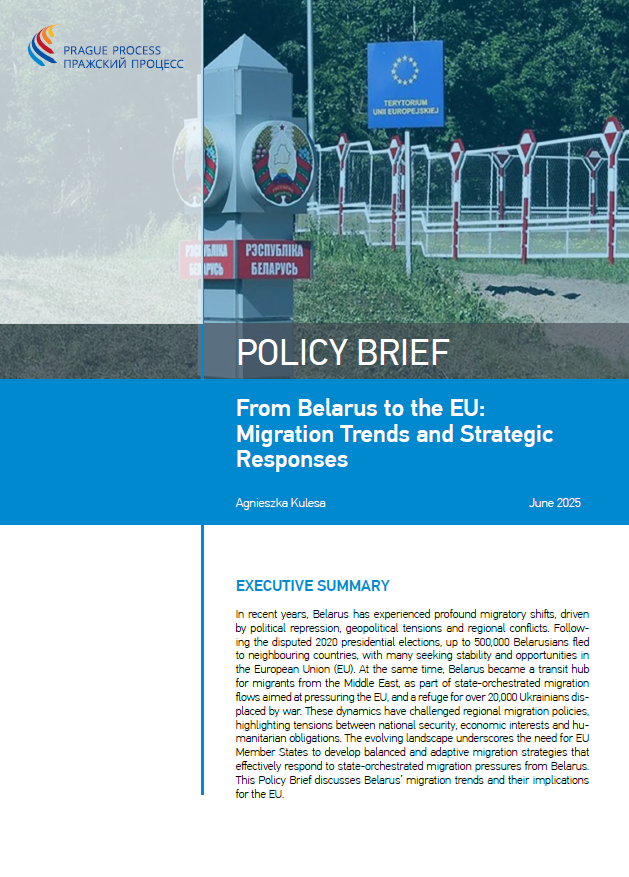
From Belarus to the EU: Migration Trends and Strategic Responses

Policy Brief

Published 17.06.2025

Summary

In recent years, Belarus has experienced profound migratory shifts, driven by political repression, geopolitical tensions and regional conflicts. Following the disputed 2020 presidential elections, up to 500,000 Belarusians fled to neighbouring countries, with many seeking stability and opportunities in the European Union (EU). At the same time, Belarus became a transit hub for migrants from the Middle East, as part of state-orchestrated migration flows aimed at pressuring the EU, and a refuge for over 20,000 Ukrainians displaced by war. These dynamics have challenged regional migration policies, highlighting tensions between national security, economic interests and humanitarian obligations. The evolving landscape underscores the need for EU Member States to develop balanced and adaptive migration strategies that effectively respond to state-orchestrated migration pressures from Belarus. This Policy Brief discusses Belarus’ migration trends and their implications for the EU.


This publication was produced in the framework of the Prague Process Migration Observatory. The Prague Process is funded by the European Union through the Migration Partnership Facility (MPF), which is implemented by the International Centre for Migration Policy Development (ICMPD).

Vienna Migration Conference 2025 opening speech by ICMPD Director General Michael Spindelegger

Speech

Published 21.10.2025

Vienna Migration Conference 2025 closing speech by ICMPD Director General Michael Spindelegger

Speech

Published 22.10.2025

Challenges and Opportunities for the Ratification and Popularisation of the African Union Free Movement Protocol

Study

Published 21.11.2025

Summary

This study explores the challenges and opportunities surrounding the ratification and popularisation of the African Union Free Movement Protocol (AU FMP). Drawing on lessons from the European Union and Africa’s Regional Economic Communities (RECs), it responds to the growing recognition among African Union (AU) Member States and RECs that the continent’s aspiration for deeper regional integration and socio-economic transformation cannot be fully realised without the free movement of persons. While political will to enhance mobility exists, practical implementation remains constrained by security concerns, socio-economic issues, and limited institutional and technical capacity.

Migration in Africa – Myths and Realities: An Implementation Guide for Trainers Accompanying the Manual on Migration Governance for Media

Document

Published 21.11.2025

Summary

This guide is designed as a comprehensive resource supporting trainers in the delivery of engaging training sessions and modules as part of the ‘Migration in Africa – Myths and Realities: A Trainers’ Manual on Migration Governance for Media Practitioners and Communication Specialists in CSOs/NGOs’ (for short: communicators). As trainers, pay particular attention to the fact that while these target groups work in similar ways, they partially have different needs when communicating about migration as part of their professions.

Migration in Africa – Myths and Realities: A Manual on Migration Governance for Media Practitioners and Communication Specialists in CSOs/NGOs

Document

Published 21.11.2025

Summary

This Trainers’ Manual on Migration Governance for Media Practitioners and Communication Specialists in CSO/NGOs is in response to a need by journalists and civil society in Africa, some of whom work in the migration sector, but also have the potential to play a critical advocacy role.

Making Migration Work for Africa: A Trainer's Manual on Migration Governance for Policy Makers in Africa

Document

Published 21.11.2025

Summary

This Trainers’ Manual on Migration Governance for Policy Makers in Africa – Making Migration Work for Africa is a response to Member States and Regional Economic Communities (RECs) of the African Union identifying a gap between their commitment to address the migration challenges and their technical capacity to address them. As part of its efforts to identify the capacity building needs of Member States and RECs, the African Union conducted a survey in 2018.

Zusammenleben in hoch diversen sozialen Räumen

Study

Published 25.11.2025

Summary

Das Ziel der LOCALIZE-Studie war es, ein besseres Verständnis für die lebensweltlichen Realitäten und Dynamiken des Zusammenlebens verschiedener Bevölkerungsgruppen in städtischen Räumen zu gewinnen, die stark von sozialer Vielfalt und Zuwanderung geprägt sind. Zudem sollten Ansatzpunkte für Maßnahmen zur Förderung integrativer Dynamiken identifiziert werden. Dabei wurden drei zentrale Perspektiven betrachtet: die Lebenswelt der Anrainer:innen, die Dynamiken des Zusammenlebens sowie der integrationspolitische Kontext auf Stadt- und Stadtteilebene. Ziel war es, mögliche Zusammenhänge zwischen (halb-)öffentlichen Räumen, Integrationserfahrungen und sozialem Miteinander einerseits und der Relevanz integrationspolitischer Maßnahmen für das Zusammenleben andererseits zu beleuchten.

Die Feldforschung von LOCALIZE untersuchte daher zentrale Aspekte sozialer Integration in den drei Stadtteilen Salzburg-Lehen, Graz-Gries und Wien-Favoriten. Mithilfe der im Projekt entwickelten Untersuchungsinstrumente wurden diese systematisch beobachtet und hinsichtlich ihrer integrativen und desintegrativen Wirkungen analysiert.

Soziale Integration wurde dabei in Bezug auf zwei Dimensionen verstanden: (1) als der Grad der Einbeziehung von Individuen oder Gruppen in die soziale Ordnung vor Ort und (2) als die Art der Beziehungen, die diese Individuen und Gruppen miteinander aufbauen und pflegen. Die Untersuchung bezog sich auf alle Bewohner:innen und Anrainer:innen der drei Stadtteile und nicht ausschließlich auf bestimmte Untergruppen wie beispielsweise Migrant:innen.

Loading...